Join
Join
 Shorts

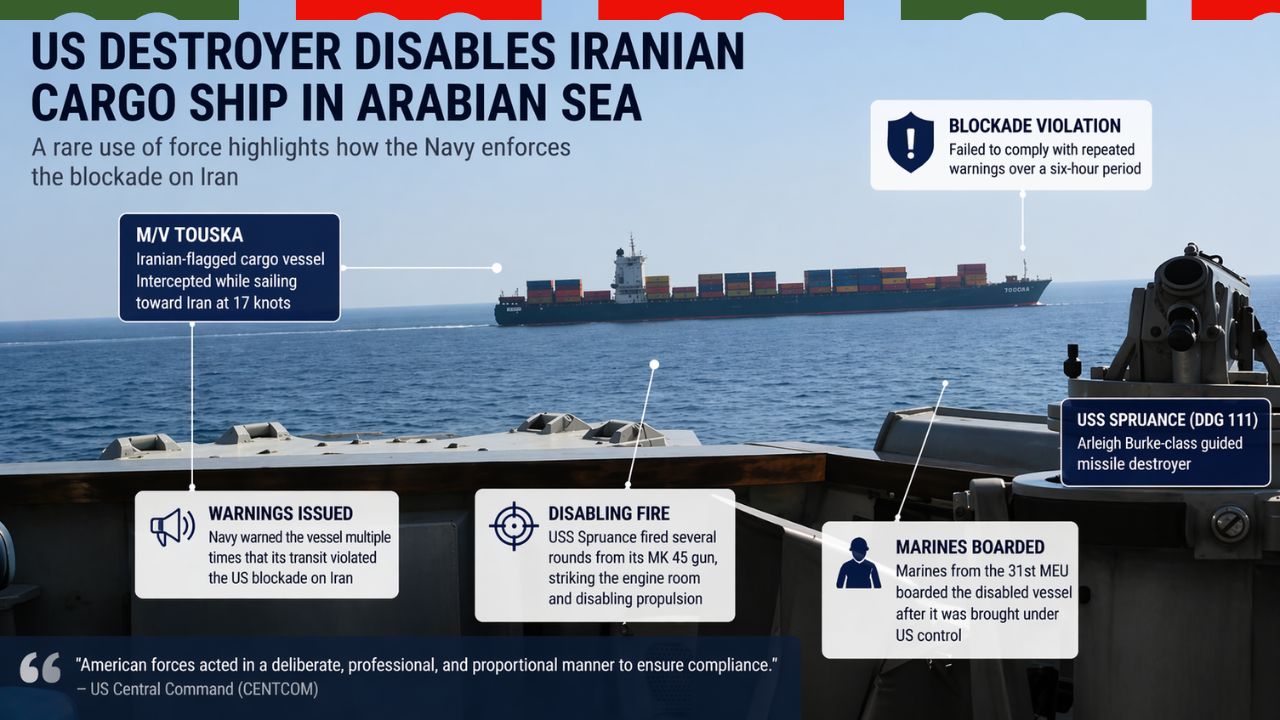
US Destroyer Disables Iranian Cargo Ship: What It Reveals About Navy Tactics: An U.S. Navy destroyer fired at engines of an Iran-flagged cargo ship in northern Arabian Sea, marking a unusual, but significant escalation in the implementation of U.S. blockade on Iran. This incident provides insight into how the Navy moves from the standard alert procedures, to direct actions in cases where vessels are not following the rules.
As per US Central Command, the cargo ship resisted repeated warnings for up to six hours. The result was the decision to disarm the ship with targeted gunfire, an act that is a an established part of naval procedure but is rarely used in actual blockade operations.
From Warnings to Action
The USS Spruance, a destroyer USS Spruance intercepted the Iranian-flagged vessel M/V Touska as it headed towards Iran with 17 knots. According to the standard procedures, naval forces initially evaluated the ship by interviewing its crew on the cargo, its origin, and the destination.
Usually, vessels are either compliant or can proceed. If further inspections are required then a boarding that is compliant follows when sailors inspect cargo and allow.
However the Touska were not willing to join in. After a series of warnings that were ignored The Navy intensified the situation. The crew was directed to leave the engine room, and the Spruance fired a series of rounds with the MK 45 weapon, effectively deactivating the propulsion system of the ship.
Authorized but Uncommon Tactic
US Destroyer Disables Iranian Cargo Ship Utilizing force to stop the vessel is a valid method of maritime interdiction. Experts agree that, while this is a part of training, it’s not required in situations of sanctions enforcement.
The aim of this move will be to stop the vessel without causing harm to the ship and allowing the boarding teams to control the ship. The deactivation of propulsion can also decrease the likelihood of escaping or resistance from crew members.
Read Also: India US Trade 2026 talks begin in Washington today, Tariff in Focus
Challenges in Boarding Noncompliant Ships
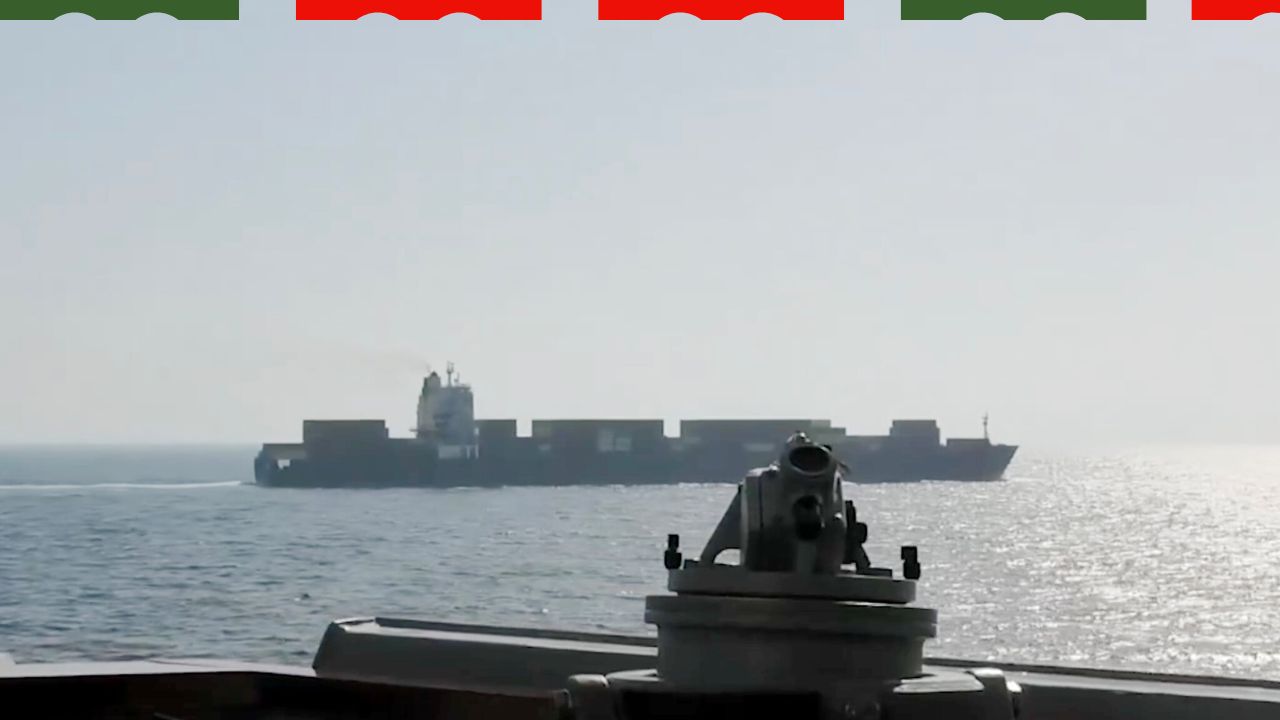
A large cargo vessel like the Touska is a challenge for operational reasons due its size as well as its speed and the potential for hostile behavior from the crew. The process of determining intent is usually the most challenging aspect of naval operations.
After the vessel was dismantled, U.S. Marines from the 31st Marine Expeditionary Unit boarded the vessel. Depending on the risk level, the boarding process could involve small-boat teams or helicopters with a focus on Visit, board, Search, and Seizure (VBSS) operations.
Similarities to Anti-Smuggling Operations
The gradual escalation process that is evident in this incident is similar to methods employed to deter officials of the U.S. Coast Guard against vessels that traffic in drugs. In these cases authorities can also go from warnings to disable fire in the event that compliance is not met.
Political and Strategic Implications
The intercept is a moment of tension when a ceasefire between U.S. and Iran nears expiration.
The former president Donald Trump stated that the Navy “stopped them right in their tracks,” which is a confirmation that this vessel was in U.S. custody and being investigated.
Iran has condemned the act as piracy, and a violation in the terms of the ceasefire.
Read Also: Power Struggle Turns Violent: 11 Hurt in Gurdwara Clash in Germany’s Moers
Rising Tensions in a Critical Region
The situation is made more complicated by Iran’s decision to close the Strait of Hormuz, a vital global route for oil transportation. This is the first complete closing of the strait by Iran and is the largest U.S. naval blockade since the Cuban Missile Crisis.
Although U.S. forces have already denied access to hundreds of commercial vessels but The Touska is the only vessel to contest the blockade, raising fears about the possibility of future conflict.
What Comes Next
Its fate Touska remains unclear. It may be torn up or released according to the findings regarding the cargo. The vessel is operated by Islamic Republic of Iran Shipping Lines which is an entity that is subject to sanctions over alleged connection to Iran’s missile programme.
US Destroyer Disables Iranian Cargo Ship tensions remain high and talks continue, this event indicates a willingness of officials of the U.S. Navy to enforce its blockade with force, if needed.