Join
Join
 Shorts

India’s electric vehicle revolution has entered a fascinating new chapter.
For years, Tata Motors has dominated the mainstream EV market with products like the Nexon EV, Punch EV, and Tiago EV. But conquering the premium electric segment requires a completely different playbook. That’s where the Tata Motors Chery-JLR Platform strategy comes into the picture—a move that has surprised industry watchers and sparked intense discussions across the automotive world.
At first glance, it may seem unusual. Why would India’s largest EV manufacturer rely on a platform with Chinese roots for its next-generation luxury electric vehicles?
The answer is simple: speed, technology, and economics.
As global automakers race toward electrification, developing a cutting-edge EV platform from scratch can cost billions and consume valuable years. Tata Motors appears to have decided that the fastest road to premium EV success is through strategic collaboration rather than starting from square one.
And honestly, in a market evolving this quickly, waiting might be the most expensive decision of all.
Why Tata Changed Its Original Avinya Plan
When Tata first unveiled the Avinya concept, the expectation was that the production vehicle would utilize Jaguar Land Rover’s advanced Electrified Modular Architecture (EMA).
However, reality had other plans.
Industry sources indicate that adapting JLR’s ultra-premium EMA platform for Tata’s projected sales volumes and target pricing became commercially difficult. The economics simply didn’t make sense.
A premium architecture designed primarily for luxury Jaguar Land Rover products would have pushed costs higher and potentially delayed launches even further.
Instead of forcing a solution that wasn’t financially viable, Tata chose a more pragmatic route.
Sometimes the smartest engineering decision isn’t building something new—it’s choosing the right foundation to build upon.
Understanding the Tata Motors Chery-JLR Platform
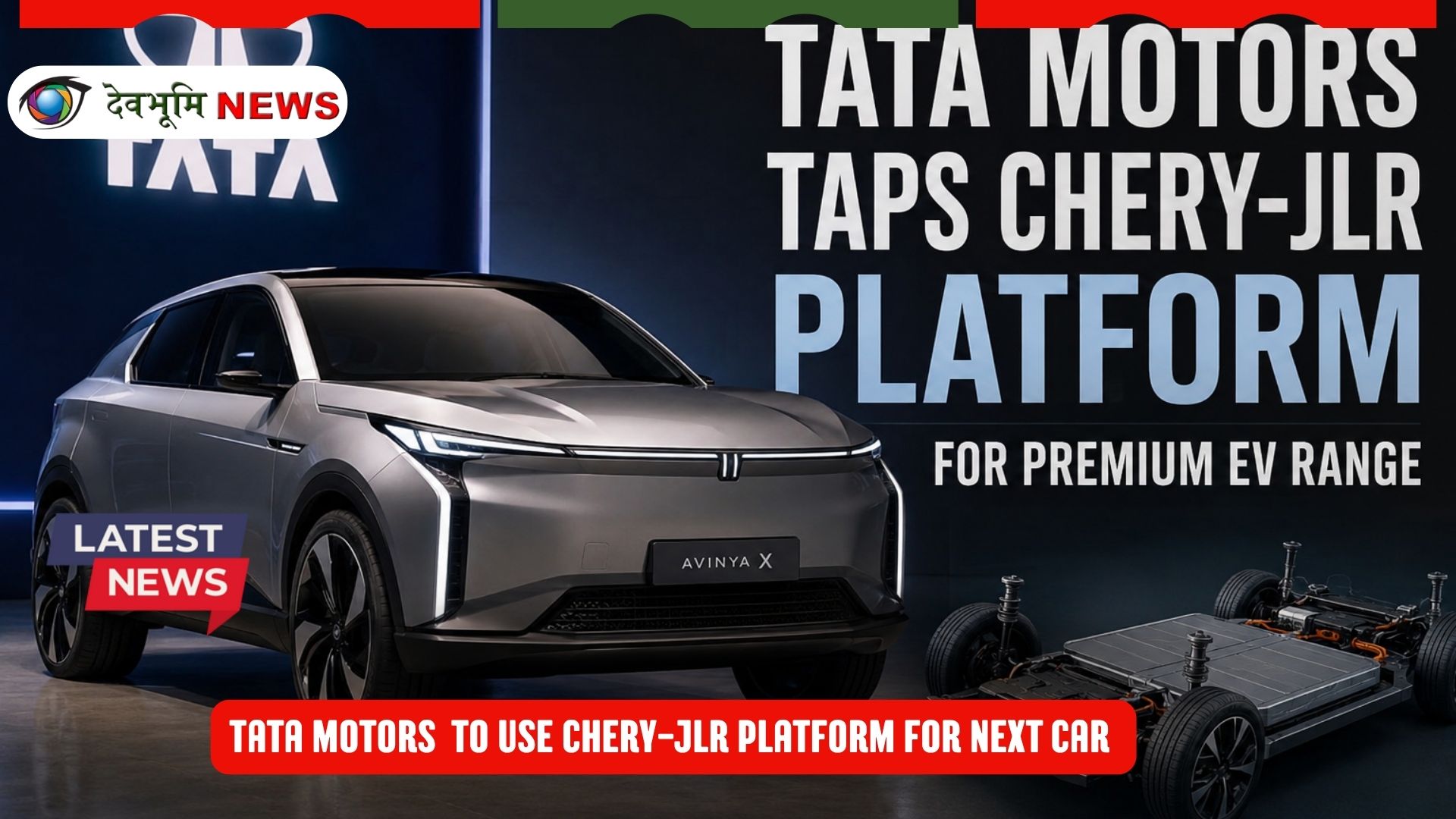
The new strategy revolves around the Freelander EV architecture developed through the Chery-JLR partnership in China.
For Tata Motors, this platform offers a proven foundation capable of supporting modern premium electric vehicles without the lengthy development cycle associated with an entirely new architecture.
The platform will underpin the upcoming Avinya range, beginning with the first production model scheduled for 2027.
More importantly, it gives Tata access to technology that has already been engineered for next-generation electric mobility.
In the EV world, platforms are the new engines. They determine everything from charging speed and battery packaging to software capabilities and driving dynamics.
The iMax Architecture Explained
This is where things get particularly interesting.
The Freelander platform is built around Chery’s premium E4X/iMax (Intelligent Modular Architecture to X) architecture.
Unlike many current EV platforms in India that still operate on lower-voltage systems, the iMax architecture features an advanced 800-Volt electrical backbone.
Why does that matter?
Because voltage is the secret ingredient behind ultra-fast charging.
Key Technical Highlights
- Native 800V electrical architecture
- Support for DC fast charging up to 350 kW
- Potential 10% to 80% charging times under 20 minutes
- Advanced software-defined vehicle capabilities
- Enhanced thermal management systems
- Scalable architecture for multiple body styles
For consumers, the result could be shorter charging stops and greater long-distance usability.
Think of it this way: today’s charging experience often feels like waiting for your phone to reach 100%. An 800V architecture aims to make charging feel more like grabbing a quick coffee.
Why Avinya X Is Launching First
One of the biggest updates involves Tata’s launch strategy.
Many enthusiasts expected the original Avinya hatchback-inspired concept to arrive first. That is no longer the plan.
Instead, Tata is reportedly prioritizing Avinya X, internally known as Project P2.
Avinya X (2027)
The first production model is expected to be a premium five-seat electric coupe SUV.
This body style aligns perfectly with global consumer trends, where SUV and crossover segments continue to dominate demand.
Future Premium SUV (2029)
The second vehicle under consideration is expected to be a larger three-row electric SUV aimed at establishing Avinya as a genuine premium lifestyle brand.
Rather than launching a single halo product, Tata appears to be building an entire luxury EV ecosystem.
Agratas Batteries and Local Manufacturing
Another crucial piece of the puzzle is battery sourcing.
While the underlying platform originates from the Chery-JLR ecosystem, Tata’s Indian-market vehicles are expected to utilize battery packs sourced through Agratas, Tata Group’s battery manufacturing venture.
Industry estimates currently point toward battery pack capacities ranging between:
- 65 kWh
- 75 kWh
- 80 kWh
This localization strategy offers several advantages:
- Reduced dependency on imported battery systems
- Better supply chain stability
- Potentially lower production costs
- Greater control over future battery development
It also aligns with India’s broader manufacturing ambitions and localization goals.
The Panapakkam Production Hub
Production of the upcoming Avinya vehicles is expected to take place at the newly inaugurated TMPV-JLR manufacturing facility in Panapakkam, Tamil Nadu.
Initially, some vehicle components and platform kits will arrive from China.
However, this should not be confused with a traditional joint venture.
Legally, Chery’s role remains that of a platform supplier. There is no direct equity partnership between Tata Motors and Chery.
This distinction is important because it keeps the arrangement compliant with India’s regulatory framework governing foreign investments and technology partnerships.
Meanwhile, Tata Technologies teams in India and the United Kingdom are reportedly reengineering key systems for local requirements.
That means:
- Suspension tuning for Indian roads
- Software localization
- Climate-specific calibration
- User interface customization
- Market-specific feature integration
In automotive terms, the skeleton may originate elsewhere, but the personality is being developed by Tata.
What Indian Buyers Can Expect
If executed successfully, the Tata Motors Chery-JLR Platform strategy could deliver several major benefits.
Faster Product Launches
Tata can bring premium EVs to market sooner than developing an entirely new platform internally.
Next-Generation Charging
The 800V architecture could introduce significantly faster charging capabilities than many existing EVs in India.
Improved Technology
Buyers can expect advanced connectivity, modern software systems, and over-the-air update capabilities.
Global-Level Engineering
The combination of Chery’s EV expertise, JLR’s premium engineering influence, and Tata’s local adaptation efforts creates an intriguing blend of technologies.
READ MORE:
Hyundai Ioniq 5 Facelift 2026: The EV That Just Fixed Almost Everything
Stronger Competition
The premium EV segment in India is still developing. More competition generally means better products and more choices for consumers.
Final Thoughts
The Tata Motors Chery-JLR Platform strategy may be one of the most important automotive stories of 2026.
More than just a platform decision, it reflects a broader shift happening across the global automotive industry. Success is no longer determined solely by who builds every component themselves. Increasingly, success comes from identifying the best technology available and integrating it intelligently.
For Tata Motors, this move could accelerate its ambitions far beyond mainstream EV leadership.
And when the Avinya X finally arrives in 2027, it won’t simply be another electric SUV launch.
It will be a test of whether strategic global collaboration can help create India’s first truly world-class premium electric vehicle brand.
If the technology delivers on its promise, the answer could be a resounding yes.