Join
Join
 Shorts

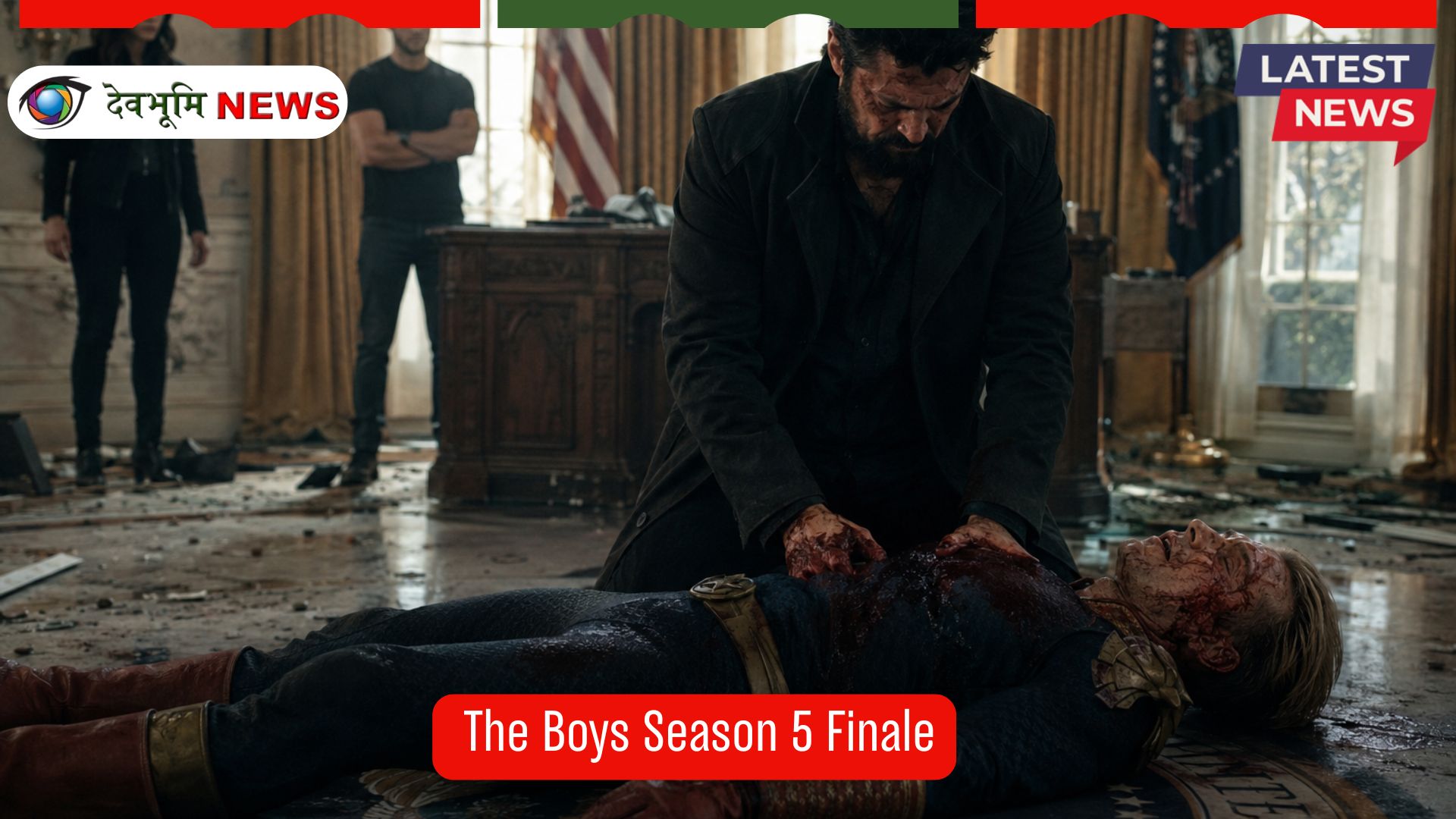
The end of The Boys has finally arrived, and somehow the finale managed to feel both gigantic and painfully empty at the same time.
After five seasons of exploding bodies, unhinged superheroes, corporate propaganda, milk memes, emotional trauma, and enough blood to make horror movies uncomfortable, Episode 8 — titled “Blood and Bone” — officially dropped on May 20, 2026.
And yes, it absolutely went there.
Fans spent months predicting who would survive the final chapter. Internet forums became war zones. Betting markets literally took wagers on character deaths. Some viewers expected a giant superhero apocalypse. Others thought the show would pull one final insane twist.
Instead, the finale delivered something much darker:
a hollow victory.
Because in true The Boys fashion, saving the world didn’t feel heroic.
It felt exhausting.
The Boys Season 5 Finale Release Details
The fifth and final season of The Boys premiered on April 8, 2026, following a weekly release schedule before concluding today with Episode 8.
Episode 8 Runtime
The finale runs for 1 hour and 5 minutes — longer than a standard episode but intentionally not stretched into a movie-length event.
Showrunner Eric Kripke reportedly wanted the ending to feel focused and emotionally sharp rather than oversized spectacle.
Which is honestly ironic considering this show once exploded a man from inside his own body.
Why “Blood and Bone” Is the Perfect Finale Title
At first glance, “Blood and Bone” sounds like a forgotten thrash-metal album from 2006.
But the title actually comes from an earlier warning delivered by Homelander to Billy Butcher, promising a final “blood and bone” war between them.
And that’s exactly what the finale becomes:
not a superhero battle,
but a complete emotional collapse.
Blood has always defined The Boys. Every season treated human bodies like water balloons filled with tomato soup.
But “bone” feels symbolic:
- What remains after destruction
- The skeleton beneath the propaganda
- The ugly truth hidden beneath celebrity and patriotism
By the final episode, nearly every character is stripped down to who they really are without power, branding, or illusion.
And honestly? Most of them are terrifying.
Frenchie’s Death Quietly Became the Heart of the Finale
One of the biggest emotional gut punches actually happened before Episode 8 even started.
Frenchie died in Episode 7 from radiation poisoning after helping lure Homelander into a trap.
The finale opens with his burial, and that moment completely reshapes Kimiko Miyashiro for the rest of the episode.
For years, The Boys balanced grotesque violence with strange little moments of humanity. Frenchie represented that emotional center more than almost anyone else.
He was chaotic, broken, funny, brilliant, and somehow still capable of kindness inside a world built on cruelty.
His death gives the finale its emotional gravity.
Without him, the story suddenly feels colder.
Smaller.
Final.
How Homelander Finally Lost
For five seasons, Homelander felt unstoppable.
Not just physically.
Emotionally.
That’s what made him terrifying.
Played masterfully by Antony Starr, Homelander became one of television’s greatest villains because he didn’t see himself as evil. He saw himself as necessary.
The finale destroys that illusion completely.
Using radiation-modified abilities developed through Frenchie and Butcher’s research, Kimiko successfully strips Homelander of his powers during the climactic confrontation inside the Oval Office.
And suddenly, the god becomes human.
No lasers.
No flying.
No invincibility.
Just fear.
The most disturbing part of the entire finale isn’t Homelander dying.
It’s watching him cry before it happens.
Because once his powers disappear, all that remains is a terrified man who spent his entire life hiding behind superiority.
Billy Butcher ultimately kills him in one final act of vengeance.
But the scene doesn’t feel triumphant.
It feels tragic.
Like watching hatred finally consume itself.
Billy Butcher’s Ending Is Pure The Boys
If Homelander represented corrupted power, Billy Butcher represented corrupted revenge.
And the finale understands something important:
revenge stories don’t usually end with peace.
After killing Homelander, Butcher attempts one last desperate plan — releasing a global Supe-killing virus through Vought Tower’s sprinkler system.
Because even at the end, he still can’t stop escalating.
It’s Hughie Campbell who finally stops him.
Not through violence.
Not through power.
But through compassion.
That’s the twist that makes the finale work emotionally.
Hughie refuses to let Butcher destroy what little humanity he has left.
Following the confrontation, Butcher dies from a gunshot wound after finally making peace with Hughie.
And somehow, for the first time in years, the man actually looks tired instead of angry.
Who Dies in The Boys Season 5 Finale?
A lot of people.
Because of course they do.
Confirmed Deaths in Episode 8
Homelander
Depowered by Kimiko before being killed by Billy Butcher inside the Oval Office.
Billy Butcher
Dies after abandoning his virus plan and reconciling with Hughie.
The Deep
Killed earlier in the finale after Starlight blasts him into the ocean during one of the show’s most darkly hilarious moments.
Earlier Major Deaths
A-Train
Killed earlier in the season by Homelander after secretly helping Hughie.
Frenchie
Dies from radiation poisoning in Episode 7.
At this point, the show’s body count is probably large enough to require its own government spreadsheet.
Hughie and Starlight Get the Most Unexpected Thing Possible
A happy ending.
Sort of.
After years of trauma, manipulation, violence, and emotional destruction, Hughie and Starlight survive the finale and begin building a future together.
It’s surprisingly quiet compared to everything surrounding them.
No massive speech.
No giant heroic pose.
No cinematic victory music.
Just two exhausted people trying to live normally after surviving absolute insanity.
And maybe that’s the point.
In a universe obsessed with power, the show quietly suggests that ordinary human connection matters more.
Which feels weirdly hopeful for a series that once featured a man sneezing another man apart.
Why The Boys Season 5 Finale Feels So Empty — And Why That Works
A lot of viewers expected catharsis when Homelander finally died.
Instead, the finale leaves behind emotional emptiness.
That’s intentional.
Homelander dies powerless, terrified, and broken.
Butcher dies exhausted and hollow.
Nobody really wins.
Because The Boys was never secretly building toward traditional superhero triumph. It was always about how violence, fear, and obsession poison everyone involved.
Even the “good guys.”
The finale understands that destroying monsters doesn’t magically heal people damaged by them.
And honestly, that’s probably the darkest thing the show ever said.
Did The Boys Stick the Landing?
Shockingly… yes.
Television finales are notoriously dangerous territory. Entire fanbases still break into cold sweats remembering Game of Thrones.
But The Boys succeeds because it stays faithful to its core themes:
- Power corrupts
- Celebrity culture creates monsters
- Revenge destroys people
- Corporations weaponize morality
- Humanity survives through connection, not dominance
The finale doesn’t try to become a giant Marvel-style spectacle at the last second.
Instead, it becomes smaller.
Sadder.
More human.
And that choice probably saved it.
Read more
- BRABUS Bodo Is Here, and It Looks Like Aston Martin Had a Midlife Crisis in Carbon Fiber
- अफगानिस्तान के खिलाफ टेस्ट और वनडे के लिए भारतीय टीम का एलान, शुभमन गिल संभालेंगे कप्तानी
- Trump Calls Off Iran Attack After Gulf States Request Amid Rising Middle East Tension
Final Thoughts on The Boys Season 5 Finale
The The Boys Season 5 Finale closes one of the most influential television shows of the streaming era with exactly the kind of ending it deserved:
violent,
emotionally devastating,
darkly funny,
and painfully honest.
For years, the series asked what would happen if superheroes were shaped by fame, politics, trauma, and corporate greed instead of morality.
The answer, apparently, was Homelander.
But in the final hour, the show also asks a quieter question:
What happens after the monsters are gone?
The answer isn’t victory.
It’s survival.
And somehow, that feels far more real.