Join
 Shorts


The Indian stock market witnessed mixed trading activity as the BSE Sensex declined by more than 200 points, while the NSE Nifty50 moved above the 22,700 mark. The contrasting performance of the two benchmark indices highlighted the uneven movement of stocks across different sectors.
Such market movements often reflect a combination of domestic economic developments, global market trends, investor sentiment and changes in buying and selling activity. While the Sensex’s decline indicated pressure on several heavyweight stocks, the Nifty50’s rise above 22,700 suggested that buying interest remained present in parts of the market.
Investors will closely monitor the performance of major companies, sectoral indices and global cues to understand whether the market can maintain its momentum or experience further volatility.
Sensex and Nifty50 Show Different Trends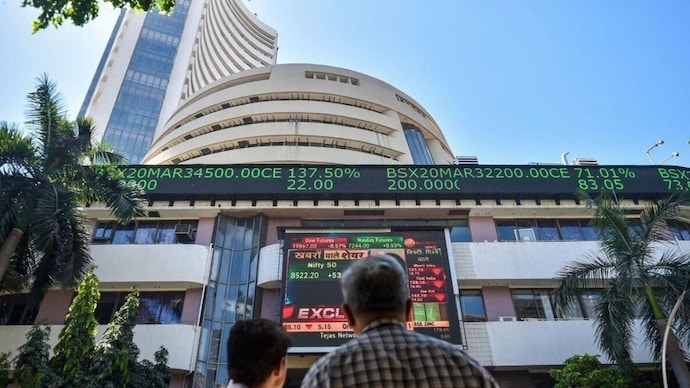
BSE Sensex Declines Over 200 Points
The BSE Sensex, which tracks 30 major companies listed on the Bombay Stock Exchange, came under pressure during trading. A fall of more than 200 points indicated selling activity in some influential stocks.
Movements in the Sensex are significantly affected by changes in the share prices of its constituent companies. When major banking, information technology, energy or financial stocks decline, the index can experience downward pressure even if several other shares are trading higher.
Investors generally examine the performance of individual constituents to determine whether a decline is broad-based or concentrated in a few heavyweight stocks.
NSE Nifty50 Moves Above 22,700
In contrast, the NSE Nifty50 advanced above the 22,700 level. The index represents 50 major companies listed on the National Stock Exchange and serves as an important indicator of the broader market’s direction.
The Nifty50’s upward movement, despite the Sensex decline, points to differences in the performance and weighting of stocks across the two indices. It does not necessarily mean that the entire market is rising.
Market participants will watch whether the Nifty50 can sustain its position above 22,700 and whether buying interest spreads across more sectors.
Key Factors Influencing the Stock Market
Global Market Cues
International markets can have a substantial influence on Indian equities. Movements in US stock indices, Asian markets, crude oil prices and global bond yields often affect investor sentiment in India.
Rising geopolitical tensions or uncertainty about global economic growth can encourage investors to reduce exposure to riskier assets. Conversely, positive international cues may support buying in domestic equities.
Foreign and Domestic Investor Activity
The buying and selling decisions of foreign institutional investors and domestic institutional investors are important factors behind daily market movements.
Heavy foreign selling can place pressure on large-cap stocks, while purchases by domestic institutions can provide support. However, institutional flows are only one part of the overall market picture, and their influence varies according to prevailing conditions.
Interest Rates and Economic Expectations
Expectations about inflation, interest rates, economic growth and corporate earnings can also influence share prices. Investors assess these factors when deciding how much they are willing to pay for stocks.
Companies with strong earnings visibility and stable business models may attract interest during uncertain periods, while businesses facing higher costs or weaker demand may come under pressure.
Sectoral Performance and Stocks in Focus
Information Technology and Banking Stocks
Information technology and banking shares often play a major role in determining the direction of benchmark indices. Changes in global technology spending, interest-rate expectations and quarterly earnings can influence investor demand for these stocks.
Investors should examine whether declines in heavyweight companies are offset by gains in other sectors. A market rally supported by only a handful of stocks may be less convincing than one accompanied by widespread buying.
Crude Oil and Energy Stocks
Crude oil prices remain an important factor for the Indian economy because India depends heavily on imported petroleum. Rising oil prices can increase costs for transport companies, airlines and other fuel-intensive businesses while adding to inflationary pressures.
Elevated crude prices can also influence the rupee and foreign investor sentiment. On the other hand, certain energy companies may benefit from favourable changes in commodity prices, depending on their business models and government policies.
What Should Investors Watch Next?
Important Support and Resistance Levels
With the Nifty50 moving above 22,700, traders may monitor whether the index can sustain this level. A sustained move above a key level can strengthen short-term sentiment, while a fall below it may indicate renewed selling pressure.
However, support and resistance levels are technical indicators rather than guaranteed turning points. Investors should combine them with market breadth, trading volumes and broader economic developments.
Corporate Earnings and Global Developments
Quarterly earnings announcements, central-bank decisions, inflation data and international developments can influence market direction. Investors should also track institutional investment flows and movements in the rupee.
These factors can change quickly, making it important to distinguish temporary market fluctuations from changes in a company’s underlying business prospects.
Read more like this:
- ‘अब मेरी बारी है’: अपनी कहानी सुनाने की तैयारी में सोनिया गांधी, ‘तमाशे’ को लेकर चर्चा तेज
- “Ethanol… That Was All Propaganda”: Gadkari Defends E20, Bats for Alternative Fuels
Conclusion
The contrasting movements of the Sensex and Nifty50 highlight the complexity of stock-market trading. While the Sensex’s decline of more than 200 points signals pressure on some heavyweight stocks, the Nifty50’s move above 22,700 suggests that selected shares may be attracting buying interest.
The key question for investors is whether the Nifty50 can sustain its gains and whether broader market participation improves. Global cues, crude oil prices, corporate earnings and institutional activity will remain important indicators.
Investors should avoid making decisions based solely on one day’s index movement. Reviewing company fundamentals, maintaining diversification and managing risk can help them navigate volatile market conditions.