Join
Join
 Shorts

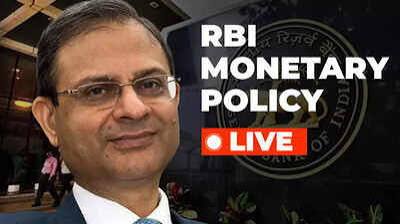
The Reserve Bank of India (RBI) has raised the benchmark repo rate by 25 basis points to 5.50% in its October 2026 Monetary Policy Committee (MPC) meeting, marking the central bank’s first rate hike in nearly four years. RBI Governor Sanjay Malhotra announced the decision on Wednesday as policymakers responded to rising inflationary pressures, strong economic activity and external risks affecting the Indian economy.
The six-member MPC voted unanimously in favour of the 25-basis-point increase. Along with the rate hike, the central bank changed its monetary policy stance from “neutral” to “calibrated tightening,” signalling a greater focus on containing inflation while continuing to monitor economic growth and global developments.
Repo Rate Raised to 5.50%
The latest decision takes the repo rate from 5.25% to 5.50%. The repo rate is the interest rate at which the RBI lends short-term funds to commercial banks. Changes in this rate can influence borrowing costs across the economy, including interest rates on loans and other credit products.
The October increase is particularly significant because it is the RBI’s first repo-rate hike since February 2023. The central bank had previously reduced rates during 2025, with the policy rate eventually reaching 5.25%.
The latest move indicates a shift in the RBI’s policy priorities as inflation risks have become more prominent even though economic growth remains resilient.
Why Did the RBI Raise Rates?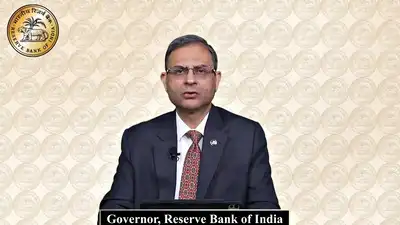
Inflation has emerged as a key concern for policymakers. According to Governor Malhotra, headline consumer inflation is expected to average around 5.8% over the next three quarters, significantly above the RBI’s medium-term target of 4%.
The central bank is also keeping a close watch on energy prices. Rising global oil prices linked to the ongoing geopolitical situation are adding pressure to inflation and could increase costs across transportation, manufacturing and other sectors.
At the same time, domestic economic activity remains strong. The RBI has noted rapid growth in monetary and bank-credit aggregates, with bank credit growth reaching 18.8% in October, reflecting strong demand in the economy.
Policy Stance Shifted to ‘Calibrated Tightening’
One of the most important takeaways from the October MPC meeting is the change in policy stance.
The RBI moved from its earlier neutral stance to “calibrated tightening.” The change suggests that policymakers are prepared to use monetary policy to address inflationary pressures if required.
However, Governor Malhotra indicated that the timing and extent of any further rate increases would depend on incoming data, particularly developments in inflation, growth, global energy prices and financial conditions.
This means the latest hike does not automatically signal a predetermined series of increases. Future policy decisions will continue to be data-dependent.
RBI Keeps CRR Unchanged
Markets had also been watching whether the RBI would increase the Cash Reserve Ratio (CRR) to absorb excess liquidity from the banking system. The central bank, however, did not announce a CRR hike.
Malhotra said the RBI would use an appropriate combination of liquidity-management tools. He indicated that raising the reserve ratio would be the central bank’s least-preferred option.
The RBI has instead been using measures including bond sales, foreign-exchange swaps and variable-rate reverse repos to manage liquidity conditions.
Banking System Has Excess Liquidity
The RBI is currently dealing with a substantial surplus of liquidity in the banking system. According to Governor Malhotra, the average surplus has been around ₹7.3 lakh crore, equivalent to roughly 2.7% of deposits, since the beginning of September.
The excess liquidity was largely generated by dollar inflows associated with one-off investment schemes. Malhotra said these conditions were temporary and expected a significant portion of the surplus to be absorbed by the end of the financial year through currency leakage, reserve requirements and RBI operations.
Impact on Loans, EMIs and Deposits
The 25-basis-point repo-rate increase could eventually translate into higher borrowing costs if banks pass on the increase to customers.
Borrowers with floating-rate home loans, personal loans and business loans could see their interest costs rise depending on how individual banks adjust their lending rates. Existing borrowers may experience an increase in EMIs or a longer repayment period.
For depositors, however, a higher-rate environment can potentially provide support to fixed-deposit and other interest-bearing savings products as banks reassess their deposit rates.
The actual impact will depend on how quickly and fully banks transmit the RBI’s policy decision.
Rupee Under Pressure
The RBI’s decision also comes at a time when the Indian rupee is facing significant pressure. The currency slipped close to its record low against the US dollar on Wednesday, with Governor Malhotra saying that financial markets can behave irrationally in the short term.
He also indicated that several indicators, including the real effective exchange rate, suggest the rupee may be undervalued. The RBI has been intervening in the foreign-exchange market to maintain orderly conditions.
India’s foreign-exchange reserves have also declined in recent weeks amid market intervention.
Read more like this:
- बेंगलुरु में 8 अक्टूबर को CJP का ‘चप्पल प्रोटेस्ट’, प्रकाश राज भी होंगे शामिल; SIR को लेकर विरोध
- BrahMos Aerospace Secures ₹661.50-Crore Navy Contract as India Boosts Maritime Strike Capability
What Happens Next?
The October MPC decision marks a clear change in the RBI’s policy direction. With the repo rate now at 5.50% and the stance shifted to calibrated tightening, inflation and global energy prices are likely to remain key factors for future policy decisions.
At the same time, the RBI will have to balance price stability with economic growth and financial-market stability. Governor Malhotra has indicated that future rate decisions will depend on actual inflation and growth data rather than follow a fixed path.
For households and businesses, the immediate message is that borrowing costs could remain under upward pressure, while the central bank’s next moves will depend heavily on how inflation, oil prices, liquidity and the rupee evolve in the coming months.