Join
Join
 Shorts

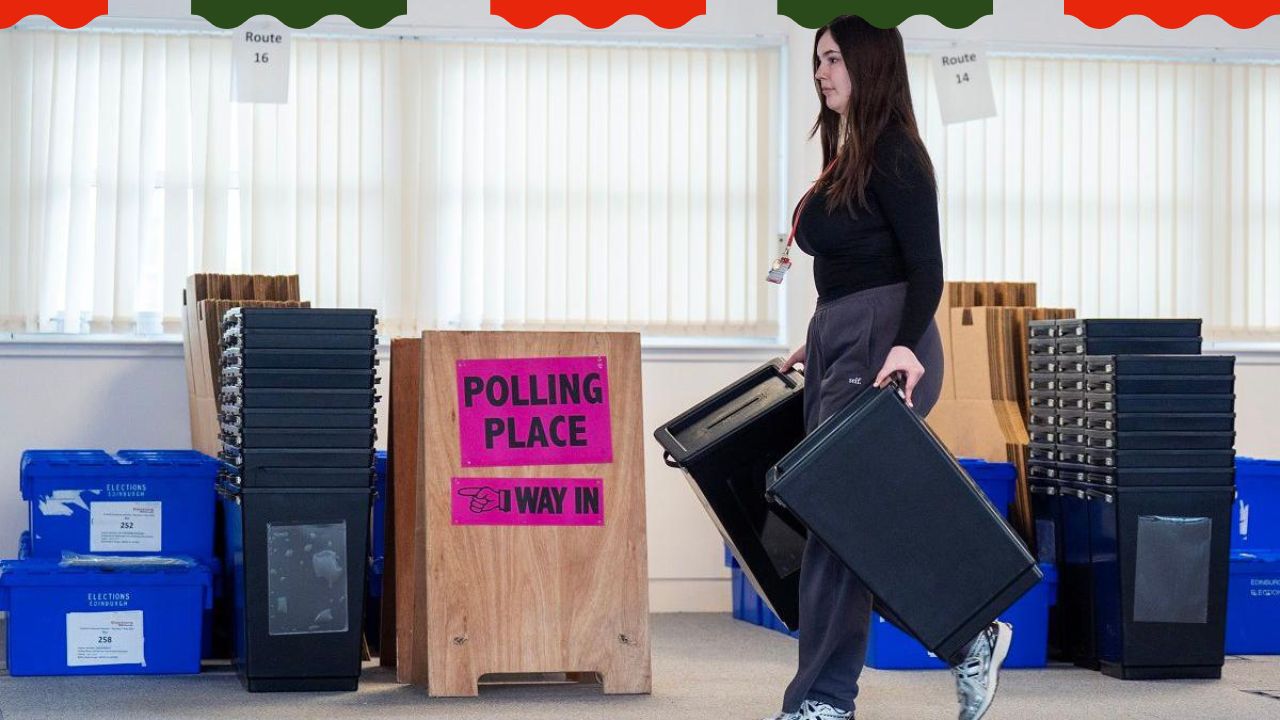
Polls Open Across Britain in Biggest Election Day Since 2024: The polling stations began to open at 7 am today throughout England, Scotland, and Wales in what experts consider to be the most significant day of voting since the general election of 2024.
On May 7, the voters of Scotland, Wales, and England will vote in a significant series of local and devolved elections, which will be an important political test for the chief minister, Keir Starmer. The polls will be open until 10 pm this evening.
What Is Being Voted On?
The day includes three distinct, yet overlapping, contests. Local elections are being held across England, and devolved Parliament elections are currently taking place throughout the two countries of Scotland and Wales.
More than 25,000 people were nominated to run in this year’s English local elections in the UK alone. Reform UK, Labour, and the Conservatives, as well as the Green Party, all stood candidates in more than 95% of the wards.
In Scotland, this election will determine 129 members for the Scottish Parliament. This is the seventh general election since the devolved legislature was reinstated in 1999.
In Wales, the Senedd will comprise 96 members, who will be selected from all over Wales, which is a substantial increase from the previous 60-seat representation.
Read Also: US Secretary of State Marco Rubio’s Diplomatic Mission to the Vatican and Italy
England: Labour Braces for Heavy Losses
The English local elections are set to be a bloody night for the ruling Labour Party. Labour defends more than 250 seats. The BBC stated that Labour will enter the election with low numbers of votes.
Labour is predicted to suffer a significant loss, with the biggest losses occurring in the northern boroughs of metropolitan areas in which Reform is gaining momentum. The party currently polls at 20 per cent, a drop from 35 per cent when the seats were last in the race in 2022.
Reform UK is the story of the night in England. The party has gone from having minuscule local support in 2022 to polling at least 27% across the country and is predicted to be in the county councils of Essex, Norfolk, and Suffolk—a landmark shift in England’s rural regions.
Within the West Midlands, Reform UK is expected to achieve significant gains and is in contention to be the top vote-getter across all 13 council areas, including double-digit share gains in seven of the areas. The losses for Labour in the West Midlands are expected to be staggering—their vote share is predicted to drop by 30 points from 2022 to Birmingham and as high than 32 percentage points for Sandwell.
The sway between the major parties comes to an end. Local elections last year resulted in Labour as well as the Conservatives getting the lowest percentage in council seats since the 1970s. This is likely to increase the pace of change, with five parties currently getting double-digit results.
The Greens have been appearing as an unknown. With a polling score of 12-14%, an unnamed chief, and 5 MPs in the party, the Greens may be able to take Hastings and take on Norwich, Sheffield, and inner London.
Scotland: SNP Eyes Fifth Term, But Majority in Doubt
At Holyrood, the Scottish National Party is expected to be re-elected. However, whether it will be able to achieve the absolute majority the first minister, John Swinney, needs to press his independence agenda is uncertain.
On May 6, 2026, the PollCheck five-poll moving mean shows the SNP in the lead with 36.4 per cent, which is ahead of Labour with 18.2 percent as well as Reform UK at 17.8 per cent.
A poll for election day forecasts the SNP to be unable to secure an absolute majority, and Reform UK is predicted to come second, a top SNP government minister at risk, as well as an unpopular Scottish Conservative leader failing to gain an election seat.
The issue of independence is big. Swinney has pledged to bring independence in the event of a re-election and has proposed an overwhelming majority as the reason to hold a new independence referendum, based on the precedent established by the majority in 2011.
Reform UK’s rise north of the border is among the major subplots of the evening. Reform is likely to gain a voice, possibly becoming the most unionist party at Holyrood.
Wales: Historic Change Expected as Labour May Lose Power
Wales could produce the most dramatic results that night. Changes in the government are anticipated in Wales, the country in which Labour is trailing both Plaid Cymru and Reform UK in the polls.
An MRP survey conducted by The Telegraph predicts that Plaid Cymru will be the most popular group across Wales, having 33 out of 96 Senedd seats, Reform UK second with 29 seats, and Labour coming in third with only 17 seats. If the poll is confirmed, it will be the first time Labour has been unable to win Wales since devolution was first introduced in 1999, a historic event within Welsh political history.
Read Also: Jeffrey Epstein Suicide Note Revealed “Watcha Want Me To Do? Bust Out Crying” Sparks New Questions
The Bigger Picture: A Political System in Flux
The insurgencies can take a variety of shapes: Reform drawing on cost-of-living anger and anti-immigration sentiments; the Greens profiting from the progressive discontent with Labour; and Plaid Cymru focusing on national identity and discontent with the political party that has been in charge of Wales for a quarter of a century. All are driven by the same discontent with stagnant living standards as well as an increasing feeling that the current political system is not delivering.
This will be the second round of local elections held under the reign of Keir Starmer. They will be held during an era of discontent for the ruling Labour Party. Results that are set to appear in the early morning hours of Friday are expected to change the political landscape prior to the upcoming general election.