Join
Join
 Shorts

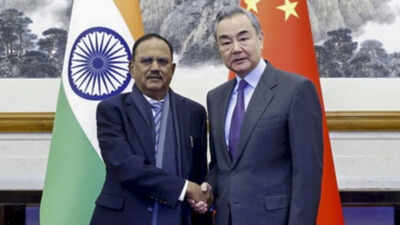
India and China have announced an eight point consensus on the long running boundary question following high level talks between National Security Adviser Ajit Doval and Chinese Foreign Minister Wang Yi in Beijing.
The development has been seen as an important step in efforts to stabilise relations between the two Asian powers ahead of Chinese President Xi Jinping’s expected visit to India for the upcoming BRICS summit.
The consensus emerged during the 25th round of talks between the Special Representatives of India and China on the boundary question. Both sides agreed to strengthen dialogue, improve border management and work towards an early and substantial outcome in boundary delimitation.
Ajit Doval and Wang Yi Lead Crucial Talks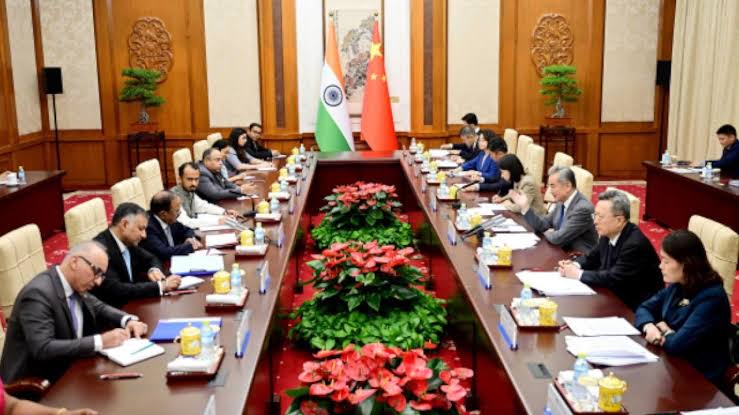
The discussions were co chaired by India’s National Security Adviser Ajit Doval and China’s Foreign Minister Wang Yi, who serve as Special Representatives for their respective countries on the boundary issue.
The two leaders reviewed the overall state of bilateral relations and discussed measures aimed at maintaining peace and tranquillity along the Line of Actual Control.
The talks came at a significant time as both countries have gradually attempted to improve communication and reduce tensions following years of military standoffs along their disputed Himalayan border.
Focus on Early and Substantial Progress
One of the most significant elements of the eight point consensus is the decision to advance discussions on an early and substantial harvest in boundary delimitation and border management.
The two sides agreed that an Expert Group on Boundary Delimitation and a Working Group on Border Management would take forward discussions under the existing Working Mechanism for Consultation and Coordination on India China Border Affairs.
Their immediate task will be to establish their respective terms of reference before moving forward with detailed discussions.
New Mechanisms for Boundary Delimitation
The proposed Expert Group on Boundary Delimitation is expected to focus specifically on advancing discussions related to the unresolved boundary question.
Meanwhile the Working Group on Border Management will focus on improving the management of the Line of Actual Control and reducing the possibility of confrontations or misunderstandings between military forces.
The creation of these mechanisms reflects an attempt by both countries to move beyond crisis management and establish more structured channels for dealing with sensitive border issues.
Preventing Misunderstanding and Miscalculation
India and China also agreed on the importance of promptly addressing situations along the border to prevent misunderstanding and miscalculation.
The two countries have experienced several tense confrontations along the Line of Actual Control in recent years. The expansion of communication mechanisms is therefore being viewed as an important confidence building measure.
Better coordination between diplomatic and military channels could help both sides respond more quickly to incidents and prevent local situations from escalating into wider confrontations.
Commitment to Fair and Mutually Acceptable Solution
Both sides reaffirmed their commitment to working towards a fair reasonable and mutually acceptable settlement of the boundary question.
The discussions also referred to the existing political parameters and guiding principles that have previously been agreed upon by India and China.
Despite the latest progress, the boundary dispute remains one of the most complex issues in bilateral relations. Any final settlement is expected to require extensive political negotiations and agreement on several sensitive territorial questions.
Xi Jinping’s Expected Visit Adds Significance
The eight point consensus has come shortly before Chinese President Xi Jinping’s expected visit to India.
Xi is expected to attend the BRICS summit in India in September, which would mark his first visit to the country in seven years. His visit could provide an opportunity for further high level engagement between New Delhi and Beijing.
The recent progress in border discussions is being viewed as an effort to create a more stable environment before the high profile diplomatic engagement.
Relations Show Signs of Gradual Improvement
India and China have gradually increased diplomatic engagement after a prolonged period of tension.
The two countries reached a disengagement understanding in 2024 after years of military tensions at several points along the border. Since then both sides have attempted to restore communication and explore areas of cooperation while continuing negotiations over unresolved boundary issues.
The latest consensus suggests that both governments are interested in preventing border tensions from dominating the wider bilateral relationship.
Border Management Remains a Priority
Although the latest agreement represents diplomatic progress, both countries still face the challenge of managing one of the world’s longest and most disputed borders.
The Line of Actual Control has never been fully and mutually delineated, creating differences in perceptions and occasional confrontations between Indian and Chinese forces.
Improved communication, stronger crisis management mechanisms and continued dialogue are expected to remain essential while negotiations over a long term political settlement continue.
Read more like this :
What Happens Next
The newly proposed Expert Group on Boundary Delimitation and Working Group on Border Management will first work on defining their terms of reference.
India and China are expected to continue discussions on achieving meaningful progress while strengthening mechanisms aimed at maintaining peace along the border.
Attention will now turn to President Xi Jinping’s expected visit to India and whether the improving diplomatic engagement can lead to further progress on one of the most difficult issues in India China relations.
The eight point consensus does not resolve the decades old boundary dispute, but it represents a significant attempt by both sides to move towards structured negotiations, improved border management and an early and substantial outcome in the future.