Join
 Shorts

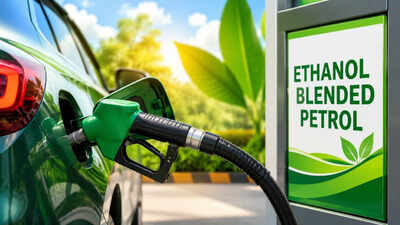
India has taken an important step towards promoting alternative fuels in the automobile sector. The Central Government has amended the Central Motor Vehicles Rules, 1989, to formally allow flex-fuel vehicles capable of running on ethanol blends of up to E100. The decision, notified by the Ministry of Road Transport and Highways in October 2026, clears a major regulatory hurdle for automakers preparing to introduce ethanol-compatible cars.
The move is part of India’s broader strategy to reduce dependence on imported crude oil, encourage domestic biofuel production and diversify the country’s transport energy sources. However, the approval applies only to vehicles specifically designed and certified for high-ethanol fuels.
What Is E100 Fuel? 
Understanding Ethanol-Based Fuel
E100 refers to fuel containing nearly 100% ethanol, while E85 contains 85% ethanol and 15% petrol. Ethanol is an alcohol-based fuel that can be produced from agricultural feedstocks such as sugarcane, maize and other biomass sources.
Unlike conventional petrol cars, flex-fuel vehicles are specially engineered to operate on different proportions of petrol and ethanol. Depending on their design and certification, these vehicles can use a range of fuel blends, potentially extending from E20 to E100.
How Flex-Fuel Technology Works
Flex-fuel vehicles use specially designed fuel-system components, compatible materials and electronic engine controls. These systems adjust engine operation according to the fuel composition, allowing the vehicle to operate safely on approved ethanol-petrol mixtures.
However, ordinary petrol vehicles cannot automatically use E85 or E100. Their engines and fuel systems may not be designed to handle such high ethanol concentrations.
What Has the Government Changed?
Amendment to Motor Vehicle Rules
The Ministry of Road Transport and Highways has amended the Central Motor Vehicles Rules, 1989, to include E100 alongside E85 in relevant emission certification and testing provisions.
The change establishes a formal regulatory framework for manufacturers to obtain the necessary certification for vehicles designed to operate on higher ethanol blends. The amendments also revise certain technical provisions and increase the applicable vehicle weight threshold in specified emission standards from 3,000 kg to 3,500 kg.
This regulatory recognition is significant because manufacturers need clear technical and legal standards before bringing new fuel technologies to the market.
Automakers Prepare for E100 Vehicles
New Opportunities for the Automobile Industry
The regulatory approval is expected to encourage automobile manufacturers to accelerate the development and introduction of flex-fuel vehicles in India.
Maruti Suzuki has been developing its Wagon R Flex Fuel, designed to operate on ethanol-petrol blends ranging from E20 to E100. Other major manufacturers, including Toyota, Tata Motors and Hyundai, have also shown interest in flex-fuel technology.
The new framework provides greater clarity for manufacturers seeking to develop vehicles compatible with higher ethanol concentrations. However, regulatory approval alone does not guarantee immediate commercial availability or widespread adoption.
Benefits of E100 Fuel for India
Reduced Dependence on Crude Oil Imports
India imports a substantial share of its crude oil requirements, making its economy vulnerable to international oil price fluctuations and geopolitical disruptions.
Greater use of domestically produced ethanol could reduce the demand for imported petroleum and strengthen India’s energy security. It may also create additional markets for agricultural products used in ethanol production.
Environmental Advantages
Ethanol-based fuels can reduce certain tailpipe pollutants when used in appropriately designed engines. Depending on the feedstock, manufacturing process and overall fuel lifecycle, ethanol may also offer lower greenhouse gas emissions than conventional petrol.
Nevertheless, the environmental benefits depend on how the ethanol is produced, the energy consumed during manufacturing and the agricultural practices involved.
Challenges in Adopting E100 Cars
Limited Fuel Availability
One of the major challenges is the availability of E100 fuel at petrol stations. Even if compatible vehicles enter the market, consumers will need convenient access to suitable fuel supplies.
Expanding production, storage, transportation and retail infrastructure will therefore be essential for wider adoption.
Fuel Economy and Vehicle Costs
Ethanol contains less energy per litre than petrol. Consequently, vehicles running on high-ethanol blends may consume more fuel to cover the same distance, depending on their design and operating conditions.
Manufacturers must also ensure that flex-fuel vehicles remain affordable and competitive with conventional petrol cars, electric vehicles and hybrids.
Existing Cars Cannot Use E100
The government has clarified that vehicles designed for conventional petrol or E20 cannot use E85 or E100 unless they are specifically designed and certified for those fuels. Owners should follow the manufacturer’s instructions and use only approved fuel.
Read more like this:
- फॉर्म-6 जमा करने पर हटाए गए मतदाताओं के खिलाफ मुकदमा नहीं चलेगा: सुप्रीम कोर्ट का आश्वासन
- मुख्य चुनाव आयुक्त को भी सुप्रीम कोर्ट के न्यायाधीश की तरह ही हटाया जा सकता है: निर्वाचन आयोग
Conclusion
The regulatory approval for E100-compatible cars marks an important development in India’s transition towards alternative transport fuels. By formally recognising high-ethanol flex-fuel vehicles, the government has opened the way for automakers to introduce new technologies and contribute to domestic biofuel demand.
However, the success of this initiative will depend on affordable vehicles, reliable fuel availability, appropriate infrastructure and clear long-term policies.
E100 is not an immediate replacement for petrol across India’s existing vehicle fleet. Instead, it represents another option in the country’s broader energy transition. With coordinated efforts from the government, automobile manufacturers, fuel suppliers and ethanol producers, flex-fuel technology could contribute to improved energy security, agricultural opportunities and a more diversified transport sector.