Join
 Shorts

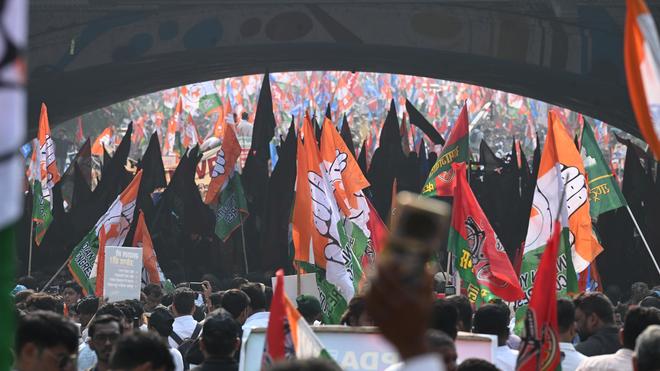
Thousands of people from different parts of the country gathered at Delhi’s historic Ramlila Maidan on November 1, 2026, to participate in a major rally organised by the INDIA bloc. The gathering brought together political workers, students, farmers, youth organisations, women’s groups and ordinary citizens, all united by their concerns over alleged irregularities in electoral rolls and the Special Intensive Revision (SIR) exercise.
The rally, which witnessed participation from several opposition parties, was projected as a united movement to protect democratic values, voting rights and the credibility of the electoral process. The slogan, “You can break a stick, but not a bundle,” became a powerful expression of the opposition’s message that unity is its greatest strength.
People Travelled Long Distances to Join the Protest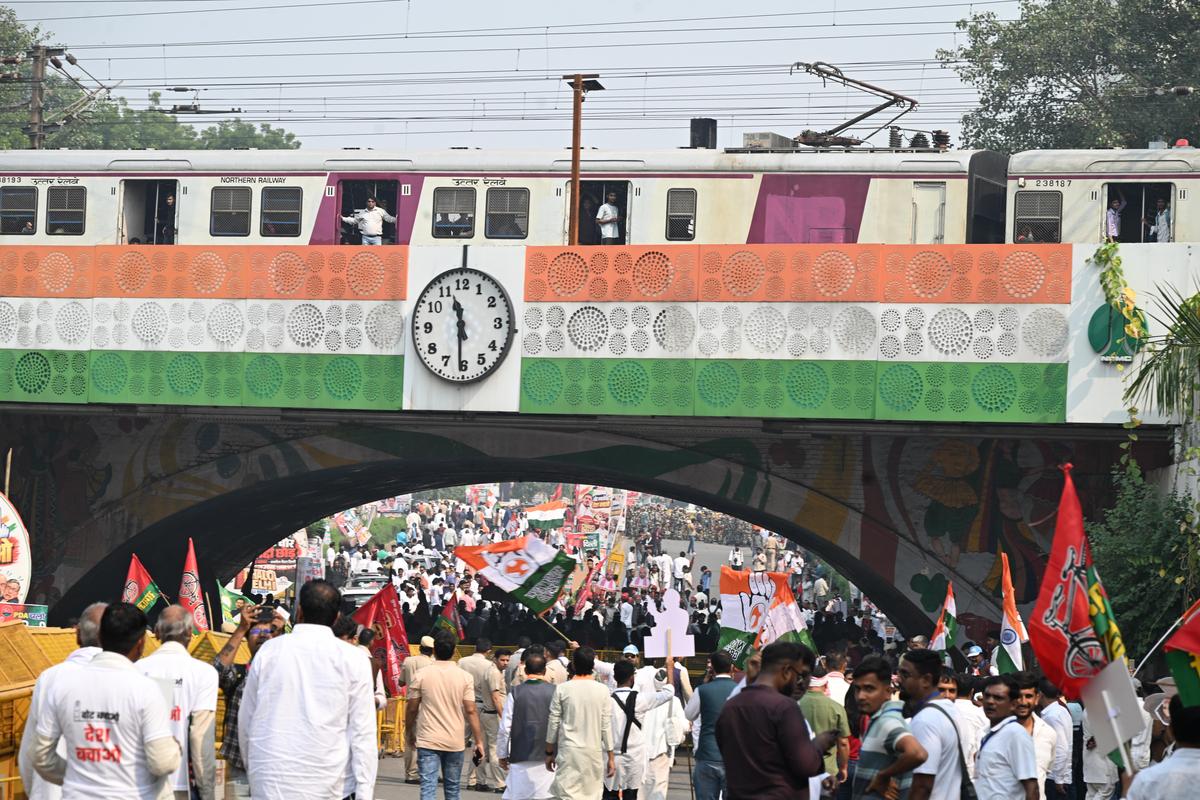
The most remarkable aspect of the rally was the determination of participants who travelled hundreds and even thousands of kilometres to reach the national capital. People from Telangana, Maharashtra, Uttar Pradesh, Jharkhand and other states made considerable efforts to attend the gathering.
Some participants reportedly travelled for nearly 48 hours in sleeper buses after facing difficulties with railway arrangements. Others booked tickets from different stations to overcome restrictions on bulk reservations.
For many, the journey was not simply about attending a political programme. It was an opportunity to raise their voices against issues they believed were affecting their democratic rights.
An IT professional, Tejender, who arrived with his wife from Gurugram, explained the importance of unity through the example of a bundle of sticks. He said that while a single stick could easily be broken, several sticks tied together could not be broken so easily.
His words reflected the central message of the INDIA bloc rally: collective action can create a stronger voice than individual protests.
Electoral Roll Revision Becomes the Main Issue
The Special Intensive Revision of electoral rolls emerged as the principal issue behind the mobilisation. Opposition parties have alleged that the exercise has resulted in the removal of genuine voters’ names from electoral lists, potentially depriving eligible citizens of their right to vote.
Several participants shared personal experiences of difficulties in getting their names restored to the electoral rolls.
Abdul Kaleem, who travelled from Telangana’s Suryapet district, claimed that nearly 80 per cent of the people in his village had lost their voting rights because their names were removed during the revision process.
He expressed frustration over being asked to produce documents relating to his father and grandfather despite having been born, educated and living in the same village.
Similarly, Zubair from Nagpur, Maharashtra, said that he had been struggling to get his family members’ names included in the electoral rolls. He hoped that participating in the Delhi protest would help draw attention to the difficulties faced by ordinary voters.
A Rally Beyond Political Boundaries
The gathering was not limited to established political workers. It also attracted independent citizens, professionals, students and people from different social backgrounds.
An especially striking participant was Azka, a Delhi-based café owner who attended the demonstration despite recently being hospitalised with typhoid. With an intravenous cannula still in her arm, she reached the protest site to express solidarity with the movement.
Her participation reflected the emotional significance the issue had acquired among some citizens.
For others, the rally represented an opportunity to experience national politics first-hand. Ram Kumar from Jharkhand’s Giridih district travelled with a group of around 60 people. It was his first visit to Delhi, and he described the experience as memorable.
The presence of people with different professions, backgrounds and political interests gave the gathering a wider social character.
Opposition Leaders Target Election Commission
Several opposition leaders used the occasion to question the functioning of the electoral system and demand accountability from the Election Commission.
Protesters raised slogans of ‘Vote Chori’ and demanded the resignation of Chief Election Commissioner Gyanesh Kumar. They also called for the rollback of the SIR exercise.
Congress leaders alleged that attempts had been made to prevent supporters from reaching Delhi. K.C. Venugopal claimed that restrictions and other obstacles were created to discourage people from participating in the demonstration.
These allegations formed an important part of the opposition’s criticism, although the claims remain contested.
INDIA Bloc Attempts to Strengthen Opposition Unity
The rally also carried considerable political significance for the INDIA bloc. Bringing together parties with different regional interests and political priorities has remained a major challenge for the opposition alliance.
The large gathering provided an opportunity to demonstrate coordination and present a collective position on issues concerning democratic institutions.
For the participating parties, the protest was also a test of their ability to mobilise ordinary citizens beyond traditional party boundaries.
However, the long-term impact of such mobilisation will depend on whether the alliance can maintain unity, develop a common political strategy and convert public participation into sustained action.
Read more like this:
- रामलीला मैदान में उमड़ा जनसैलाब, राहुल गांधी की चेतावनी—‘ज्ञानेश कुमार जाएंगे जेल’, INDIA गठबंधन ने भरी हुंकार
- पंजाब विधानसभा चुनाव: AAP की पहली लिस्ट जारी, 40 उम्मीदवारों के नाम शामिल; धूरी से चुनाव लड़ेंगे CM भगवंत मान
The Road Ahead: Protecting Every Voter’s Right
The Delhi rally has once again brought electoral transparency and voting rights into the centre of national political debate.
While opposition parties have demanded greater accountability and safeguards against wrongful deletion of names, the Election Commission’s position and the government’s response will remain important in determining the next stage of the controversy.
Ultimately, the strength of a democracy lies in ensuring that every eligible citizen can exercise the right to vote without unnecessary difficulties.
The message of the rally was clear: people from different regions and backgrounds can come together when they believe a common cause deserves attention. Whether this unity develops into a lasting political movement remains to be seen, but the massive gathering at Ramlila Maidan has certainly made the issue more prominent in India’s political conversation.