Join
 Shorts

A Critical Diplomatic Moment
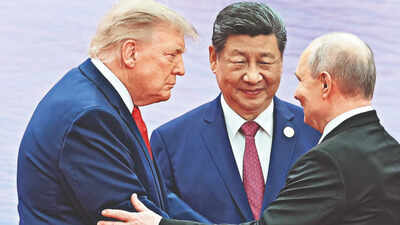
The proposed meeting of US President Donald Trump, Chinese President Xi Jinping and Russian President Vladimir Putin in Shenzhen comes at a defining moment in world politics. Wars in Ukraine and Iran, uncertainty over nuclear arms control and economic rivalry have raised questions about global stability. The gathering has therefore invited comparisons with the Yalta Conference of 1945. The key question is whether the three leaders can reduce tensions or reinforce a world divided by competing powers.
From Yalta to Shenzhen: A Changing World Order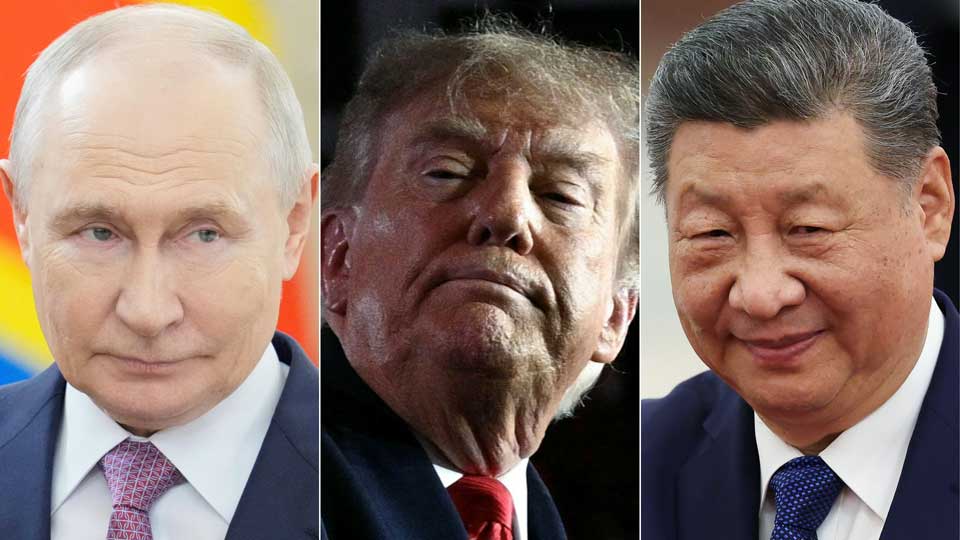
In February 1945, US President Franklin D. Roosevelt, British Prime Minister Winston Churchill and Soviet leader Joseph Stalin met at Yalta to discuss Nazi Germany’s defeat and post-war Europe. They discussed Germany’s occupation, Eastern Europe and the proposed United Nations. Disagreements over political freedom and Soviet influence later contributed to the Cold War.
Shenzhen is not another Yalta. The countries are competitors, not wartime allies. Yet their power gives the meeting global importance, and their decisions could affect countries absent from the negotiating table.
Nuclear Arms: The Need for a New Agreement
Nuclear security is one of the summit’s most urgent challenges. New START, the last major nuclear arms-control treaty between the United States and Russia, expired in February 2026. It limited deployed weapons and provided verification measures. Its expiry raises fears of renewed competition.
Trump has expressed interest in a wider agreement involving China. Beijing, however, has resisted negotiations based on equal numerical limits because its nuclear arsenal is much smaller than those of Washington and Moscow. China is unlikely to accept restrictions that constrain its deterrent while the other two retain much larger stockpiles.
A practical beginning would be dialogue, transparency and safeguards against miscalculation.
Ukraine and Iran: Can Diplomacy End Two Wars?
The wars in Ukraine and Iran add urgency to the talks. Russia’s invasion of Ukraine has transformed European security and triggered extensive Western sanctions. China remains an important economic partner for Moscow, though its interests differ from those of Washington and Kyiv.
Any lasting settlement must respect Ukraine’s sovereignty and address its security. A deal made without Ukraine’s meaningful participation could lack legitimacy.
Iran presents a different challenge. The three powers have different interests in the region. De-escalation requires direct diplomacy with the countries concerned, not decisions imposed from outside.
Personal Diplomacy Versus National Interests
Trump often presents personal relationships as a way to resolve international disputes. Engagement may reopen communication, but cannot erase disagreements over security, trade and influence.
Xi can use the meeting to highlight China’s diplomatic role. Putin can demonstrate that Russia remains an important international actor despite Western pressure. Trump can present himself as a dealmaker able to engage both competitors. Each will judge outcomes by national interests.
Trade, Technology and Global Competition
The agenda also includes US-China tensions over tariffs, rare-earth minerals, semiconductors and artificial intelligence. Rare earths are essential to modern manufacturing and defence, while advanced chips are central to AI development.
Cooperation could benefit the global economy. But lasting confrontation could fragment supply chains and create uncertainty for smaller economies.
The international community will also watch closely. Smaller states depend on predictable rules, open trade routes and institutions that prevent disputes from becoming wars. If major powers make decisions over their heads, mistrust may deepen. The United Nations and regional organisations must therefore remain part of the diplomatic process. Great-power cooperation matters, but it should strengthen international law rather than weaken it.
Read more like this:
- आजम खान को गाजियाबाद की डासना जेल से मिली रिहाई, मनी लॉन्ड्रिंग मामले में इलाहाबाद हाईकोर्ट ने दी अंतरिम जमानत
- अखिलेश यादव की गोरखपुर रथ यात्रा में दर्दनाक हादसा: फूल बरसाने वाले बुलडोजर ने ली BJP नेता के बेटे की जान
Conclusion: A Test, Not Yet a Turning Point
Calling the Shenzhen meeting “Yalta 2.0” may be premature. The 1945 conference helped shape the post-war order but also exposed disagreements that contributed to decades of division. Today’s world has more influential actors and deeper economic connections.
Their responsibility is not to divide the world into spheres of influence, but to reduce the dangers of nuclear competition, war and economic confrontation. Progress requires inclusive talks, respect for sovereignty and verifiable agreements.
Success should be judged by concrete steps towards arms control, peace and cooperation, not handshakes. What follows Shenzhen will determine whether it becomes a turning point.