Join
 Shorts

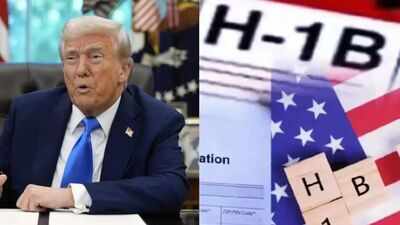
Trump administration has proposed a significant change to the US immigration system by moving to end the policy of “deference to prior approvals” for H-1B visa extensions. The proposed move could create additional uncertainty for thousands of Indian professionals working in the United States, particularly those waiting for employment-based Green Cards.
For many Indian employees, an H-1B visa is not simply a temporary work permit. It is an important means of maintaining legal employment and residence in the US while waiting for permanent residency. Since the Green Card backlog for Indian applicants can stretch over several decades, many professionals depend on repeated H-1B extensions to continue their careers.
The proposed policy could make these renewals more complicated by allowing immigration officers to reassess applications more independently, even when earlier petitions were approved.
What Is the H-1B Deference Policy?
The deference policy refers to the practice followed by US Citizenship and Immigration Services (USCIS) when examining applications for visa extensions.
Under the existing system, if an employer files an extension petition for the same employee under substantially similar circumstances, USCIS generally gives importance to its previous approval. This means that immigration officers normally do not reconsider every aspect of the case unless there is a material error, a significant change in circumstances or new information affecting eligibility.
The Trump administration has proposed removing this requirement. If the proposal becomes final, officers will have greater freedom to examine each extension application afresh.
This does not mean that previous approvals will automatically become invalid. However, workers and employers may have to provide stronger evidence to demonstrate that all immigration requirements continue to be satisfied.
Why Are Indian Professionals Particularly Concerned?
Indian nationals represent a major proportion of the US H-1B workforce. According to USCIS data cited in reports, Indians accounted for approximately 70 per cent of H-1B beneficiaries in fiscal year 2025.
The situation is particularly challenging because of the employment-based Green Card backlog.
A report by the National Foundation for American Policy (NFAP) estimates that nearly one million Indians are waiting for employment-based Green Cards, representing approximately 79 per cent of the total backlog in the first three employment-based preference categories.
Under the NFAP’s modelling assumptions, an Indian applicant entering the EB-2 queue in 2026 could face a potential waiting period of 179 years, while the estimated wait for EB-3 could reach 38 years.
These are projections rather than guaranteed waiting periods, but they demonstrate the serious difficulties created by the backlog.
As a result, many Indian professionals depend on extensions beyond the normal six-year H-1B period under provisions of the American Competitiveness in the Twenty-First Century Act (AC21).
How Could the New Proposal Affect H-1B Extensions?
The biggest concern is that every extension application could face more detailed scrutiny.
Immigration officers may examine several aspects of an employee’s case, including:
- Whether the position qualifies as a specialty occupation.
- Whether the employee’s salary meets applicable wage requirements.
- Whether the employer-employee relationship remains valid.
- Whether the employee’s job responsibilities have changed.
- Whether the employer’s business operations and work arrangements support the petition.
Consequently, even professionals who have received multiple successful extensions could face additional questions during future renewals.
The proposal does not automatically mean that applications will be rejected. However, it could increase requests for evidence, administrative procedures and uncertainty for workers and employers.
Additional Burden on US Employers
The proposed change could also increase the administrative responsibilities of American companies hiring foreign professionals.
Employers may need to submit more detailed documents regarding employee qualifications, salary structures, job descriptions, contracts, work locations and business operations.
According to the Department of Homeland Security (DHS), the proposed change could result in approximately 6,044 additional Requests for Evidence (RFEs) annually.
Although the estimated additional annual administrative costs are relatively limited at around $133,987, the broader impact could include increased legal expenses, additional paperwork and delays in processing applications.
For technology companies and other businesses that depend on international talent, these developments could also make long-term workforce planning more complicated.
Why Does the Trump Administration Want This Change?
The administration argues that the existing deference policy may prevent immigration officers from examining applications thoroughly.
According to DHS, relying heavily on previous approvals could allow incorrect or unsupported petitions to receive subsequent approvals without sufficient examination.
The government believes that every extension application should independently demonstrate that the applicant continues to meet the requirements of the relevant visa category.
The administration has presented the proposal as part of its broader effort to strengthen immigration enforcement, improve programme integrity and protect employment opportunities for American workers.
However, immigration professionals have raised concerns about the additional uncertainty that the change could create for genuine foreign workers who have maintained lawful employment for many years.
What Happens Next?
The proposed rule was published on October 14, 2026, and is not yet final. The public comment period is scheduled to remain open until November 13, 2026.
Employers, immigration lawyers, professional organisations and affected workers can submit their views during this period.
Until a final rule is published and becomes effective, the existing deference policy remains applicable.
Read more like this:
Conclusion
The Trump administration’s proposal to end deference to previous H-1B approvals could significantly change the experience of Indian professionals waiting for US Green Cards.
Although it will not directly change Green Card priority dates or automatically cancel existing H-1B approvals, it could make future visa extensions more complicated and increase scrutiny of employment-related documents.
For Indians who have spent years building their careers in the United States while waiting for permanent residency, the proposal introduces another layer of uncertainty.
The coming weeks will be important as the government considers public feedback before deciding whether to implement the proposed changes. Ultimately, the impact will depend on the final regulations and how USCIS applies them to future extension applications.