Join
 Shorts

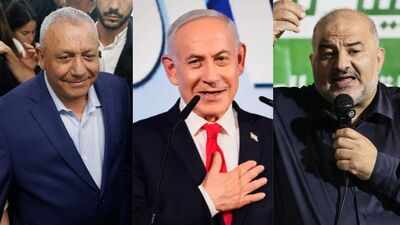
Israel’s latest parliamentary elections have created a complicated political situation, with Arab political parties emerging as potential kingmakers in the formation of the next government. Prime Minister Benjamin Netanyahu’s Likud-led alliance has failed to secure the required parliamentary majority, opening the possibility of a major political shift in the country. The results have placed Arab parties at the centre of coalition negotiations, as their support could determine whether Netanyahu remains in power or the opposition succeeds in forming a new government.
The election results have once again highlighted the importance of coalition politics in Israel and raised questions about the political participation and influence of the country’s Arab minority.
Election Results Create Political Uncertainty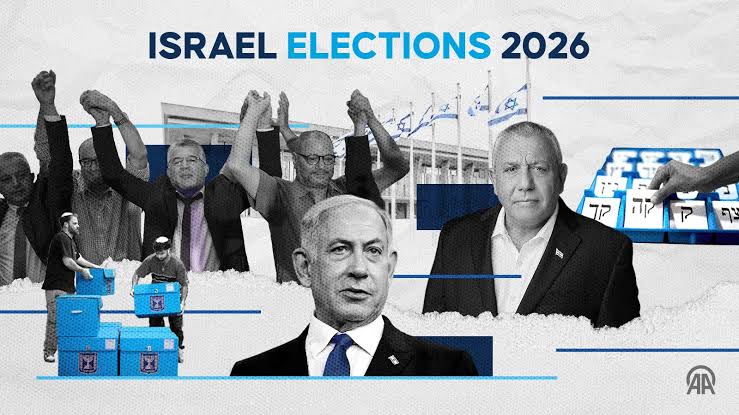
Israel’s parliament, known as the Knesset, has a total of 120 seats. A political alliance needs at least 61 seats to secure a parliamentary majority and form a government.
According to the final election results, Netanyahu’s Likud-led bloc secured 53 seats, while the four main opposition parties won 48 seats. The remaining 19 seats went to Arab political factions, making them crucial to the government formation process.
The Likud emerged as the largest individual party with 27 seats, while opposition leader Gadi Eisenkot’s Yashar party secured 21 seats. Among the Arab political groups, the Joint List won 11 seats and Mansour Abbas’s Ra’am party secured eight seats.
Neither the ruling alliance nor the opposition has independently reached the majority mark. Consequently, the support of Arab parties could become decisive in determining Israel’s political future.
Arab Parties Emerge as Kingmakers
The strong performance of Arab political parties represents a significant development in Israeli politics. Their combined strength of 19 seats gives them considerable bargaining power during coalition negotiations.
The two major Arab political groupings, the Joint List and Ra’am, have different political approaches. Ra’am, led by Mansour Abbas, has previously demonstrated its willingness to participate directly in government. In 2021, it became part of the coalition government led by Naftali Bennett and Yair Lapid.
The Joint List, comprising Hadash, Ta’al and Balad, has indicated that it may support an alternative government from outside the ruling coalition. Such external support could help an opposition-led government survive important parliamentary votes without requiring Arab parties to become formal members of the cabinet.
However, differences between the two Arab groupings could make negotiations complicated.
Opposition Faces a Difficult Political Choice
Although the opposition has an opportunity to challenge Netanyahu, cooperation with Arab parties remains controversial among several of its leaders.
Some opposition politicians have expressed reservations about forming a government that depends on Arab political support. Avigdor Lieberman, leader of Yisrael Beytenu, has reportedly opposed both a coalition involving Arab parties and a minority government dependent on their backing.
On the other hand, Yair Golan, leader of The Democrats, has supported cooperation with Arab parties to establish a government without Netanyahu. Discussions between opposition leaders and Mansour Abbas indicate that efforts are underway to explore possible political arrangements.
Gadi Eisenkot faces a particularly difficult decision. His ability to form an alternative government may depend on support from parties with which he has previously expressed ideological differences.
Netanyahu Still Has Political Options
Despite falling short of a majority, Netanyahu remains an important contender for the next government. His party has emerged as the largest individual political force, and he may attempt to attract support from smaller parties or individual lawmakers.
Another possibility is the formation of a broad national unity government involving Likud and opposition parties. Such an arrangement could potentially cross the majority threshold, although political disagreements and campaign commitments may make it difficult.
If coalition negotiations fail, Israel could face another election, prolonging political uncertainty.
Significance for Israel’s Arab Minority
The election results are also important for Israel’s Arab citizens, who constitute approximately 21 per cent of the country’s population.
For many years, Arab political representation has remained limited in terms of direct participation in national government. The current results offer an opportunity to increase their influence over important national decisions.
Issues such as public safety, crime, economic development, discrimination and equal opportunities remain important concerns for Arab communities. Greater parliamentary influence could help bring these matters into national political discussions.
However, securing parliamentary seats does not automatically guarantee meaningful political participation. Arab parties must also receive recognition as legitimate partners in government formation.
Read more like this:
- सुप्रीम कोर्ट की सख्त टिप्पणी: पटाखों से नहीं, दीपों से जुड़ा है दीपावली का असली इतिहास; हर साल टूट रहे हैं प्रतिबंध के आदेश
- यमुना में तैराकी प्रतियोगिता कराएंगे किरेन रिजिजू? मनोज तिवारी की चुनौती पर राहुल गांधी और अरविंद केजरीवाल का नाम चर्चा में
Conclusion
Israel’s election results have created a new political situation in which Arab parties may play a decisive role in determining the country’s next government. With Netanyahu’s bloc holding 53 seats and the opposition securing 48, the combined 19 seats of Arab political factions have become extremely significant.
The coming coalition negotiations will test the willingness of Israeli political leaders to cooperate across ideological and communal divisions. Whether Arab parties join a coalition, support a minority government from outside or remain in opposition, their parliamentary strength has given them an unprecedented opportunity to influence national politics.
Ultimately, the election is not only about who becomes Israel’s next prime minister. It is also about political inclusion, democratic representation and the future relationship between Jewish and Arab communities in the country. The decisions taken during the government formation process could have lasting consequences for Israel’s political stability and democratic future.