Join
Join
 Shorts

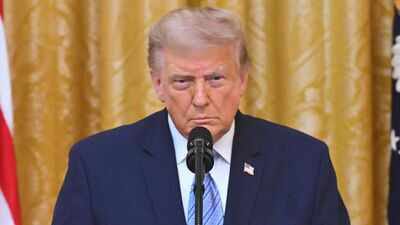
A newly announced tariff roadmap by U.S. President Donald Trump has triggered fresh concerns across India’s pharmaceutical industry, one of the world’s largest suppliers of affordable generic medicines. Under the proposed plan, imported generic drugs will continue to enter the United States duty-free for the next two years, after which they will face a 100% tariff for one year before the levy rises to 200% indefinitely.
The announcement has raised questions about the future of India’s pharmaceutical exports, global medicine supply chains, and healthcare costs in the United States.
The phased approach appears to provide pharmaceutical companies with a transition period while encouraging manufacturers to shift production to the United States. Trump has argued that the policy is designed to strengthen domestic manufacturing, reduce dependence on foreign suppliers, and improve America’s pharmaceutical security.
India’s Strong Position in Generic Medicines
India is widely recognized as the “pharmacy of the world” because of its large-scale production of affordable generic medicines.
Indian pharmaceutical companies supply a significant share of prescription drugs consumed in the United States, particularly low-cost generic medicines used to treat chronic illnesses such as diabetes, hypertension, cardiovascular diseases, and infections.
For many Indian drug manufacturers, the U.S. remains their largest overseas market. Companies including Sun Pharma, Dr. Reddy’s Laboratories, Cipla, Lupin, Aurobindo Pharma, and Zydus Lifesciences generate a substantial portion of their revenues from American sales.
Understanding the Three-Stage Tariff Plan
According to the proposal, imported generic medicines will continue to enjoy a 0% tariff for the next two years. Beginning in the third year, the United States plans to impose a 100% tariff, followed by a 200% tariff from the fourth year onward.
The phased implementation is intended to give pharmaceutical manufacturers sufficient time to relocate manufacturing facilities or expand production within the United States. Trump has argued that companies choosing not to invest in American manufacturing could eventually face substantially higher import costs.
Potential Impact on Indian Pharmaceutical Exports
The proposed tariffs could significantly increase the cost of exporting generic medicines from India to the U.S. Higher import duties may reduce the price competitiveness of Indian products, particularly in segments where profit margins are already thin.
Analysts note that generic drug manufacturers typically operate on relatively low margins. A sharp increase in import duties could force companies to either absorb part of the additional cost or pass it on to buyers, potentially making medicines more expensive for American consumers.
Why Experts Believe Indian Pharma May Remain Competitive
Despite concerns, several market experts believe the Indian pharmaceutical sector is well positioned to withstand the proposed tariff regime.
India continues to enjoy significant advantages in terms of manufacturing efficiency, skilled workforce, regulatory expertise, and large-scale production capacity. Establishing equivalent manufacturing infrastructure in the United States would require substantial investments, regulatory approvals, and several years of development.
Analysts have also pointed out that the U.S. healthcare system depends heavily on imported generic medicines. Replacing Indian suppliers immediately may not be practical due to existing supply chains, manufacturing capacity constraints, and the need to maintain affordable drug availability.
Industry Seeks Dialogue with Donald Trump 
Following the announcement, representatives of India’s pharmaceutical industry have called for continued engagement with U.S. policymakers. Industry bodies have emphasized that Indian companies already contribute significantly to America’s healthcare system by supplying affordable medicines and maintaining reliable pharmaceutical supply chains.
Several companies have also highlighted their existing investments in manufacturing facilities within the United States, arguing that Indian firms are already supporting local employment and pharmaceutical production. Industry leaders have expressed hope that ongoing discussions between New Delhi and Washington could help address concerns before the tariff schedule is fully implemented.
Possible Consequences for American Consumers
Healthcare experts warn that while the tariffs are intended to promote domestic production, they could also increase medicine prices for American patients.
Generic medicines account for a large proportion of prescriptions filled in the United States because they offer affordable alternatives to branded drugs. If import costs rise significantly, insurers, hospitals, pharmacies, and patients could ultimately bear higher expenses.
Market Reaction
The announcement has placed pharmaceutical stocks under close investor scrutiny. Shares of major Indian drug manufacturers have remained in focus as investors assess how individual companies may respond to the proposed policy.
Market experts believe firms with diversified global operations and existing manufacturing facilities in the United States may be better positioned to adapt than companies that depend almost entirely on exports from India. Financial analysts have urged investors to focus on long-term business fundamentals rather than short-term market volatility.
Read more like this:
- CJP प्रदर्शन के चलते दिल्ली मेट्रो के कई स्टेशन बंद, यात्रियों की बढ़ीं मुश्किलें; सुरक्षा के बीच राजधानी में हाई अलर्ट
- अनंतनाग में आतंकी हमला: लाल चौक के पास आतंकियों की फायरिंग में पुलिस कांस्टेबल शहीद, सुरक्षा बलों ने घेरा इलाका
- सोनम वांगचुक से मिले जेपी नड्डा और डॉ. जितेंद्र सिंह, मेदांता अस्पताल में जाना स्वास्थ्य का हाल; CJP आंदोलन के बीच बढ़ी राजनीतिक हलचल
Strategic Decisions Ahead
The two-year duty-free window provides Indian pharmaceutical companies with valuable time to prepare. Industry experts suggest several possible responses, including expanding U.S.-based manufacturing, strengthening contract manufacturing partnerships, diversifying export destinations, investing in higher-value specialty medicines, and improving supply chain efficiency.
Many companies are also expected to closely monitor future trade negotiations between India and the United States, as policy adjustments remain possible before the higher tariffs take effect.
Looking Ahead
Although the proposed tariff schedule represents one of the most significant trade policy announcements affecting the pharmaceutical sector in recent years, its long-term impact remains uncertain. Much will depend on implementation timelines, trade negotiations, industry adaptation, and the pace at which domestic U.S. pharmaceutical manufacturing expands.
For India, the announcement serves as a reminder of the importance of diversifying export markets while continuing to strengthen its position as a global pharmaceutical manufacturing hub. For the United States, the challenge will be balancing industrial policy objectives with the need to ensure affordable and uninterrupted access to essential medicines.