Join
Join
 Shorts

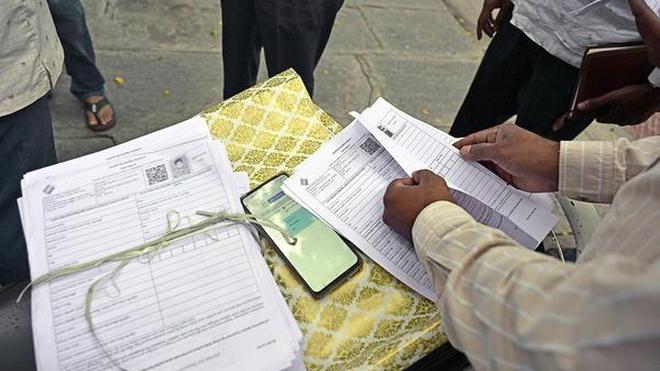
Amid the continuing debate over the Election Commission’s Special Intensive Revision (SIR) of electoral rolls, the Lawyers Association for Constitution (LAFC) has constituted an independent five-member panel of former Supreme Court and High Court judges to examine the exercise and its impact on eligible voters.
The panel will examine the constitutional and statutory validity, methodology and overall impact of the SIR process. It will also look into whether eligible citizens have been retained on electoral rolls and whether ineligible entries have been appropriately removed. The LAFC said the commission will function independently and will have responsibility for its own findings and recommendations.
Justice Madan B. Lokur to head the panel
The five-member commission will be headed by former Supreme Court judge Justice Madan B. Lokur. The other members are former Supreme Court judge Justice A.K. Patnaik, former Chief Justice of the Jammu and Kashmir High Court Justice Badar Durrez Ahmad, former Delhi High Court judge Justice Rekha Sharma and former Patna High Court judge Justice Anjana Prakash.
According to the lawyers’ association, the panel has been formed in response to concerns raised by citizens and civil society groups about the design, implementation and consequences of the electoral-roll revision exercise.
The panel’s work will focus not only on the legal framework governing SIR but also on its practical consequences for voters.
What will the panel examine?
The commission’s mandate covers several aspects of the SIR process. One of the key questions will be whether the exercise has adequately protected the electoral rights of eligible citizens.
The panel will examine whether eligible voters have remained on the electoral rolls and whether entries considered ineligible have been removed through an appropriate and legally valid process.
It will also study the methodology used for voter verification, the relevant legal provisions, notifications and procedures associated with the revision exercise. The objective, according to LAFC, is to assess whether the process complies with constitutional safeguards.
The inquiry therefore combines legal scrutiny with field-level assessment. This means that the panel is expected to look beyond official documents and consider the experiences of people who may have been affected by the revision.
Nationwide public hearings planned
One of the significant features of the proposed inquiry will be public hearings across the country.
According to LAFC, full and regional benches of the commission will travel to different locations to record the testimonies of affected citizens, civil society organisations and experts.
These hearings could provide the panel with first-hand accounts of how the SIR process has affected voters at the ground level. The commission is also expected to collect information and evidence that can help it assess the implementation of the electoral-roll revision.
Alongside the public hearings, a dedicated research wing will collect and analyse data relating to additions and deletions from electoral rolls. A legal support team will examine the relevant laws, notifications and verification procedures.
Senior lawyers to provide strategic advice
The commission will also receive strategic legal advice from a group of senior lawyers.
The lawyers named by LAFC include Kapil Sibal, Prashant Bhushan, Chander Uday Singh, Prashanto Chandra Sen, Raju Ramachandran, Rebecca Mammen John, Warisha Farasat and Vrinda Grover.
The role of these lawyers will be to provide legal assistance and strategic advice to the commission as it examines the constitutional and statutory aspects of SIR.
However, LAFC has stated that the former judges on the commission will retain responsibility for their substantive findings and recommendations.
Panel says it will function independently
LAFC has described the commission as an independent initiative. The association has said that the panel will function with complete autonomy and that sponsoring organisations or supporting committees will not influence the judges’ substantive conclusions or recommendations.
This distinction is important because the commission has not been constituted by the Supreme Court or the Election Commission. It is a panel established by a lawyers’ association. Therefore, any findings or recommendations it produces will represent an independent legal assessment rather than an official judicial ruling.
The panel’s eventual report could nevertheless become part of the wider public and legal debate surrounding electoral-roll revision.
Report expected by December 2026
The commission has set an intensive timetable for its work. According to LAFC, it aims to complete the inquiry and make its final report public by December 2026.
Before that, the panel is expected to conduct hearings, field research, data analysis and legal scrutiny. The process could therefore involve evidence from multiple regions and different categories of voters.
The report is expected to address the legal basis and methodology of SIR as well as its consequences for eligible voters.
SIR remains a subject of wider debate
The formation of the panel comes at a time when SIR has become a major subject of political, legal and public discussion.
Supporters of electoral-roll revision argue that accurate voter lists are essential for ensuring the integrity of elections and for removing duplicate, ineligible or otherwise invalid entries. Critics, meanwhile, have raised concerns about the possibility of eligible voters being excluded if verification requirements or procedures are not implemented effectively.
The Election Commission has maintained that electoral-roll revision falls within its constitutional and statutory responsibilities. The debate has therefore focused on how such revisions should be conducted while ensuring that legitimate voters are not denied their right to participate in elections.
The LAFC panel’s inquiry is expected to examine these questions from a legal and evidence-based perspective.
Read more like this:
- अराधना मिश्रा मोना बनीं UP कांग्रेस की अध्यक्ष, अजय राय की जगह मिली जिम्मेदारी
- CEC ज्ञानेश कुमार के इस्तीफे की मांग, CJP का ऐलान- 10 अक्टूबर को जंतर-मंतर पर होगा बड़ा प्रदर्शन
What happens next?
The next stage will involve the commission beginning its public hearings and research process. Testimonies from affected voters, civil society organisations and experts could form an important part of its assessment.
The panel’s eventual report in December could add another layer to the ongoing discussion over SIR, particularly on questions surrounding voter inclusion, verification procedures, legal safeguards and the methodology adopted during electoral-roll revision.
For now, the formation of the five-member panel marks a new development in the SIR debate. With former Supreme Court and High Court judges examining the exercise and nationwide hearings planned, attention will now turn to the evidence gathered by the commission and the conclusions it reaches in its proposed December 2026 report.