Join
Join
 Shorts


On the occasion of Hindi Diwas, the Supreme Court of India announced the launch of a new public information service, Jan Soochna Seva, aimed at making important judicial information easier for ordinary citizens to understand. The initiative will provide simplified Hindi summaries of selected significant judgments and orders of the Supreme Court.
The service is intended to make access to justice more inclusive by reducing the language barrier faced by people who may find lengthy legal documents difficult to read or comprehend. The Supreme Court said the initiative would particularly benefit ordinary citizens, litigants and persons with disabilities.
Simple Hindi Summaries of Important Judgments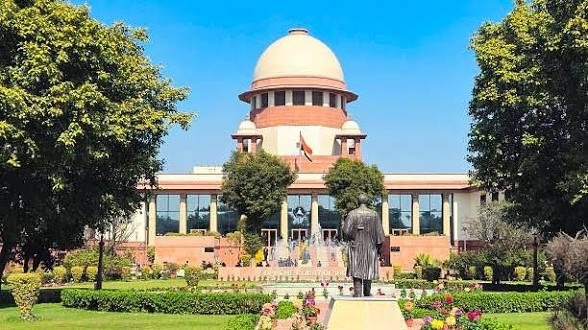
Under Jan Soochna Seva, selected important judgments and orders will be accompanied by summaries written in simple and accessible Hindi. The purpose is not to replace the original court documents, but to help citizens understand the main findings, implications and possible next steps arising from significant Supreme Court decisions.
Each summary is expected to be linked with the corresponding official judgment or order. This will allow readers to first understand the decision in simpler language and then refer to the complete legal document whenever they require detailed information.
The initiative could be especially useful in cases involving constitutional rights, government policies, public welfare, education, taxation, employment and other matters that directly affect citizens’ lives.
Daily Audio and Video Bulletins
A major feature of the proposed service will be Hindi audio and video bulletins lasting approximately 15 to 30 minutes. These bulletins will explain important decisions in an accessible format and are expected to make judicial information available to people who may not be comfortable reading complex legal language.
The use of audio and video could also help people with visual disabilities, limited reading ability or difficulties in understanding lengthy written material. By presenting key judicial developments through multiple formats, the Supreme Court aims to reach a wider section of the public.
The service will focus on explaining the significance of important rulings, their impact on citizens and the subsequent proceedings or actions that may follow.
A Step Towards More Inclusive Access to Justice
The Supreme Court’s announcement reflects a broader effort to improve public access to judicial information. Although court judgments are publicly available, many are written in technical legal language and are predominantly available in English. For people who are more comfortable with Indian languages, understanding the practical meaning of a judgment can therefore remain difficult.
Jan Soochna Seva seeks to address this gap by connecting judicial communication with the language preferences of citizens. The Court said the initiative would link respect for Indian languages with the public dissemination of judicial information.
The move also supports the wider principle that access to justice should not depend solely on a person’s ability to understand complicated legal terminology. Clear explanations of court decisions can help citizens become more aware of their rights, legal responsibilities and the effects of judicial rulings.
Service to Initially Begin in Hindi
The Supreme Court has announced that Jan Soochna Seva will initially be available in Hindi. The service is expected to be launched after the necessary administrative and technical arrangements are completed.
The Court has also indicated that work will be undertaken to make the service available in other Indian languages in a phased manner. This could eventually allow citizens from different linguistic regions to receive concise and easy-to-understand information about important Supreme Court judgments in their own languages.
The planned expansion to other languages is significant for a country where millions of people do not use English as their primary language for communication or education. It could help strengthen the connection between judicial institutions and the wider public.
Potential Impact on Citizens and Legal Awareness
Jan Soochna Seva could improve public awareness about the functioning of the judiciary and the practical consequences of important court decisions. Citizens often learn about major judgments through news reports or social media, where legal developments may sometimes be simplified inaccurately or presented without sufficient context.
An official public information service can provide a reliable starting point for understanding significant rulings. The availability of original judgment links alongside simplified summaries would also help users distinguish between an explanatory overview and the authoritative court record.
For litigants and their families, the service could make it easier to understand what a judgment means without immediately relying on complex legal terminology. Lawyers, law students, journalists and legal aid organisations may also find the summaries and bulletins useful for communicating judicial developments to a wider audience.
Read more like this :
A New Model for Judicial Communication
The announcement of Jan Soochna Seva comes at a time when courts and public institutions are increasingly using digital platforms, regional languages and accessible communication tools to improve public engagement. The Supreme Court has already been expanding digital access to court information through online judgments, case updates and live-streaming initiatives.
The new Hindi service adds another layer by focusing specifically on interpretation and public understanding rather than merely making documents available online.
If implemented effectively, Jan Soochna Seva could become an important model for communicating judicial information in a multilingual democracy. Its success will depend on the accuracy of summaries, consistency of bulletins, accessibility of the digital platform and the quality of future language translations.
For now, the initiative marks a significant step towards making the country’s highest court more accessible to citizens who prefer to receive important information in Hindi. The proposed expansion into other Indian languages could further strengthen the principle that justice and knowledge of the law should be available to people across linguistic and social backgrounds.