Join
 Shorts

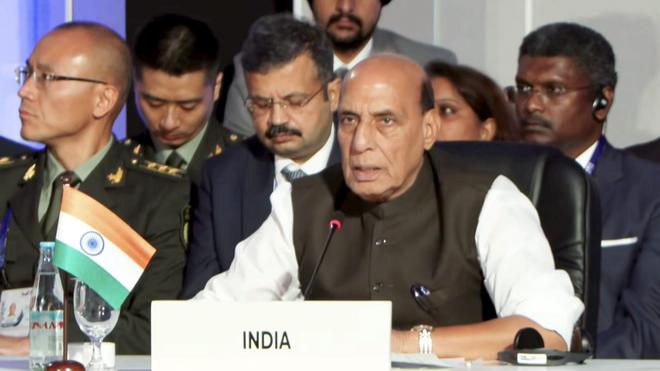
India has expressed its willingness to share its extensive counter-terrorism experience and operational expertise with member countries of the Association of Southeast Asian Nations (ASEAN) and their dialogue partners. Defence Minister Rajnath Singh made the announcement while addressing the 13th ASEAN Defence Ministers’ Meeting-Plus (ADMM-Plus) in Cebu, Philippines, on October 29, 2026. He emphasised that India’s experience in combating terrorism has been developed through decades of confronting complex cross-border security threats.
Singh highlighted that terrorism remains a serious challenge to international peace and stability and requires a coordinated response from all countries. He stated that India is fully prepared to contribute its practical knowledge to strengthen regional security and collective counter-terrorism capabilities.
India’s Battle-Tested Counter-Terrorism Experience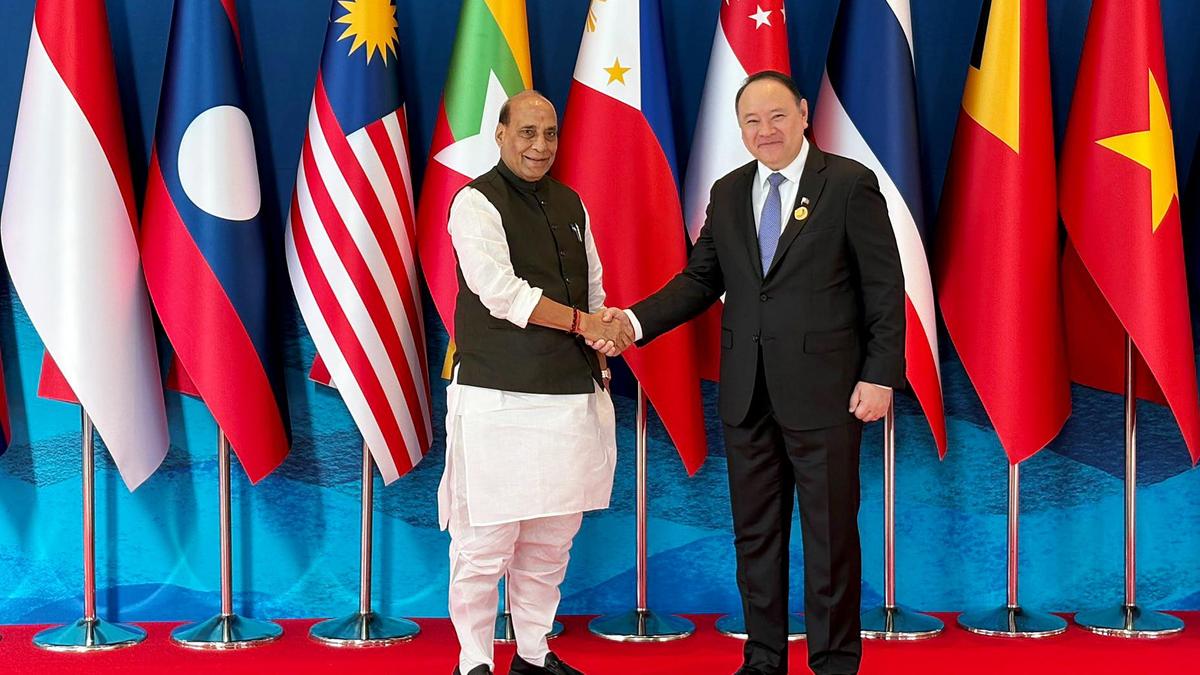
Addressing the defence ministers, Rajnath Singh underlined that India’s counter-terrorism expertise is not limited to theoretical knowledge or classroom training. Instead, it has been developed through years of operational experience and direct encounters with cross-border security challenges.
He explained that India’s strategies have been continuously tested, refined and strengthened through real-world operations. According to him, every country must recognise that terrorism is a shared international threat that cannot be effectively tackled through isolated efforts.
The Defence Minister reiterated India’s commitment to fighting terrorism in all its forms and manifestations. He also stressed the importance of taking firm action against terrorist networks and the infrastructure supporting them.
Operation Sindoor: A Demonstration of India’s Resolve
Referring to Operation Sindoor, Rajnath Singh described it as a major example of India’s proactive approach towards combating state-sponsored terrorism. The operation, launched in May 2025, demonstrated India’s determination to respond firmly to terrorist threats.
He stated that the operation resulted in the destruction of terrorist infrastructure and reflected India’s clear position against state-sponsored terrorism.
Singh described Operation Sindoor as evidence of India’s operational preparedness and its willingness to protect national security. He emphasised that the country’s counter-terrorism approach is based on practical experience, strategic preparedness and the determination to address emerging security challenges.
The operation, therefore, serves as an important reference point in India’s efforts to share its security experience with friendly and partner nations.
Three Major Areas of Cooperation with ASEAN
India has proposed strengthening counter-terrorism cooperation with ASEAN countries and other ADMM-Plus partners through three important mechanisms.
1. Joint Military Exercises: India is ready to participate in and organise joint exercises to improve coordination, operational preparedness and the ability of security forces to respond to terrorist threats.
2. Capacity-Building Programmes: Training initiatives and professional exchanges can help partner countries improve their institutional capabilities, strengthen security infrastructure and develop effective counter-terrorism strategies.
3. Intelligence Sharing: Robust intelligence-sharing mechanisms can help countries identify emerging threats, understand terrorist networks and improve coordination against cross-border terrorism.
These initiatives are expected to promote mutual trust and strengthen the collective ability of participating nations to deal with evolving security challenges.
India-Malaysia Cooperation Under ADMM-Plus
India is also working closely with Malaysia under the ADMM-Plus framework. Both countries are co-chairing the Experts’ Working Group on Counter-Terrorism for the 2024-2027 cycle.
This cooperation provides an important platform for exchanging experiences, discussing emerging security threats and developing practical approaches to counter-terrorism.
The framework also reflects India’s commitment to multilateral security cooperation and its growing engagement with Southeast Asian countries.
India’s Vision for a Secure Indo-Pacific
Apart from counter-terrorism, Rajnath Singh highlighted India’s vision of a secure, open, inclusive, resilient and rules-based Indo-Pacific region.
He emphasised that peace and stability cannot be achieved through statements alone but require collective responsibility and practical action.
The Defence Minister also raised concerns about disruptions to international maritime trade routes. He stated that maritime security is directly connected with regional peace, economic prosperity and international trade.
Singh reaffirmed that India would continue to act as a trusted net security provider in the Indian Ocean region and the wider Indo-Pacific.
Importance of Maritime Security and UNCLOS
Singh reiterated India’s commitment to the United Nations Convention on the Law of the Sea (UNCLOS), freedom of navigation and freedom of overflight.
He clarified that India’s emphasis on international maritime law is not directed against any particular country. Rather, it aims to safeguard the collective interests of all regional stakeholders.
His remarks are significant amid continuing tensions and territorial disputes in the South China Sea, where several ASEAN members have expressed concerns about growing military activities.
India believes that respect for international law and peaceful cooperation are essential for maintaining stability across the Indo-Pacific.
Defence ‘Youth Bridge’ Initiative
The Defence Minister also proposed establishing a dedicated defence ‘Youth Bridge’ to strengthen India-ASEAN relations.
The initiative aims to promote people-to-people connectivity, digital innovation, knowledge exchange and capacity building among young people.
It could provide new opportunities for cooperation in defence-related education, technology and professional development.
Read more like this:
- 6 राज्यों में SIR की समय-सीमा बढ़ी, दिल्ली को भी मिली राहत
- Countdown Progressing for ISRO’s Crucial GSLV-F18 Launch Carrying Navigation Satellite NVS-03
Conclusion
India’s offer to share its battle-tested counter-terrorism expertise with ASEAN partners represents an important step towards strengthening regional security cooperation. Through joint military exercises, intelligence sharing and capacity-building programmes, India aims to contribute to a stronger collective response against terrorism.
Rajnath Singh’s address also highlighted India’s broader commitment to maritime security, international law and Indo-Pacific stability.
At a time when terrorism and geopolitical tensions continue to challenge international peace, India’s initiative underlines the importance of cooperation, preparedness and mutual trust. It also reinforces India’s Act East Policy and its commitment to building a peaceful, secure and resilient Indo-Pacific region.