Join
 Shorts

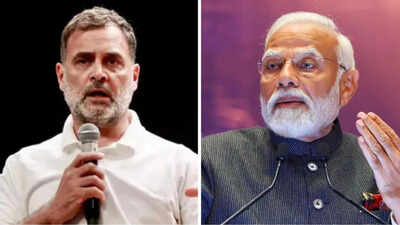
Political Face-Off Between Rahul Gandhi and Narendra Modi Gains Momentum
India’s political atmosphere has heated up after Congress leader and Leader of Opposition in the Lok Sabha Rahul Gandhi renewed his challenge to Prime Minister Narendra Modi for an open public debate. Taking the political confrontation to social media, Rahul Gandhi launched a public poll on X (formerly Twitter), asking citizens whether they wanted to see a face-to-face debate between the two prominent political leaders.
The move has sparked fresh discussion about political accountability, democratic debate and the importance of direct communication between the ruling government and the Opposition.
Rahul Gandhi Asks People to Decide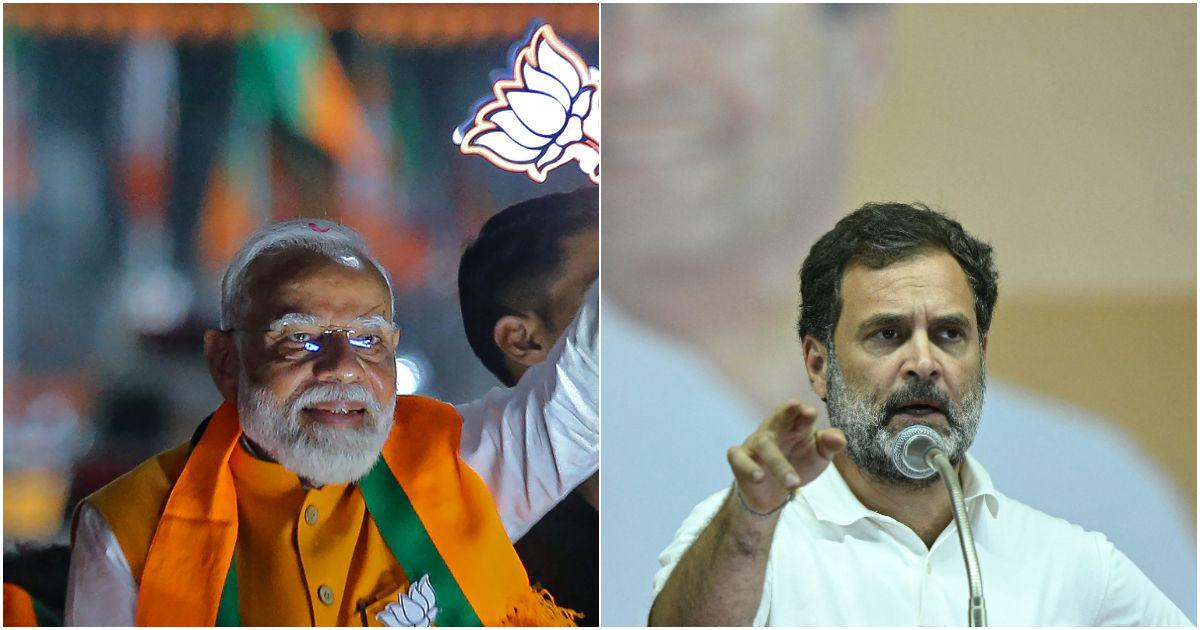
On November 3, Rahul Gandhi posted a poll on X with the question: “Do you want to see a Rahul Gandhi vs Narendra Modi open debate?”
The poll offered two options: “Yes, Modi Ji, Daro Mat” and “No, Modi Ji, Dar Gaye.” Through this post, Rahul attempted to put public opinion at the centre of the political challenge.
He also tagged senior BJP leaders, including Defence Minister Rajnath Singh, Union Minister Nitin Gadkari, Shivraj Singh Chouhan and Uttar Pradesh Chief Minister Yogi Adityanath. He requested them to convince the Prime Minister to participate in the proposed debate, saying that they always had the Prime Minister’s best interests in mind.
The post quickly attracted attention and added another chapter to the ongoing political exchange between the Congress and the BJP.
Rahul Gandhi Renews His Challenge to PM Modi
The public poll came hours after Rahul Gandhi renewed his challenge to Narendra Modi through a video message.
He said that 24 hours had passed since he first challenged the Prime Minister to participate in an open debate. He invited Modi to select any venue or platform and discuss the allegations being exchanged between the ruling party and the Opposition.
Rahul questioned the BJP’s accusations that the Opposition was acting against national interests. He also raised questions about alleged connections with foreign forces and challenged the Prime Minister to discuss these matters openly.
According to Rahul, a public debate in the presence of the media and young people would help distinguish facts from political allegations.
How Did the Political Controversy Begin?
The latest confrontation followed Prime Minister Modi’s remarks during his Ekta Diwas address.
In his speech, the Prime Minister criticised the Opposition, describing it as an “Avrodh Paksh” (obstructionist force) rather than a constructive opposition. He accused certain forces of spreading rumours, creating instability and attempting to damage India’s international image.
Modi also raised concerns about alleged links between some political elements and forces operating outside India.
Rahul Gandhi responded strongly to these remarks and challenged the Prime Minister to discuss the allegations directly rather than exchange accusations through public speeches.
The disagreement has now developed into a wider political debate over transparency, national interest and the responsibilities of India’s political leadership.
What Does the BJP Say About the Debate?
The BJP has also responded to Rahul Gandhi’s challenge.
Union Home Minister Amit Shah said that the government was prepared to discuss important national issues in Parliament. He referred to subjects such as the Special Intensive Revision (SIR) of electoral rolls, Electronic Voting Machines (EVMs) and infiltration.
Shah challenged the Congress to participate in a parliamentary discussion, arguing that important political questions should be addressed through established democratic institutions.
Meanwhile, BJP leaders have questioned Rahul Gandhi’s approach and challenged the Congress to discuss its allegations with the ruling party.
However, the question of whether Narendra Modi and Rahul Gandhi will participate in a direct, face-to-face public debate remains open.
Why Would an Open Debate Matter?
An open debate between the Prime Minister and the Leader of Opposition would be politically significant.
India is the world’s largest democracy, where citizens have the right to question their elected representatives and expect answers on issues affecting the country.
A structured debate could provide an opportunity to discuss:
- Economic growth, employment and inflation.
- National security and foreign policy.
- India’s international relations and trade agreements.
- Electoral reforms and democratic institutions.
- Allegations exchanged between the ruling party and Opposition.
- Development, education and opportunities for young people.
Such a discussion could also help citizens understand the competing political arguments beyond campaign speeches and social media statements.
Social Media Poll Puts Public Opinion in Focus
Rahul Gandhi’s poll has once again demonstrated how social media has become an important platform for political communication in India.
Political leaders increasingly use platforms such as X to directly approach voters, present their arguments and challenge opponents.
However, an online poll cannot necessarily represent the opinion of the entire country. Its results depend on participation, the audience reached and the way the question is framed.
Nevertheless, the initiative has brought the idea of a direct political debate into the national conversation.
Read more like this:
- US Midterm Election Results 2026 Live Updates: Democrats Set to Take Control of House and Senate
- ओमान के तट के पास भारतीय ध्वज वाले जहाज ‘अल जुसीफी’ पर हमला, एक भारतीय नाविक की मौत; विदेश मंत्रालय ने तनाव कम करने की अपील की
Conclusion:
Will India Witness a Rahul-Modi Face-Off?
The proposed Rahul Gandhi versus Narendra Modi debate has become another major talking point in Indian politics.
While Rahul Gandhi is pressing for a direct discussion, the BJP has pointed towards parliamentary debate as the appropriate forum for discussing national issues.
Ultimately, the bigger question is not simply which leader would win a political face-off. It is whether such a discussion would provide meaningful answers to citizens.
A fair, fact-based and transparent debate could strengthen democratic accountability and give voters a clearer understanding of the positions taken by both political sides.
For now, the country will have to wait and see whether the challenge leads to an actual debate or remains another episode in the ongoing political battle between the Congress and the BJP.