Join
 Shorts

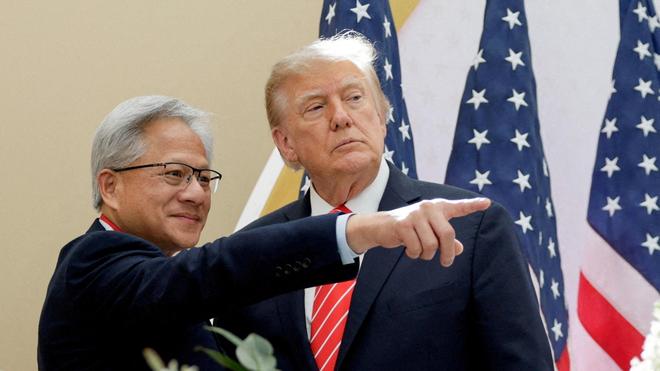
A major controversy has emerged in the American technology industry after US President Donald Trump revealed that the Federal Bureau of Investigation (FBI) is looking into alleged relationship involving Nvidia CEO Jensen Huang and a woman suspected of having links to Chinese intelligence. The issue has attracted international attention because of Nvidia’s crucial role in developing advanced artificial intelligence (AI) chips and its importance to America’s technological and national security interests.
Trump said that he had spoken directly with Huang and believed the billionaire technology executive would be in a favourable position despite the investigation. However, the allegations have raised serious questions about foreign intelligence activities, corporate security and the growing technological competition between the United States and China.
Trump’s Statement on the FBI Investigation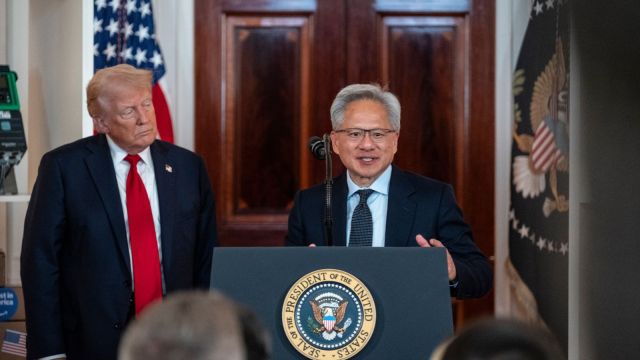
What Did the US President Say?
Speaking to reporters at the White House on Monday, November 9, Trump confirmed that the FBI was looking into the matter. He indicated that he had personally contacted Huang to check on his well-being.
Trump said Huang had told him that he had no knowledge that the woman involved was allegedly connected to Chinese intelligence.
The US president described Huang as an honourable person and expressed confidence that he would be in good shape. His comments have drawn attention because the investigation involves one of the world’s most influential technology executives.
Trump’s remarks also highlighted the sensitive relationship between national security investigations and the political leadership of the United States.
Jensen Huang Acknowledges Personal Relationship
Apology to His Family and Nvidia
Jensen Huang has acknowledged that he had an intimate relationship with a business executive. In an open letter published on Nvidia’s website, he apologised to his wife and the company.
Huang also expressed support for the investigation and promised full cooperation with the authorities.
He emphasised his commitment to protecting Nvidia and supporting American national security.
However, acknowledging an affair does not establish that Huang knowingly maintained contact with an intelligence operative. Whether the relationship was part of a foreign intelligence operation remains a matter requiring investigation and evidence.
Who Is the Woman at the Centre of the Controversy?
Alleged Links to Chinese Intelligence
According to reporting by The New York Times, the woman, identified as Alice Huang, was reportedly associated with Megaspeed International, a Singapore-based data centre company.
The company has promoted its business relationship with Nvidia on its website. Reports have raised questions about whether the relationship could have provided opportunities for gathering sensitive information.
US intelligence assessments reportedly suggested that the woman was collecting information for Beijing. However, these allegations have not been independently established in public.
China has strongly rejected claims that it used the woman to target Nvidia’s chief executive.
Chinese Foreign Ministry spokesperson Guo Jiakun described the allegations as unsubstantiated and a smear campaign against China.
Why Is Nvidia Important to US National Security?
The Global AI Chip Industry
Nvidia is one of the world’s most influential semiconductor companies. Its powerful graphics processing units (GPUs) are widely used to train and operate artificial intelligence systems.
From advanced research laboratories to major technology companies, Nvidia’s chips have become essential infrastructure for the global AI industry.
This makes the investigation particularly sensitive. Authorities are likely to be interested in whether confidential business information, technological developments or strategically important data could have been exposed.
Experts have emphasised that the central questions concern whether Huang knew about any alleged intelligence activities and whether sensitive information was compromised.
At present, there is no publicly established evidence that Nvidia’s advanced chip technology was stolen through the alleged relationship.
Political and Economic Consequences
Growing Tensions Between Washington and Beijing
The controversy comes at a time when the United States and China are competing intensely for leadership in artificial intelligence and semiconductor technology.
Washington has introduced restrictions on exports of advanced computer chips to China, citing national security concerns. Nvidia has previously sought permission to sell certain products to the Chinese market while complying with US regulations.
The allegations could increase pressure on American lawmakers to introduce stricter controls on advanced chip exports and strengthen corporate security requirements.
Several Democratic lawmakers, including Senator Mark Warner and Representative Hakeem Jeffries, have expressed interest in receiving a detailed briefing about the national security implications.
Meanwhile, Nvidia has announced an independent investigation into reports that Huang may have been targeted by a foreign intelligence operation.
Impact on Nvidia Shares
Investors Monitor the Developing Situation
The controversy has also affected investor confidence. Nvidia shares fell approximately 5% in pre-market trading on Monday, while reports indicated that the stock had lost around 11% since the previous Wednesday.
Investors are concerned about the possible consequences for the company’s leadership, reputation and business relationships.
However, the long-term financial impact will depend on the findings of the investigations and whether any regulatory or legal action follows.
Read more like this:
- बांग्लादेश में चीनी नागरिकों पर गंभीर आरोप: झुग्गी-बस्तियों में वीडियो बनाकर भारत के नाम पर फैलाया जा रहा झूठ?
- Ahead of Abu Dhabi Peace Talks, Modi Speaks to Zelenskyy; Jaishankar Speaks to Lavrov
Conclusion
The FBI investigation involving Nvidia CEO Jensen Huang has developed into a significant political, corporate and national security controversy.
While Huang has acknowledged his personal relationship and pledged cooperation with investigators, the allegations concerning Chinese intelligence remain unproven publicly. China has denied involvement, while Nvidia has launched its own investigation.
The case highlights how personal relationships involving influential business leaders can become national security concerns in an era of intense technological competition.
Ultimately, the most important issue is whether any sensitive information or strategic technology was compromised. Until investigators establish the facts, conclusions about espionage, responsibility or wrongdoing should be avoided. The outcome could have important implications not only for Nvidia but also for the future of US-China relations and the global artificial intelligence industry.