Join
 Shorts

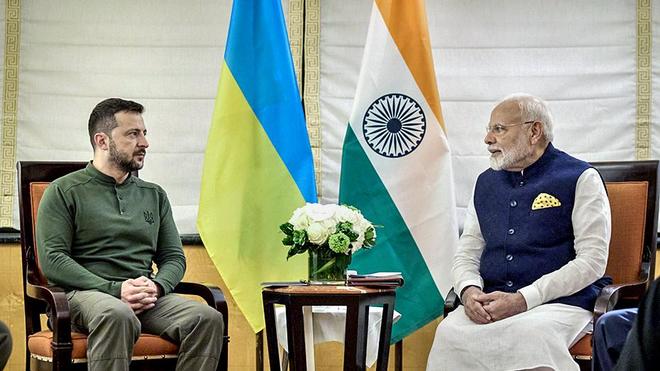
India has stepped up its diplomatic engagement in the ongoing Russia-Ukraine conflict ahead of crucial peace talks scheduled to take place in Abu Dhabi. On November 9, 2026, Prime Minister Narendra Modi held a telephone conversation with Ukrainian President Volodymyr Zelenskyy, while External Affairs Minister S. Jaishankar spoke separately with Russian Foreign Minister Sergey Lavrov. These high-level diplomatic exchanges came just ahead of negotiations involving Russia, Ukraine and the United States, aimed at finding a peaceful solution to the nearly five-year-long conflict.
The two conversations highlight India’s continued efforts to maintain communication with both Moscow and Kyiv and strengthen international initiatives for restoring peace.
Modi’s Conversation with Zelenskyy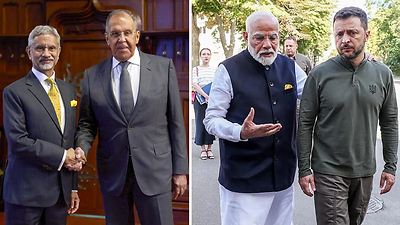
Prime Minister Narendra Modi described his telephone conversation with Ukrainian President Volodymyr Zelenskyy as productive. During the discussion, the two leaders reviewed their bilateral relations and explored opportunities to strengthen cooperation between India and Ukraine.
Modi thanked Zelenskyy for sharing his views on the ongoing conflict, its humanitarian consequences and various diplomatic efforts aimed at restoring peace.
According to the Prime Minister’s Office, Modi reiterated India’s consistent position that the Russia-Ukraine conflict must be resolved through dialogue and diplomacy. He also reaffirmed India’s readiness to contribute to all efforts aimed at achieving a peaceful resolution.
Zelenskyy briefed Modi about the latest developments in the conflict and Ukraine’s preparations for the upcoming peace negotiations in Abu Dhabi.
Zelenskyy Seeks India’s Support for Peace
Following the conversation, Ukrainian President Zelenskyy emphasised the importance of India’s role in international diplomatic efforts.
He recalled that Prime Minister Modi had repeatedly conveyed to Russian President Vladimir Putin that the ongoing war should come to an end.
Zelenskyy also urged India to identify possible diplomatic steps and engage with other international leaders to help end the hostilities.
One important issue discussed between the two leaders was the establishment of safe food corridors through the Black Sea. Ukraine believes that disruptions to grain exports have serious consequences for international food security, particularly in developing countries.
Zelenskyy indicated that India could play a constructive role in facilitating an arrangement that would ensure the safe and uninterrupted movement of agricultural shipments.
He also stressed that Russia must demonstrate a genuine willingness to reduce tensions and participate constructively in peace efforts.
Jaishankar Holds Talks with Sergey Lavrov
In a parallel diplomatic development, External Affairs Minister S. Jaishankar held a telephone conversation with Russian Foreign Minister Sergey Lavrov.
Jaishankar confirmed the discussion through a post on social media platform X, stating that the conversation focused on the Ukraine conflict and ongoing diplomatic initiatives.
Although detailed information about the discussion was not immediately disclosed, the timing of the conversation was significant.
By engaging with the Russian foreign minister on the same day that Modi spoke to the Ukrainian president, India demonstrated its willingness to maintain diplomatic channels with both sides.
This approach reflects New Delhi’s emphasis on dialogue, strategic autonomy and peaceful conflict resolution.
Abu Dhabi Peace Talks: What Is on the Agenda?
The upcoming negotiations in Abu Dhabi are expected to bring representatives of Russia, Ukraine and the United States together on November 10 and 11.
The talks are particularly important because diplomatic efforts to end the conflict have faced repeated obstacles over territorial disputes, security arrangements and disagreements regarding the conditions for a ceasefire.
A major issue is expected to be security guarantees for Ukraine and mechanisms to prevent the conflict from restarting after a possible agreement.
The negotiations will also test whether Russia and Ukraine are prepared to make compromises and move towards a sustainable political settlement.
The involvement of the United States is significant because Washington has been actively pursuing diplomatic initiatives to bring the two sides closer to an agreement.
India’s Proposed Role in the Peace Process
India has consistently maintained that dialogue and diplomacy are the only sustainable ways to resolve the Russia-Ukraine conflict.
New Delhi has also highlighted the wider economic and humanitarian consequences of the war, particularly disruptions to energy supplies, fertiliser availability, food exports and international trade.
India has previously discussed proposals involving the protection of civilian infrastructure, uninterrupted grain and energy shipments through the Black Sea, and the safety of commercial vessels and seafarers.
These proposals reflect India’s concern about the impact of the conflict on developing economies and countries of the Global South.
India’s engagement with both Russia and Ukraine also gives it an opportunity to encourage constructive communication between the two sides.
Why This Development Matters
The simultaneous diplomatic conversations involving Modi, Zelenskyy, Jaishankar and Lavrov carry considerable international significance.
India maintains longstanding strategic and defence ties with Russia while also expanding its economic, technological and diplomatic partnership with Ukraine.
Maintaining balanced relations with both countries allows India to remain engaged in international peace initiatives without abandoning its independent foreign policy.
Moreover, the conflict has affected global food security, energy markets, trade routes and geopolitical stability. Therefore, its peaceful resolution is important not only for Russia and Ukraine but also for the wider international community.
Read more like this:
- संसद का मानसून सत्र 88 दिनों से प्रोरोग नहीं, 2008 का रिकॉर्ड टूटा
- Nvidia CEO Jensen Huang Admits to Affair: Read His Email to Nvidia Employees
Conclusion
Prime Minister Narendra Modi’s conversation with Volodymyr Zelenskyy and External Affairs Minister S. Jaishankar’s discussion with Sergey Lavrov underline India’s growing diplomatic engagement in efforts to end the Russia-Ukraine war.
As representatives of Russia, Ukraine and the United States prepare for negotiations in Abu Dhabi, India’s emphasis on dialogue, diplomacy, food security and safe maritime trade remains important.
Although the success of the peace talks will ultimately depend on the willingness of the conflicting parties to reach an agreement, India’s continued engagement with both sides reflects its commitment to promoting international peace and stability.