Join
 Shorts

22-Year-Old Space Telescope Returns to Earth
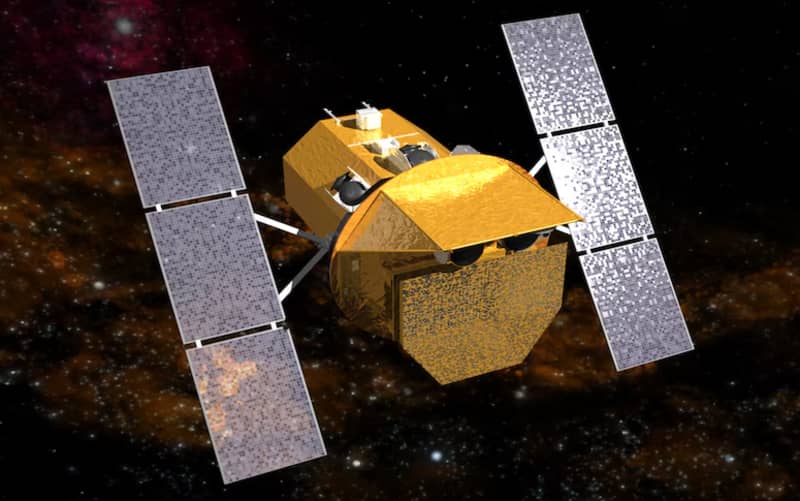
A 1.5-tonne space observatory operated by the National Aeronautics and Space Administration (NASA) has returned to Earth’s atmosphere after spending nearly 22 years in space. The Neil Gehrels Swift Observatory, which was launched in November 2004, re-entered the atmosphere on November 4, 2026, bringing an end to its remarkable scientific journey.
Before its re-entry, scientists had warned that some parts of the spacecraft could survive the extreme heat generated while passing through Earth’s atmosphere. India was among the regions included in the possible debris zone, raising concerns about the potential fall of spacecraft components in parts of the country.
However, the spacecraft eventually re-entered over Indonesia, according to reports, and no damage or injuries were reported.
Why Was the NASA Observatory Returning to Earth?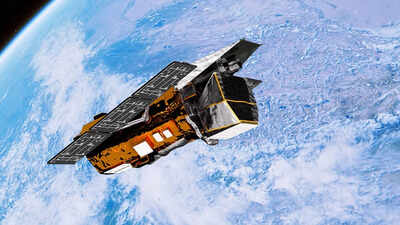
The Neil Gehrels Swift Observatory was originally designed for a two-year scientific mission. However, the spacecraft continued operating successfully for more than two decades, far exceeding its expected lifespan.
The observatory was launched on November 20, 2004, with the primary objective of studying gamma-ray bursts, which are among the most powerful explosions in the universe.
It was equipped with three specialised telescopes that enabled scientists to observe cosmic events through different wavelengths, including ultraviolet, visible and X-ray radiation.
Over the years, Swift made significant contributions to astronomical research by observing gamma-ray bursts, supernova explosions, black holes, active galaxies and other energetic cosmic phenomena.
Why Was India Included in the Possible Debris Zone?
Before the spacecraft’s re-entry, NASA and the US Space Force monitored its falling orbit and calculated a broad possible re-entry zone.
The observatory’s orbital inclination was approximately 20.6 degrees. This meant that its potential re-entry path was limited to a geographical band extending between 20.6 degrees north and 20.6 degrees south latitude.
This broad region included parts of Africa, Australia, Southeast Asia, Central America, South America and southern India.
In India, cities such as Mumbai, Hyderabad, Bengaluru, Chennai, Bhubaneswar and Kochi were among the locations falling within the broad geographical band.
However, being inside this zone did not mean that debris would necessarily fall in these cities. It simply indicated that the spacecraft’s possible orbital path crossed these geographical regions.
Could Parts of the Spacecraft Survive Atmospheric Re-Entry?
NASA had expected most of the spacecraft to burn up during its journey through Earth’s atmosphere.
When an object travelling at extremely high speed enters the atmosphere, intense heating causes its external structure and several components to break apart and disintegrate.
However, certain dense and heat-resistant components may survive the process.
According to reports, scientists identified tungsten components and parts of the telescope’s mirrors among the materials that could potentially withstand atmospheric re-entry.
Nevertheless, most surviving debris was expected to fall into the ocean rather than populated areas.
What Was the Risk to People?
The possibility of spacecraft debris reaching Earth’s surface naturally raised questions about public safety.
However, experts had emphasised that the chances of someone being injured by falling debris were extremely low.
The estimated probability of harm to anyone on Earth was approximately one in 2,100. This was a global risk estimate and did not mean that an individual had a one-in-2,100 chance of being hit.
Since nearly 70 per cent of Earth’s surface is covered by oceans, the likelihood of debris falling into the sea was considerably higher than the likelihood of it striking a populated location.
Failed Rescue Mission Led to the Observatory’s Return
NASA had also explored ways to prevent the observatory from returning to Earth by attempting to raise its orbit.
A private company developed a robotic spacecraft for a rescue mission intended to capture Swift and move it into a higher orbit.
However, the rescue attempt failed after the robotic spacecraft encountered technical and control problems.
As the observatory continued losing altitude, its orbital position became increasingly unstable. NASA eventually ended its scientific operations on October 20, 2026.
Read more like this:
- दिल्ली के चावड़ी बाजार में निर्माणाधीन 3 मंजिला इमारत ढही, कई लोगों के मलबे में दबे होने की आशंका
- महादेव सट्टेबाजी ऐप के सह-प्रमोटर रवि उप्पल दुबई में गिरफ्तार, भारत लाने की तैयारी तेज; प्रत्यर्पण की प्रक्रिया शुरू
A Remarkable Chapter in Space Science Comes to an End
The return of the Neil Gehrels Swift Observatory marks the conclusion of an extraordinary chapter in space exploration.
Although it was originally designed for a short mission, the spacecraft continued providing valuable scientific observations for approximately 22 years.
Its discoveries helped astronomers understand some of the universe’s most energetic events and contributed to thousands of scientific research papers.
The spacecraft’s final journey also highlights the growing importance of monitoring space debris and developing better systems to manage ageing satellites.
While its re-entry attracted attention because India was included in the possible debris zone, the spacecraft ultimately returned over Indonesia without any reported damage or injuries.