Join
Join
 Shorts

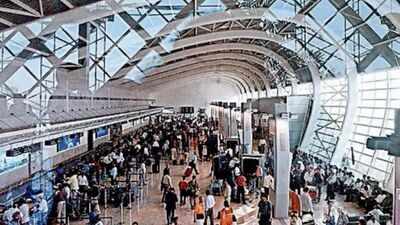
Mumbai aviation network is set for a major operational change as Chhatrapati Shivaji Maharaj International Airport’s Terminal 1 (T1) is scheduled to phase out operations from October 25, 2026, ahead of a large-scale redevelopment. The nearly 80-year-old terminal will eventually be demolished and rebuilt, with the first major demolition work planned to begin in January 2027. The redevelopment is expected to continue until the new terminal is commissioned around 2029-30.
The transition will affect millions of passengers. According to Mumbai International Airport Ltd (MIAL), of the roughly 15 million passengers currently handled by T1 each year, flights carrying around 10 million passengers are expected to move to Navi Mumbai International Airport (NMIA). The remaining passengers are expected to be accommodated at Mumbai airport’s Terminal 2 (T2).
Why is Terminal 1 being closed?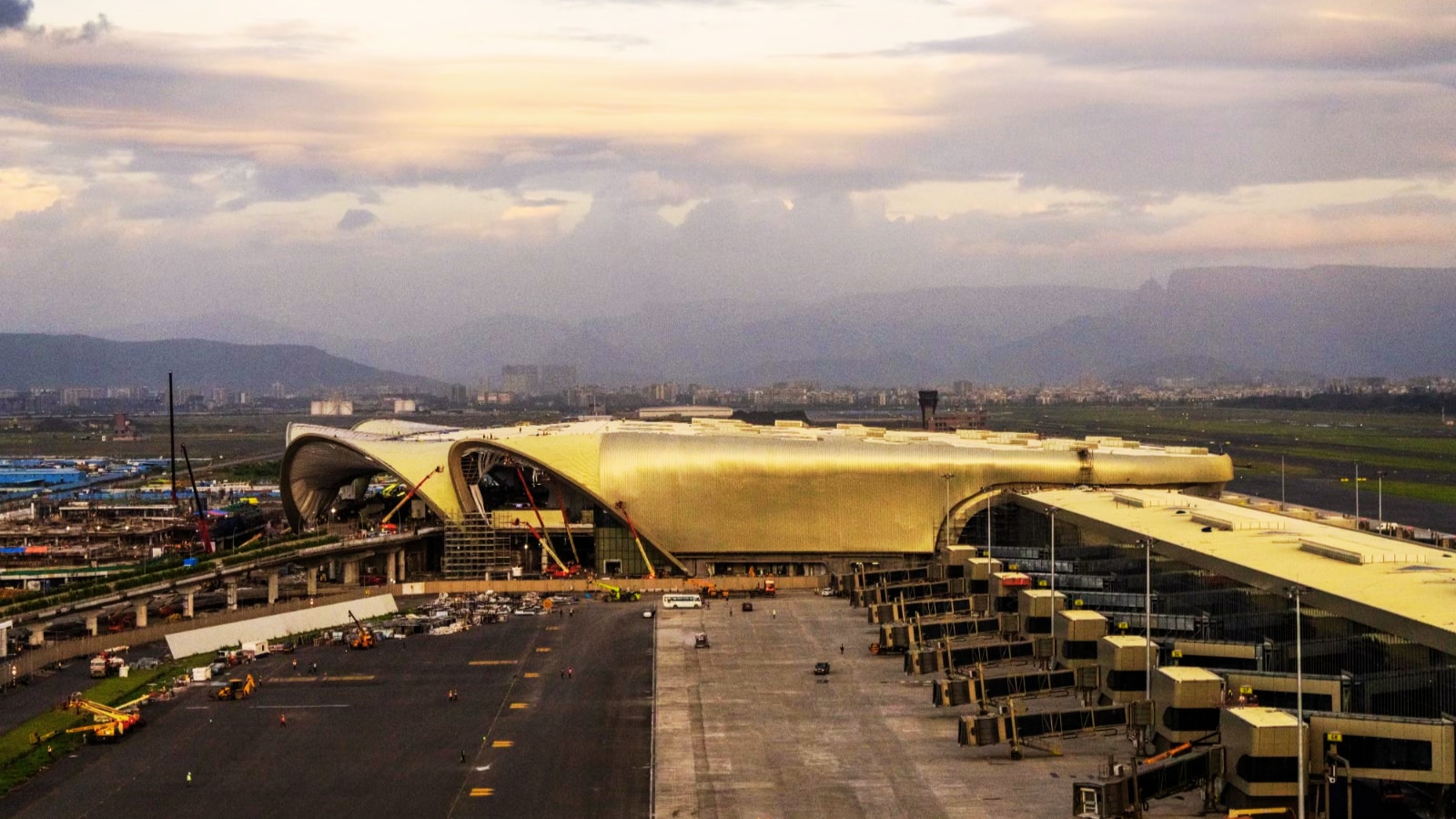
Terminal 1 is one of the oldest airport facilities in Mumbai and is now due for a major reconstruction. MIAL has said the redevelopment is being undertaken in line with the tariff order of the Airports Economic Regulatory Authority of India (AERA).
The demolition was originally planned earlier but was delayed because airlines did not have another suitable operating facility within the Mumbai Metropolitan Region. With Navi Mumbai International Airport now operational, airlines have another option for shifting flights during the redevelopment period.
The first phase of demolition is scheduled to begin with the northern section of Terminal 1-B on January 15, 2027. The shutdown of operations is being planned in phases rather than through a single overnight closure.
Where will T1 flights go?
The redistribution of flights will involve both Mumbai Airport’s T2 and Navi Mumbai International Airport.
MIAL has indicated that at least one-third of international air traffic movements are planned to move to NMIA, while from October 25 at least one-third of the air traffic movements currently handled by T1 are expected to shift towards T2. Airlines are being asked to finalise their transition plans as the redevelopment approaches.
Airlines operating from T1 have broadly been given the option of shifting their operations to T2, moving them to NMIA or, in some cases, temporarily suspending services until suitable capacity becomes available. MIAL has said airlines’ historic slot rights will be honoured once the reconstructed T1 becomes operational.
The transition has already begun for some carriers. Akasa Air shifted its domestic operations from T1 to T2 from August 1 as part of the operational realignment.
10 million passengers could shift to Navi Mumbai
The biggest change for travellers will be the airport they have to reach.
T1 currently handles around 15 million passengers annually. MIAL estimates that flights carrying approximately 10 million of these passengers could shift to Navi Mumbai, while around five million passengers could be accommodated at T2.
Mumbai Airport’s T2 passenger-handling capacity is expected to rise from approximately 40 million to 45 million passengers to deal with the additional traffic.
The shift is part of a broader redistribution of aviation traffic across the Mumbai Metropolitan Region. This winter, roughly one-fifth of the 55 million passengers currently handled by Mumbai airport are expected to use Navi Mumbai airport, according to the airport operator’s projections.
What does it mean for passengers?
For travellers whose flights move to Navi Mumbai, the most immediate impact will be additional road travel.
Passengers starting their journey from western or central Mumbai may have to spend considerably more time travelling to NMIA compared with reaching the existing airport in Santacruz or Sahar. The exact impact will depend on where a passenger lives, the time of travel and the mode of transport used.
Longer journeys could also mean higher transportation expenses, particularly for passengers relying on taxis or app-based cabs.
Traffic is another concern. Increased movement between Mumbai and Navi Mumbai could place additional pressure on major road corridors, especially during peak hours. Passengers may therefore need to leave home earlier than they would for a flight from the existing airport.
Could the shift also bring benefits?
While passengers travelling to Navi Mumbai could face longer journeys, the redistribution is expected to ease congestion at Mumbai’s existing airport.
Mumbai currently relies on a single operational runway for aircraft arriving at the airport before they are directed towards T1 or T2. Moving part of the traffic to NMIA could reduce aircraft holding times and congestion around departures.
MIAL expects the redistribution to improve aircraft movement and potentially enhance punctuality and on-time performance at the existing Mumbai airport.
Thus, the transition could create inconvenience for some passengers while simultaneously reducing pressure on the heavily used Mumbai airport infrastructure.
Navi Mumbai airport faces its own capacity challenge
The shift comes at a time when NMIA itself is preparing for rapidly increasing passenger traffic.
Its Terminal 1 has a declared capacity of around 20 million passengers per year, equivalent to roughly 55,000 passengers per day. However, projections indicate that this capacity could come under pressure as traffic is transferred from Mumbai airport.
Navi Mumbai’s Terminal 2, which is expected to provide an additional 30 million passengers of annual capacity, is scheduled to be ready around 2029. Until then, Mumbai T2 and NMIA T1 may need to accommodate traffic beyond their initially declared capacities.
Airlines and authorities face coordination challenge
The transition requires close coordination among airlines, airport operators and the civil aviation authorities.
MIAL has sought the creation of a joint transition group chaired by the civil aviation secretary to coordinate the movement of operations and minimise disruption for passengers.
There has also been discussion within the aviation industry about allowing airlines greater flexibility in deciding where their operations should move. The International Air Transport Association (IATA) has argued that transfers should be commercially and operationally viable for airlines rather than being imposed without adequate consultation.
MIAL, meanwhile, has been engaging with both domestic and international carriers to finalise the redistribution of flights.
Read more like this:
- होर्मुज में कुवैत के झंडे वाले तेल टैंकर पर हमला, 5 भारतीय सुरक्षित; ओमान ने बचाव में की मदद
- राहुल गांधी ने लॉन्च की ‘सत्याग्रह’ वेबसाइट, देशभर के आंदोलनों को एक मंच पर लाने की पहल
What should passengers do?
Travellers with tickets for flights scheduled after October 25 should check the airport and terminal mentioned by their airline before leaving for the journey. A flight that previously operated from T1 could move to T2 or Navi Mumbai as the transition progresses.
Passengers travelling to NMIA should also account for additional road travel time, particularly during peak traffic periods. Airline notifications should be monitored because operational changes may occur in phases.
The redevelopment of T1 represents a major infrastructure project for Mumbai’s aviation system. While the transition is likely to create short-term logistical challenges for passengers and airlines, the redistribution of traffic is also intended to create a more balanced two-airport system for the Mumbai Metropolitan Region.
For now, the key message for travellers is simple: do not assume that a familiar Mumbai flight will continue operating from the same airport or terminal. Check the latest airline communication before every journey.