Join
Join
 Shorts

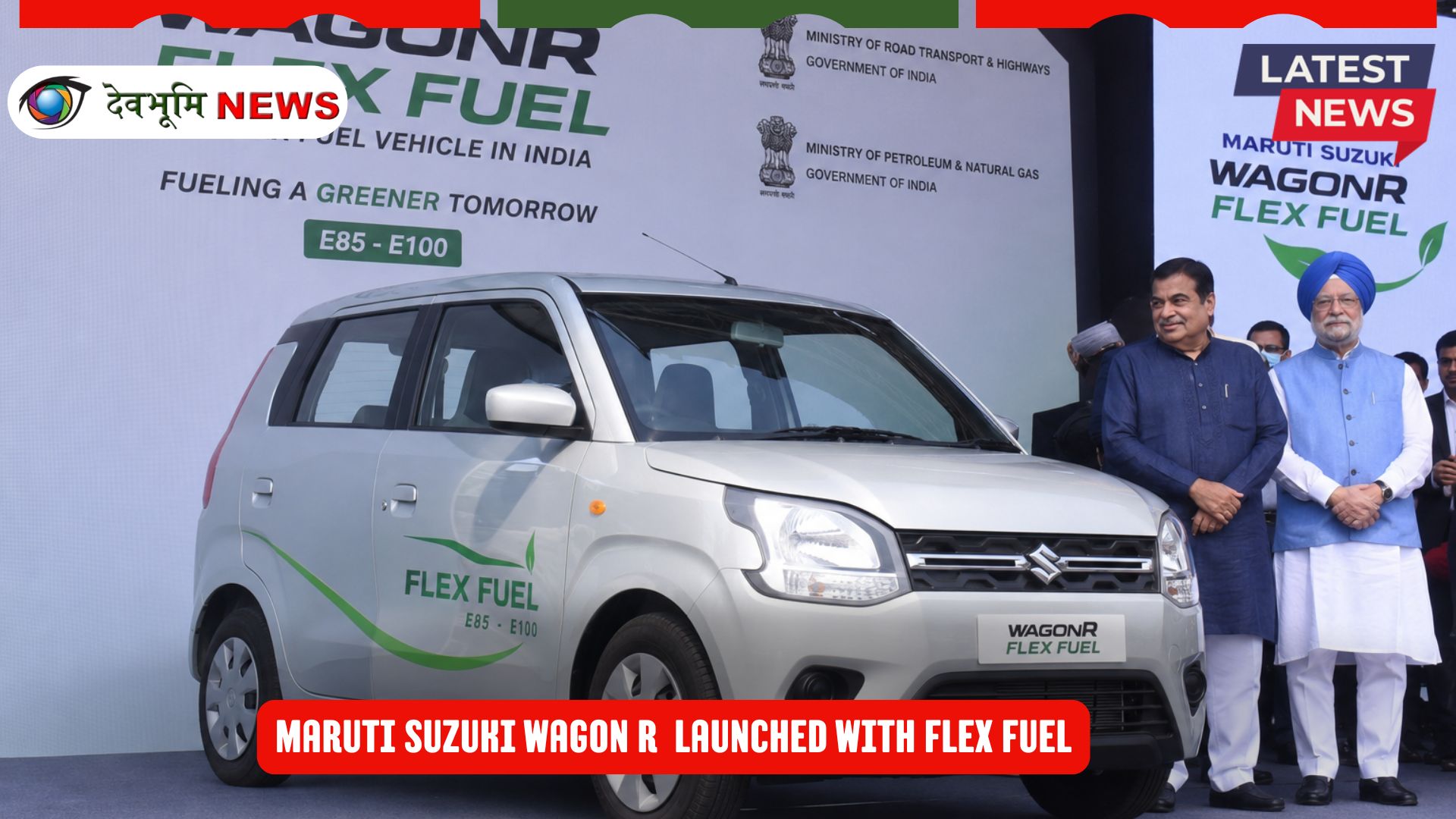
The Maruti Suzuki Wagon R Flex Fuel has officially arrived in India, and while it may look like the same practical hatchback that has been carrying families, groceries, school bags, and the occasional oversized pressure cooker for decades, there’s something very different happening beneath the bonnet.
In a significant step toward cleaner mobility, Maruti Suzuki has launched the country’s first mass-market flex-fuel passenger vehicle. Unveiled in New Delhi in the presence of Union Road Transport and Highways Minister Nitin Gadkari and Petroleum Minister Hardeep Singh Puri, the Wagon R Flex Fuel represents India’s growing commitment to alternative fuels and energy independence.
For years, electric vehicles have dominated conversations about the future of transportation. Yet India’s automotive future may not belong to a single technology. Sometimes progress isn’t about replacing everything overnight—it’s about finding practical solutions that work today while preparing for tomorrow.
And that’s exactly where the Wagon R Flex Fuel enters the picture.
What is the Maruti Suzuki Wagon R Flex Fuel?
The Maruti Suzuki Wagon R Flex Fuel is a specially engineered version of the popular Wagon R that can run on a wide range of ethanol-petrol blends.
Unlike conventional petrol cars that are designed for a specific fuel composition, flex-fuel vehicles can automatically adjust to varying ethanol concentrations. This allows owners to use fuels ranging from E20 to E100 without making any manual changes.
The launch marks a major milestone for India’s ethanol mobility roadmap, which aims to reduce dependence on imported crude oil while encouraging the use of domestically produced renewable fuels.
At first glance, it looks like a Wagon R.
Under the skin, however, it represents one of the most ambitious fuel transitions attempted by the Indian automotive industry.
Understanding Flex-Fuel Technology
Flex-fuel technology isn’t new globally. Countries like Brazil have successfully used ethanol-powered vehicles for decades.
The idea is simple.
Instead of designing an engine for a single fuel type, manufacturers develop systems capable of detecting the fuel blend inside the tank and adjusting engine operation accordingly.
The vehicle continuously monitors:
- Ethanol percentage
- Fuel injection requirements
- Ignition timing
- Air-fuel ratio
- Combustion characteristics
As the fuel composition changes, the engine management system adapts automatically.
Think of it as a multilingual translator. Whether the fuel speaks mostly petrol or almost entirely ethanol, the engine understands both languages.
E20 to E100: What Makes This Wagon R Special?
One of the biggest highlights of the Maruti Suzuki Wagon R Flex Fuel is its ability to run on ethanol blends ranging from E20 all the way up to E100.
For context:
E20 Fuel
- 20% ethanol
- 80% petrol
E85 Fuel
- 85% ethanol
- 15% petrol
E100 Fuel
- Nearly 100% ethanol
The Wagon R’s advanced electronic control unit continuously analyzes the fuel composition and adjusts engine parameters in real time.
This flexibility gives the vehicle a level of future readiness that many conventional petrol cars simply don’t possess.
As India’s ethanol infrastructure expands, owners won’t need to upgrade vehicles every time fuel standards evolve.
The car is already prepared.
Engine and Transmission Details
The Maruti Suzuki Wagon R Flex Fuel is powered by a specially modified 1.2-litre petrol engine paired with a 5-speed manual gearbox.
While the foundation comes from Maruti Suzuki’s proven powertrain, substantial engineering changes have been made to support high-ethanol operation.
These upgrades include:
- Ethanol-resistant fuel lines
- Revised fuel injectors
- Modified fuel pumps
- Advanced ECU calibration
- Corrosion-resistant engine components
- Optimized combustion mapping
These enhancements ensure reliable operation across the entire E20-E100 spectrum while maintaining the durability and practicality Wagon R buyers expect.
Engineering teams often say the best innovations are the ones drivers never notice.
That’s exactly the goal here.
The technology works quietly in the background while drivers simply get on with their day.
Why India is Betting Big on Ethanol
India imports a significant portion of its crude oil requirements every year.
That dependence creates economic and geopolitical challenges.
Ethanol offers an opportunity to diversify energy sources while supporting domestic agriculture.
The government’s ethanol strategy aims to:
- Reduce oil imports
- Improve energy security
- Support sugarcane farmers
- Lower emissions
- Promote renewable fuels
- Strengthen rural economies
It’s one of those rare policies where energy, agriculture, and transportation all intersect.
A litre of ethanol isn’t just fuel.
It’s also a reflection of crops grown, jobs created, and imports avoided.
Benefits of the Maruti Suzuki Wagon R Flex Fuel
Lower Dependence on Fossil Fuels
Higher ethanol usage reduces reliance on conventional petroleum products.
Future-Proof Fuel Compatibility
The ability to run on E20 through E100 gives owners flexibility as fuel infrastructure evolves.
Environmental Advantages
Ethanol is a renewable fuel source and can contribute to lower lifecycle carbon emissions.
Familiar Wagon R Practicality
The tall-boy design, spacious cabin, easy ingress, and city-friendly dimensions remain unchanged.
Potential Long-Term Cost Benefits
As ethanol production scales up, alternative fuel pricing could become increasingly attractive.
The Infrastructure Challenge: India’s Next Big Step
The technology is ready.
The vehicle is ready.
Now the infrastructure must catch up.
Currently, higher ethanol blends such as E85 and E100 are available only in selected regions and pilot corridors, including parts of Delhi-NCR and the Mumbai-Nagpur route.
To support nationwide adoption, the government has announced plans to establish approximately 5,000 to 5,200 ethanol dispensing stations across the country.
That is an ambitious target.
But then again, so was the idea of putting mobile internet into hundreds of millions of pockets. India has surprised skeptics before.
The success of flex-fuel vehicles will ultimately depend on how quickly this fuel network expands.
Launch Status and Availability
Unlike earlier demonstration models showcased at industry events, the Maruti Suzuki Wagon R Flex Fuel has officially launched in India.
This makes it the country’s first mass-market flex-fuel passenger car from a mainstream manufacturer.
However, commercial adoption will likely grow gradually alongside ethanol infrastructure development.
Consumers in regions where higher ethanol blends are readily available stand to benefit the most in the early stages.
As fuel availability improves nationwide, the appeal of flex-fuel technology could expand significantly.
What Does This Mean for Indian Car Buyers?
For most buyers, the launch of the Wagon R Flex Fuel isn’t just about one new variant.
It’s about having more choices.
The future of mobility in India will likely include:
- Electric vehicles
- Hybrids
- CNG vehicles
- Hydrogen technologies
- Flex-fuel vehicles
Rather than a winner-takes-all scenario, multiple solutions may coexist for decades.
The Wagon R Flex Fuel represents an important addition to that ecosystem.
And perhaps that’s the most interesting part.
The future isn’t arriving through a dramatic revolution.
It’s arriving through practical evolution.
One fuel station, one engine calibration, and one Wagon R at a time.
READ MORE:
- Hero MotoCorp Flex-Fuel Motorcycles Launch in India: 7 Powerful Reasons This Green Revolution Matters
- Virat Kohli बाहर-Rohit Sharma अनिश्चित: BCCI का World Cup Plan B हुआ एक्टिव, टीम इंडिया के भविष्य की नई रणनीति तैयार
- Odisha Boy Sacrifices IIT Bombay Seat to Study Alongside Twin Brother at IIT Madras
Final Verdict
The Maruti Suzuki Wagon R Flex Fuel is much more than another update to a familiar hatchback. It is a statement about where India’s automotive industry is heading.
By combining a trusted platform with advanced flex-fuel technology capable of running on anything from E20 to E100, Maruti Suzuki has created a vehicle that aligns with both current realities and future ambitions.
The road ahead will depend heavily on fuel infrastructure expansion, but the launch itself sends a clear message: India’s ethanol era is no longer a distant possibility.
It’s already parked in the driveway.