Join
Join
 Shorts

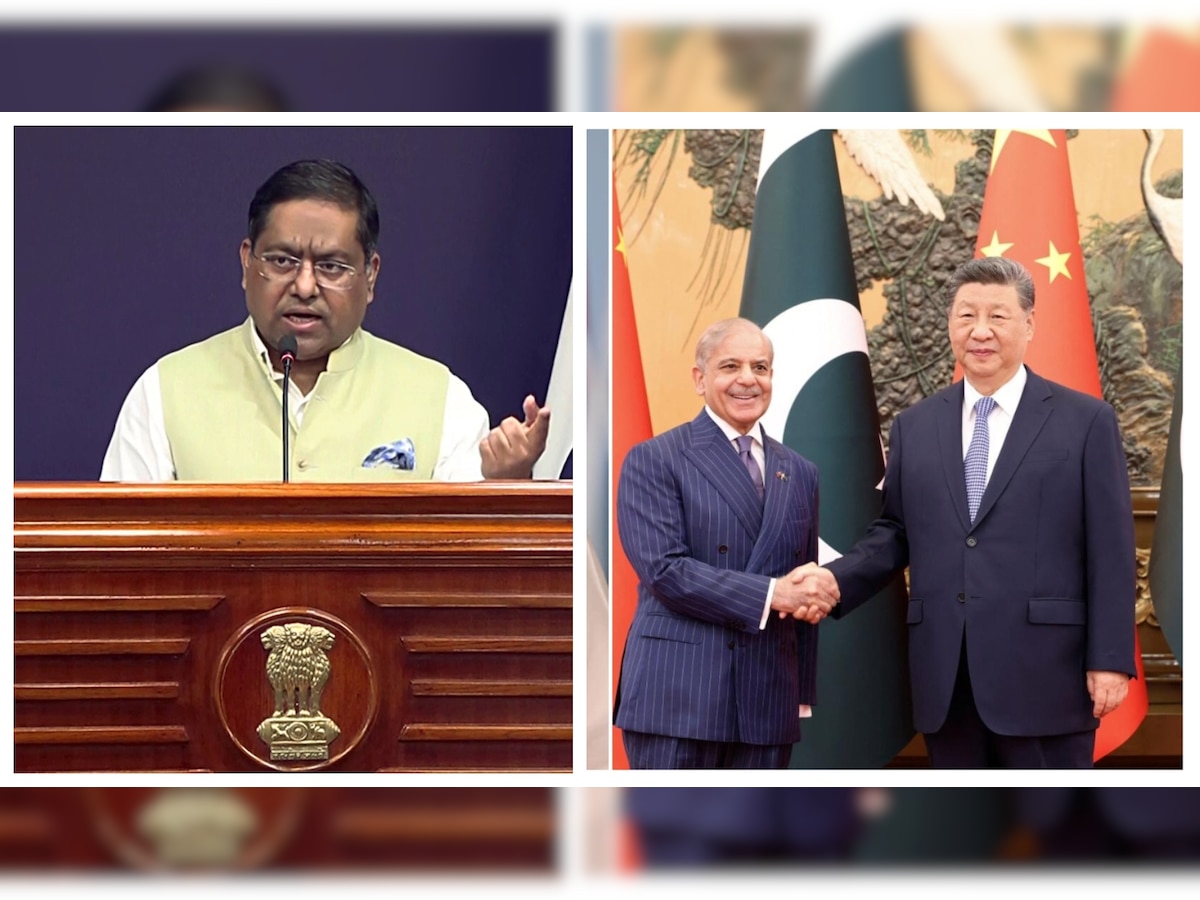
India has strongly rejected the Pakistan-China Boundary Joint Commission, describing it as an arrangement without any legal basis. New Delhi’s response came after the commission held its first meeting in Islamabad, where Pakistan and China discussed cooperation in border management, joint border surveys, trade flows and people-to-people connectivity.
The Indian government reiterated that Pakistan cannot enter into agreements concerning territories that India considers to be under illegal and forcible occupation. The Ministry of External Affairs (MEA) stated that India’s position on the matter remains “clear and consistent” and that there is no recognised Pakistan-China boundary concerning Indian territory.
MEA spokesperson Randhir Jaiswal said, “There is no boundary between Pakistan and China. We reject the so-called Joint Commission, which is without any legal basis.”
India Reaffirms Position on Jammu and Kashmir and Ladakh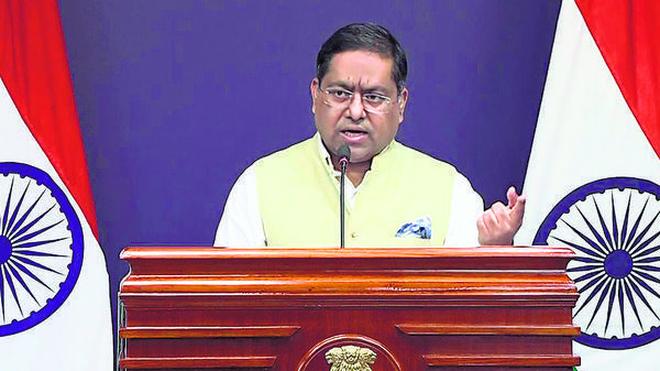
The Indian government once again declared that the Union Territories of Jammu and Kashmir and Ladakh are integral and inalienable parts of India. According to New Delhi, Pakistan has no authority to finalise arrangements involving territories that India claims as its own.
Jaiswal emphasised that these regions “have been, are and will always remain integral and inalienable parts of India.” He further stated that Pakistan has no locus standi to enter into arrangements concerning Indian territory under its alleged illegal occupation.
India has consistently maintained that Pakistan’s control over parts of the erstwhile princely state of Jammu and Kashmir originated during the 1947–48 conflict. New Delhi argues that agreements subsequently signed by Pakistan concerning these areas cannot alter India’s territorial claims or legal position.
Dispute Over the 1963 China-Pakistan Agreement
At the centre of India’s objection is the China-Pakistan Boundary Agreement signed in 1963. Under the agreement, Pakistan transferred control of territory in the Shaksgam Valley to China. India has never recognised the agreement and has repeatedly described it as illegal and invalid.
New Delhi argues that Pakistan did not possess legitimate sovereignty over the territory and therefore had no legal authority to transfer it to another country. India considers the Shaksgam Valley part of its territory in the Union Territory of Ladakh.
The Indian government has maintained that any agreement involving disputed Indian territory, especially one concluded without India’s participation, cannot be accepted as legally valid. This position has remained consistent across successive governments.
The MEA has also reiterated that India opposes attempts by China and Pakistan to legitimise what it describes as illegal occupation or alter the status of territories claimed by India.
Concerns Over Border Cooperation
Pakistan and China have presented the Boundary Joint Commission as a mechanism to strengthen coordination along their shared frontier. The commission is expected to focus on border management, joint surveys, trade-related movement and connectivity.
However, India views such cooperation through the lens of its territorial dispute with both countries. New Delhi argues that the creation of institutional mechanisms between Pakistan and China cannot establish legal legitimacy over areas that India claims.
India’s objection also reflects its broader concern over China-Pakistan strategic cooperation in Pakistan-occupied Kashmir. The government has repeatedly opposed infrastructure and connectivity projects in the region, including the China-Pakistan Economic Corridor (CPEC), because parts of the project pass through territory claimed by India.
According to New Delhi, economic development and regional connectivity cannot be pursued in a manner that disregards India’s sovereignty and territorial integrity.
Implications for Regional Relations
The dispute comes at a time when India is managing complex relations with both Pakistan and China. India and China have attempted to stabilise bilateral ties following military tensions along their disputed Himalayan border, while India’s relations with Pakistan remain affected by security concerns and the Kashmir dispute.
The establishment of a new Pakistan-China boundary mechanism could add another layer to the region’s geopolitical tensions. Although Islamabad and Beijing describe their cooperation as a bilateral matter, New Delhi maintains that any initiative involving Indian territory directly affects its sovereignty.
India’s strong reaction indicates that it will continue to oppose arrangements that it believes could create an impression of legal recognition for territorial transfers or occupation.
Read more like this:
- ‘Meta Has Admitted Its Mistake, Must Remove Child Abuse Content’: Government Says No Immunity
- रीढ़ की हड्डी दिखाइए, ट्रंप के सामने मत झुकिए’: UPI शुल्क विवाद पर राहुल गांधी का PM मोदी पर हमला
Pakistan and China Yet to Respond to India’s Objection
The Indian government has called on Pakistan to vacate territories under what it describes as illegal and forcible occupation. Jaiswal also criticised the move as “theatrics” and reiterated that bilateral cooperation between Pakistan and China would have no impact on India’s sovereignty over Jammu and Kashmir and Ladakh.
The immediate response from Pakistan and China to India’s statement will be closely watched. Their positions on the 1963 boundary agreement and border cooperation remain central to the continuing dispute.
Conclusion
India’s rejection of the Pakistan-China Boundary Joint Commission is rooted in its longstanding opposition to the 1963 China-Pakistan boundary agreement and its claims over Jammu and Kashmir and Ladakh. New Delhi maintains that Pakistan lacks the authority to negotiate arrangements concerning Indian territory and that any such initiative has no legal effect on India’s sovereignty.
The development highlights the continuing complexity of territorial disputes in South Asia, where border management, infrastructure cooperation and strategic partnerships remain closely linked to questions of sovereignty and international legitimacy.