Join
 Shorts

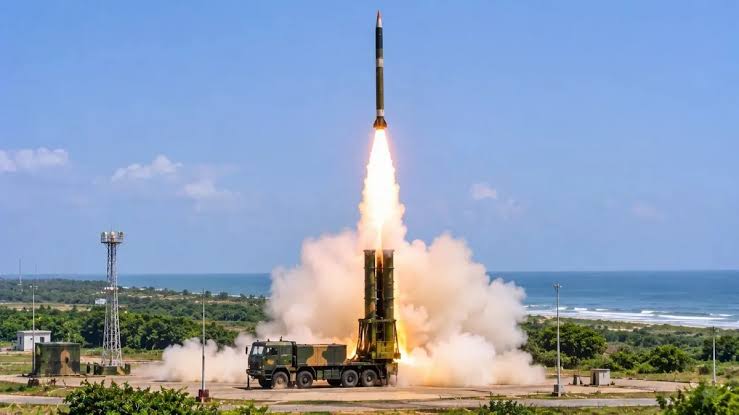
India has achieved another significant milestone in strengthening its indigenous defence capabilities. On November 5, 2026, the Defence Research and Development Organisation (DRDO) successfully conducted the flight-test of its indigenously developed quasi-ballistic missile, ‘Pralay’, from Dr APJ Abdul Kalam Island, located off the coast of Odisha. The missile was launched at approximately 11:10 AM as part of its ongoing user evaluation trials.
According to the Ministry of Defence, all the objectives of the test were successfully achieved. The successful trial marks an important step towards the induction of the Pralay missile into the Indian Armed Forces.
About the Pralay Missile
Pralay is an indigenously developed, solid-propellant, surface-to-surface quasi-ballistic missile. It has been designed to enhance India’s conventional strike capabilities and strengthen its ability to respond effectively to emerging security challenges.
The missile has been developed by Research Centre Imarat (RCI), Hyderabad, in collaboration with other DRDO laboratories. Bharat Dynamics Limited (BDL), one of the Development-cum-Production Partners, has manufactured the missile system.
Pralay represents India’s growing expertise in advanced missile technology and reflects the country’s commitment to achieving self-reliance in defence production.
Key Features of the Pralay Missile
1. Quasi-Ballistic Technology
One of the most important features of Pralay is its quasi-ballistic flight trajectory. Unlike conventional ballistic missiles, which generally follow a predictable trajectory, quasi-ballistic missiles can manoeuvre during flight.
This capability makes the missile’s flight path less predictable and increases the challenges for enemy air defence and interception systems.
2. Solid-Propellant System
Pralay uses a solid-propellant rocket motor. Solid-propellant technology offers advantages such as relatively easy storage, quicker launch preparation and operational flexibility.
3. Range and Accuracy
Pralay has a reported operational range of approximately 150 to 500 kilometres. It uses advanced guidance and navigation technologies to achieve high precision.
4. Multiple Warhead Capability
The missile is designed to carry different categories of conventional warheads to engage various types of targets. This provides flexibility to the armed forces according to operational requirements.
5. Mobile Launch Capability
The missile has been designed for launch from a mobile launcher, providing greater flexibility in deployment and improving its operational survivability.
Details of the Successful Flight-Test
The successful flight-test was conducted from Dr APJ Abdul Kalam Island off the Odisha coast on November 5, 2026.
The Integrated Test Range (ITR), Chandipur, deployed various range instruments to monitor the missile’s performance and collect flight-related data.
The Ministry of Defence confirmed that all the stipulated test objectives were fully met. The trial was conducted in the presence of senior DRDO officials, representatives from the defence industry and members of the Defence Forces.
Importantly, the test was part of user evaluation trials, which help establish the operational suitability of a weapon system before its induction into the armed forces.
Following the successful completion of this trial, the Ministry of Defence stated that the induction of the Pralay missile system had become imminent.
Significance for India’s Defence Capabilities
1. Strengthening National Security
The successful testing of Pralay will strengthen India’s conventional missile capabilities. It will provide the armed forces with an additional option to address emerging security threats and respond to changing battlefield requirements.
2. Enhancing Military Preparedness
The missile’s precision, manoeuvrability and mobile launch capability can improve the operational flexibility of India’s defence forces.
3. Boost to Atmanirbhar Bharat
Pralay is an important example of indigenous defence research, development and manufacturing. Its development demonstrates India’s increasing ability to design and produce sophisticated weapon systems within the country.
4. Strengthening Defence Industry
The participation of Bharat Dynamics Limited and various DRDO laboratories highlights the importance of collaboration between government research organisations and domestic defence industries.
Reaction of Defence Leadership
Defence Minister Rajnath Singh congratulated DRDO, the Defence Forces and industry partners on the successful flight-test.
He stated that the missile, equipped with advanced technologies, would further enhance the technological capabilities and operational preparedness of the military against emerging threats.
Defence Secretary and Chairman of DRDO Rajesh Kumar Singh also congratulated the scientists, engineers and teams associated with the successful test.
Read more like this:
- एशियन चैंपियंस ट्रॉफी: भारत ने जापान को 4-1 से हराकर लगातार तीसरी बार जीता खिताब
- दिल्ली की हवा हुई जहरीली, नोएडा-ग्रेटर नोएडा में AQI 773 तक पहुंचने का दावा; जानें अपने इलाके का हाल
Conclusion
The successful flight-test of the Pralay missile is a major achievement for India’s defence research and development programme. It demonstrates the technological capabilities of DRDO and the growing strength of India’s indigenous defence manufacturing ecosystem.
With its advanced quasi-ballistic technology, precision guidance and conventional strike capabilities, Pralay is expected to play an important role in strengthening India’s military preparedness.
The successful completion of user evaluation trials brings the missile closer to induction into the armed forces. Overall, this achievement represents another significant step towards the vision of Atmanirbhar Bharat in defence and a stronger, technologically advanced and self-reliant India.