Join
Join
 Shorts

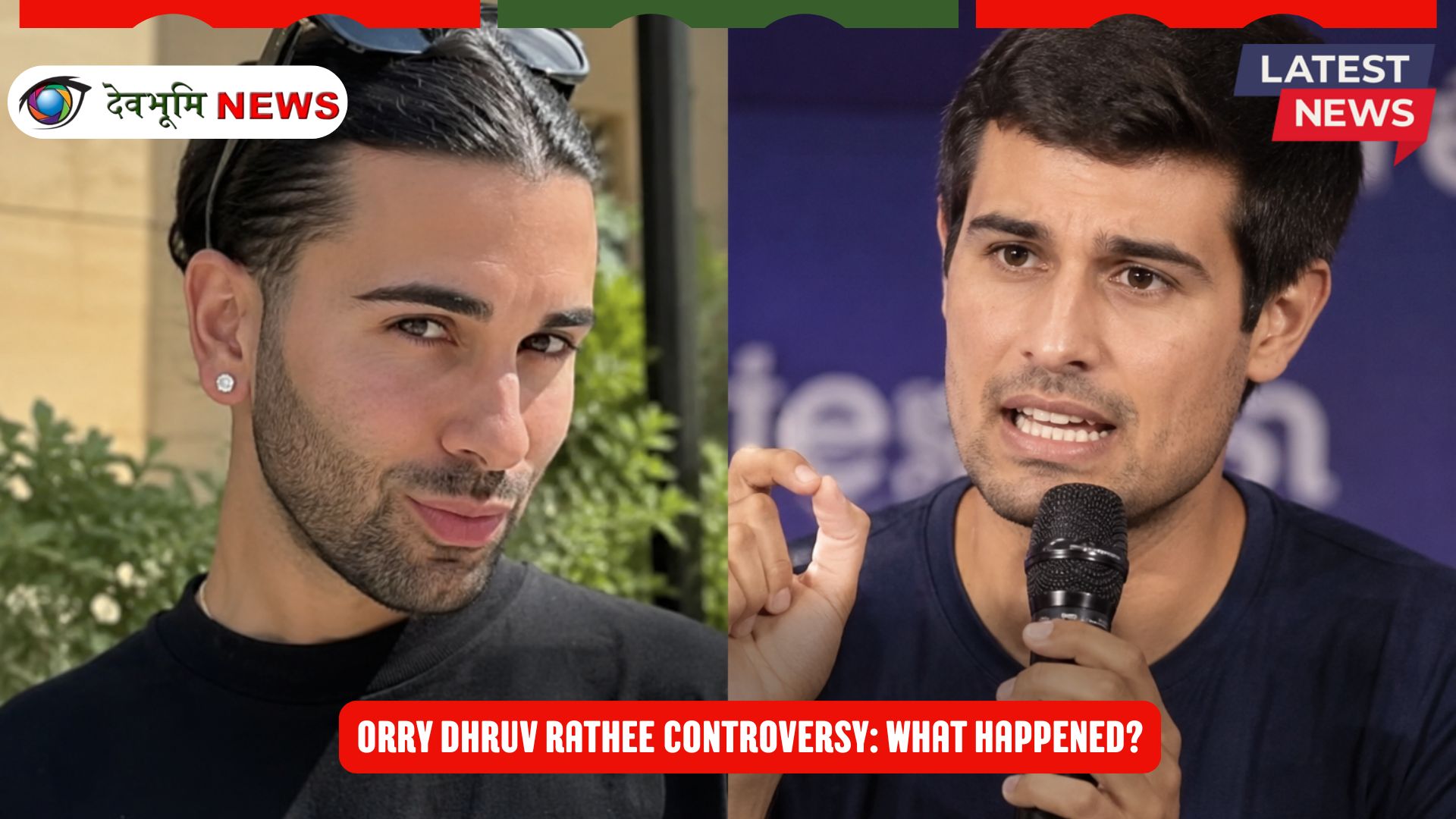
Orry Dhruv Rathee controversy has once again become a hot topic online after social media personality Orhan Awatramani, better known as Orry, criticised YouTuber Dhruv Rathee during a podcast appearance. Orry reportedly called Rathee “anti-national” again and accused him of covering topics only when they suit his narrative.
Now, that is not just tea. That is full Mumbai cutting chai with extra ginger, served boiling hot.
According to recent entertainment reports, Orry said he does not like Dhruv Rathee and questioned the way the YouTuber chooses subjects for his videos. His comments quickly caught attention because Rathee is not just another influencer. He is one of India’s most recognisable political and social commentary creators.
That is why the Orry Dhruv Rathee controversy has become more than a simple celebrity-versus-YouTuber argument. It has pulled in Bollywood fans, political viewers, meme pages, and the always-ready comment section warriors who treat every controversy like it is the IPL final.
Why Orry Called Dhruv Rathee “Anti-National” Again
Orry reportedly made the remarks during a podcast on KK Creates. While speaking about Dhruv Rathee, he accused him of covering issues “conveniently” when they fit his narrative and added that he does not like him.
The word “anti-national” is what made the controversy louder.
In India, that label is not a casual insult. It carries political weight, emotional heat, and enough drama to power three prime-time debates. Calling someone “anti-national” can quickly shift a conversation from criticism to character attack.
To be clear, Orry’s statement should be treated as his personal opinion, not a proven fact. There is no public legal finding in these reports that declares Dhruv Rathee “anti-national”. The controversy is about Orry’s allegation and the reaction it created.
That small distinction matters. In the age of viral clips, one word can travel faster than context. By the time nuance wears its shoes, outrage has already reached the airport.
The Janhvi Kapoor Connection In The Orry Dhruv Rathee Controversy
The Orry Dhruv Rathee controversy did not begin with this latest podcast clip. A similar clash happened earlier when Dhruv Rathee’s video on Bollywood beauty standards drew attention for reportedly featuring celebrities such as Janhvi Kapoor, Deepika Padukone and others. Orry had then defended Janhvi Kapoor and criticised Rathee.
Orry is known to be close to several Bollywood celebrities, and his strong reaction was seen by many as a friend defending a friend. He reportedly suggested that Janhvi Kapoor may not even know who Dhruv Rathee is, while also using the “anti-national” label earlier.
That is why the latest remark feels like round two.
One side sees Dhruv Rathee as a creator questioning Bollywood’s beauty standards. The other side sees his content as unfairly targeting public figures. And somewhere in the middle is the average internet user, pretending to be neutral while secretly refreshing the feed every five minutes.
The debate also raises a fair question: can celebrities be criticised for beauty standards without the criticism becoming personal?
The answer is not simple. Bollywood has influenced how India thinks about beauty for decades. Fair skin, perfect bodies, ageless faces and airbrushed perfection have all played their part. But celebrities are also human beings, not walking thumbnails waiting to be judged.
That is where the conversation becomes more layered than a badly folded bedsheet.
Why This Fight Became Bigger Than Bollywood Gossip
At first, the Orry Dhruv Rathee controversy may look like another social media fight. But it is bigger because Orry and Dhruv Rathee represent two very different internet worlds.
Orry belongs to the celebrity-socialite side of pop culture. His brand is parties, photos, famous friends, viral poses and mystery. Nobody is fully sure what Orry does, but everyone knows he is somehow always there. In a strange way, that itself is a talent. Some people build careers. Orry built curiosity.
Dhruv Rathee, meanwhile, represents the YouTube explainer space. His audience follows him for videos on politics, society, governance, history and public issues. Whether people agree or disagree with him, his content is designed to influence opinion and start debate.
So when Orry attacks Dhruv Rathee, the conversation becomes more than “celebrity friend angry at YouTuber”. It turns into a discussion about media power.
Who gets to criticise Bollywood?
Who decides what is selective commentary?
Can influencers call out YouTubers?
Can YouTubers call out celebrities?
And most importantly, can everyone please stop using nuclear-level labels for every disagreement?
That last one may be wishful thinking.
Internet Reactions: Divided, Loud And Very Online
The internet reaction to the Orry Dhruv Rathee controversy has been divided. Some users supported Orry and argued that public commentators should also face criticism. Others defended Dhruv Rathee, saying creators have the right to question Bollywood, beauty standards and celebrity culture.
Then there was the third group: meme makers.
For them, this was premium content. Orry versus Dhruv Rathee sounds like a crossover nobody ordered but everyone watched. It is like seeing a Bollywood after-party walk into a political science lecture and ask, “Who invited him?”
But jokes aside, this controversy shows how the Indian internet has changed. Influencers are no longer just posting lifestyle content. YouTubers are no longer just making videos. Celebrities are no longer protected by distance. Everyone is visible, everyone is clickable, and everyone is one sentence away from becoming a headline.
Social media has turned public life into a glass house. The only difference is that now everyone outside is holding a stone and a smartphone.
The Bigger Question Behind The Orry Dhruv Rathee Controversy
The real issue behind the Orry Dhruv Rathee controversy is not just who said what. It is about how public criticism works in today’s India.
Dhruv Rathee’s supporters may argue that questioning Bollywood beauty standards is valid. After all, cinema has shaped beauty expectations for generations. If creators do not question unrealistic standards, then those standards continue without challenge.
Orry’s supporters may argue that creators should be more careful while discussing celebrities, especially when the topic involves appearance. A public figure may be famous, but fame does not remove sensitivity. A thumbnail, a title, or a joke can have real impact.
Both sides have a point. That is the uncomfortable part.
The internet loves simple heroes and villains. Real life gives us people with mixed motives, emotional reactions and half-correct arguments. Orry may be overusing a loaded label. Rathee’s critics may still have a fair point about selective commentary. Bollywood may deserve criticism. Celebrities may still deserve basic dignity.
That is not a contradiction. That is adulthood. Sadly, adulthood does not trend as well as outrage.
Read More
- प्रणित मोरे ने 370 रुपये बिरयानी विवाद पर मांगी माफी, कहा- ‘मुझे बेहतर इंसान बनने का एक मौका दें’
- G7 शिखर सम्मेलन में ग्लोबल साउथ की आवाज़ बनेंगे पीएम मोदी, फ्रांस और स्लोवाकिया दौरे से भारत की वैश्विक भूमिका होगी मजबूत
- अमेरिकी-ईरान समझौते की उम्मीद से शेयर बाजार में जबरदस्त उछाल: सेंसेक्स 1700 अंक चढ़ा, निवेशकों की संपत्ति में भारी बढ़ोतरी
Final Thoughts
The Orry Dhruv Rathee controversy is another reminder that modern fame is no longer controlled by film studios, TV channels or newspapers. It is controlled by clips, comments, podcasts, thumbnails and reactions.
Orry’s latest remarks have restarted a debate that began around Bollywood beauty standards and has now moved into bigger questions about public criticism, influencer responsibility and the use of labels like “anti-national”.
Whether one agrees with Orry or Dhruv Rathee, one thing is clear: online debates need more clarity and less name-calling. Criticism is healthy. Blind outrage is not. Defending a friend is human. Throwing heavy labels without evidence is risky.
In today’s internet world, everyone has a microphone. The real test is knowing when to lower the volume.
And honestly, sometimes the smartest take is still the oldest one: think before you speak, breathe before you post, and never underestimate the power of the mute button.