Join
Join
 Shorts

Bharti Airtel has taken the lead over HDFC Bank to become India’s second most valuable publicly traded company based on market capitalization. This shift reflects a change in investor preferences, growing confidence in the telecom sector, and Airtel’s strategic focus on digital services, 5G infrastructure, and financial technology.
Recent market data shows Bharti Airtel’s market value has crossed nearly ₹12 lakh crore, surpassing HDFC Bank’s valuation of approximately ₹11.8 lakh crore.
Reliance Industries still holds the top position among India’s most valuable companies.
Bharti Airtel Market Capitalisation Surges Ahead of HDFC Bank
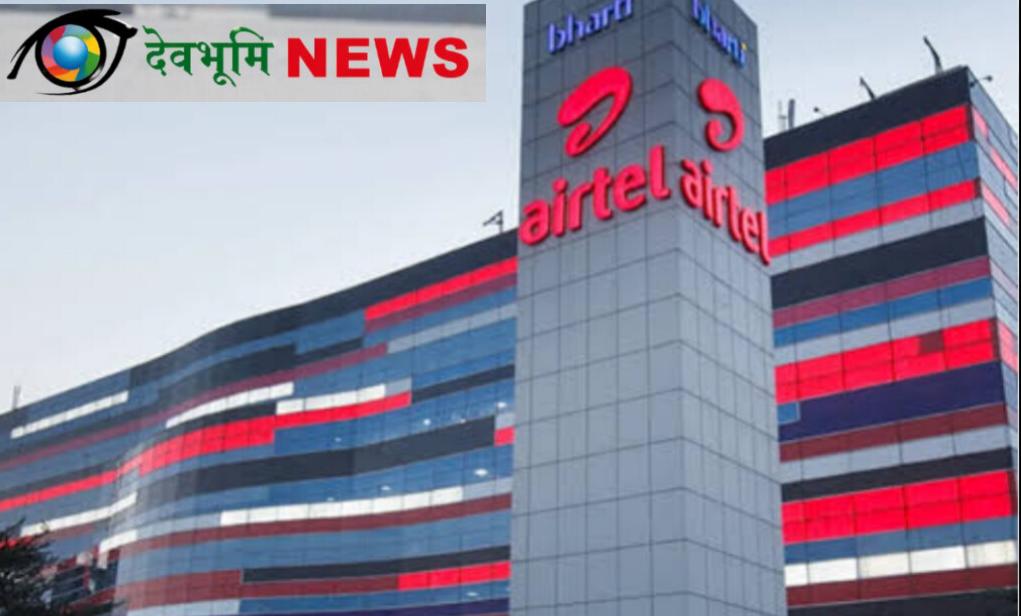
Bharti Airtel surpassed HDFC Bank in market valuation following a sharp rise in its stock price.
Airtel shares increased by nearly 10% within a week, while HDFC Bank’s stock saw only slight gains. Investors are showing more confidence in telecom companies due to rising digital usage, improved average revenue per user (ARPU), and expanding 5G services across the country.
Airtel’s stock reached record highs during intraday trading, pushing the telecom company ahead of HDFC Bank on Dalal Street.
Analysts believe the surge in valuation is more than a short-term market reaction and indicates the growing importance of telecom in India’s digital economy.
This shift highlights a broader movement in investor preferences from traditional banks towards technology-driven communication and digital infrastructure firms.
Bharti Airtel Growth Driven by Strong Financial Performance
One key reason behind Airtel’s success is its strong financial performance in recent quarters.
The telecom operator reported higher revenue growth in Q4 FY26 despite challenges in the broader market. Airtel’s revenue increased by over 15%, driven by premium subscriber upgrades, growing 5G adoption, and strong performance in its Africa business.
Airtel’s ARPU, a key profitability indicator, rose to ₹257 from ₹245 in the previous year.
This increase reflects the company’s strategy of attracting high-value customers and maximizing data usage.
The company has also benefited from increased demand for broadband, enterprise connectivity, and digital platforms.
Investors now view Airtel as a diversified digital communications company rather than just a telecom provider.
Airtel 5G Expansion Boosts Investor Confidence
Bharti Airtel’s aggressive expansion into 5G services has bolstered investor confidence.
The company has rapidly expanded its 5G network across major Indian cities and towns, establishing its position as a leading provider of next-generation connectivity.
Recently, Airtel launched “Priority Postpaid” services using advanced 5G slicing technology.
This innovation offers faster and more reliable connectivity to premium users, especially in areas with heavy network usage.
Industry experts believe that Airtel’s ongoing technological investments will drive further subscriber growth and retain customers.
The company is also heavily investing in edge data centers and cloud infrastructure to support India’s digital transformation.
Reports indicate that Airtel plans to set up 56 edge data centers in the near future and is also expanding into non-banking financial services.
HDFC Bank Faces Market Pressure Amid Slow Growth
HDFC Bank, on the other hand, has faced market pressure due to slower growth and challenges from the merger with Housing Development Finance Corporation (HDFC).
Although it remains India’s largest private-sector bank by assets, investors are cautious due to slowing loan growth, tighter margins, and valuation concerns.
Market analysts note that banking stocks are facing a tough environment due to fluctuating interest rates, regulatory pressures, and competition from fintech companies and digital payment platforms.
HDFC Bank’s shares have underperformed compared to telecom and tech-focused companies, giving Airtel an opportunity to gain market share.
Telecom Sets Re Rating Drive Airtel Valuation
Bharti Airtel’s rise also signals a broader re-rating of India’s telecom sector.
Over the past few years, the industry has evolved from a price-war-driven business into a more sustainable and profitable sector.
Industry consolidation has significantly reduced competition, giving major players like Airtel and Reliance Jio stronger pricing power.
This has allowed telecom companies to increase tariffs, boost profitability, and invest heavily in digital infrastructure.
Analysts from major brokerage firms have upgraded their target prices for Airtel after its strong quarterly results and operational improvements.
Jefferies recently increased Airtel’s target valuation following better-than-expected revenue and EBITDA performance.
The telecom company’s Africa business has also become a strong growth driver, contributing significantly to overall revenue and earnings.
Bharti Airtel Digital Ecosystem Expand Beyond Telecom
Bharti Airtel is increasingly positioning itself as a digital ecosystem company, beyond just a telecom provider.
Its business now includes broadband services, digital entertainment, cloud communication, cybersecurity solutions, and fintech services via Airtel Payments Bank.
The company’s expansion into financial services and enterprise solutions is expected to generate additional revenue streams.
Airtel’s investments in artificial intelligence, cloud infrastructure, and edge computing are also reinforcing its long-term growth strategy.
Investors are rewarding companies that can build scalable digital ecosystems, and Airtel appears to be benefiting from this global trend.
Read more like this:
- देहरादून में महिला अधिवक्ता का मानसिक व आर्थिक उत्पीड़न, केशव थलवाल के खिलाफ मुकदमा दर्ज
- Rajasthan Royals Crush Lucknow Super Giants in High scoring Thriller
- India Italy Strategic Partnership 2026 Expansion Across Trade, Technology, Defence and Clean Energy
Airtel vs HDFC Bank –A Shift in Market Leadership
The rise of Bharti Airtel over HDFC Bank reflects a broader transformation in India’s corporate landscape.
Traditionally, banks and financial institutions dominated market capitalization rankings due to their stable earnings and strong balance sheets.
However, the rapid growth of India’s digital economy is reshaping investor priorities.
Telecom, technology, and digital infrastructure companies are now being valued for their long-term growth potential and ability to benefit from rising internet penetration and digital adoption.
Bharti Airtel’s achievement demonstrates how digital connectivity has become a core pillar of India’s economic growth.
As more businesses and consumers rely on high-speed internet, cloud computing, and digital communication platforms, telecom companies are emerging as strategic assets in the economy.
Future Outlook for Bharti Airtel & HDFC Bank
Looking ahead, market experts believe Bharti Airtel could continue its upward trend if it maintains strong subscriber growth, improves profitability, and expands its digital ecosystem.
The company’s leadership in premium telecom services and 5G technology gives it a competitive advantage in India’s evolving telecom market.
At the same time, HDFC Bank remains one of India’s strongest financial institutions with a large customer base and a wide banking network.
Analysts expect the bank to regain momentum once integration challenges stabilize and credit growth improves.
For investors, the competition between Airtel and HDFC Bank represents a shift in India’s economic dynamics, where digital infrastructure companies are increasingly competing with traditional financial giants for market leadership.
Bharti Airtel’s rise to become India’s second most valuable company marks a significant moment for the telecom industry and highlights the growing importance of digital transformation in shaping the country’s economic future.