Join
Join
 Shorts

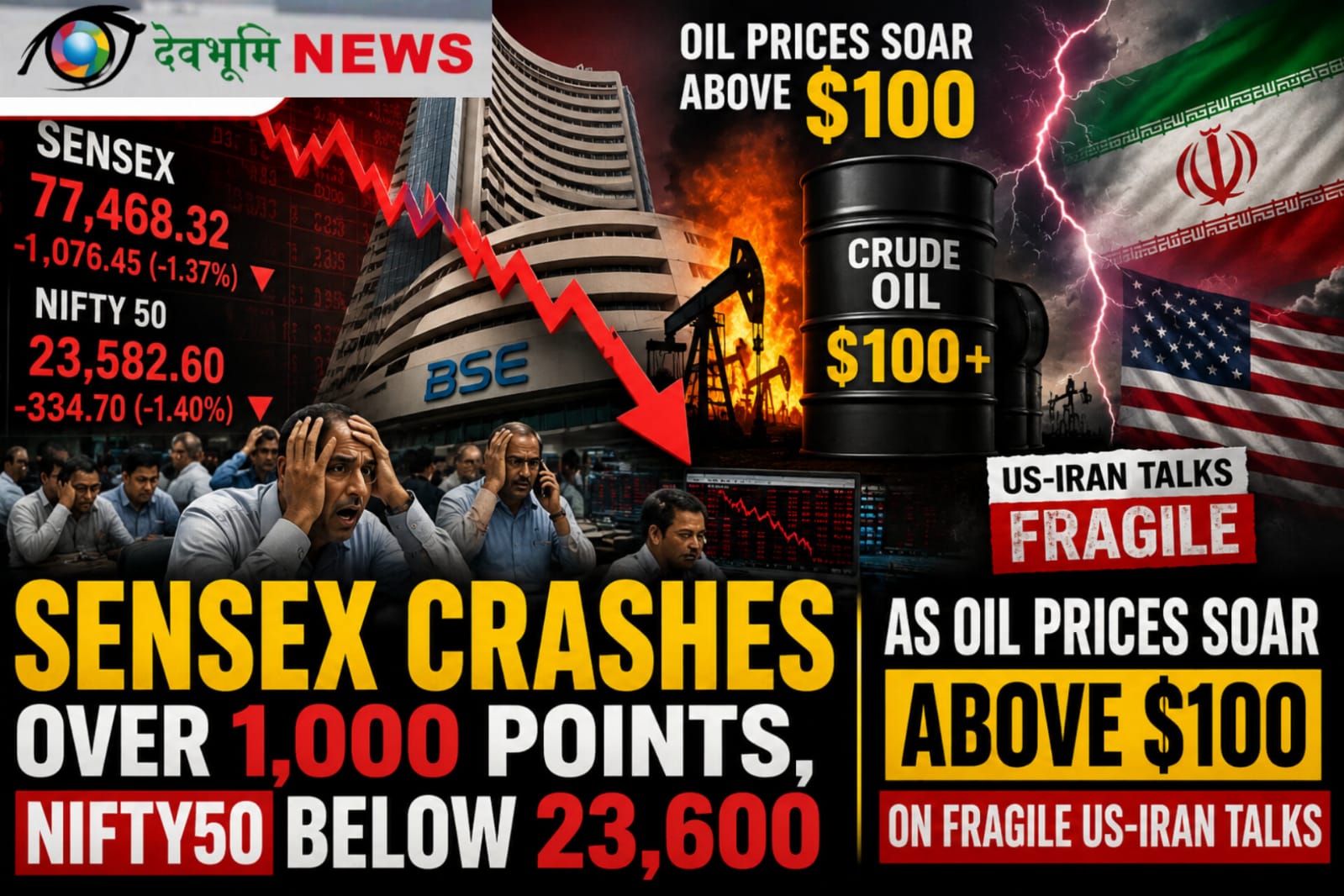
India’s stock market witnessed a massive sell-off on May 12, 2026, as the BSE Sensex crashed more than 1,400 points while the NSE Nifty50 slipped below the crucial 23,400 mark. The sharp decline came amid surging crude oil prices, weakening investor confidence, and fragile US-Iran negotiations that triggered fears of a prolonged global energy crisis.
The stock market crash today erased lakhs of crores in investor wealth, with panic selling seen across IT, banking, auto, and consumption stocks. Market experts believe rising geopolitical tensions in the Middle East and the sudden spike in crude oil prices above $100 per barrel are key reasons behind the bloodbath in Dalal Street.
Sensex and Nifty 50 Fall Amid Rising Crude Oil Prices
The biggest trigger behind today’s stock market crash was the sharp rise in global crude oil prices. Brent crude crossed the psychologically important $100-per-barrel mark after US-Iran peace negotiations appeared fragile and uncertain. Investors fear that any disruption in oil supply routes, especially through the Strait of Hormuz, could severely impact global economies.
India, being one of the world’s largest crude oil importers, remains highly vulnerable to rising energy prices. Higher crude oil prices directly increase India’s import bill, widen the current account deficit, and create inflationary pressure across sectors.
As oil prices surged, sectors heavily dependent on fuel consumption such as aviation, paints, logistics, and automobiles witnessed aggressive selling. IT and financial stocks also saw major declines due to risk-off sentiment in global markets.
Why the Stock Market Crashed Today: Top Reasons
1. US-Iran Talks Turn Fragile
The ongoing uncertainty surrounding US-Iran negotiations has become a major concern for global investors. Reports suggest that disagreements over sanctions, oil exports, and military presence continue to threaten peace prospects in the region.
As tensions rise in West Asia, investors are shifting toward safer assets such as gold and the US dollar, causing emerging markets like India to suffer heavy outflows.
2. Crude Oil Prices Above $100
Brent crude prices hovering near $105 created panic across global equity markets. Rising oil prices increase transportation costs, manufacturing expenses, and inflation risks, reducing corporate profitability.
3. Indian Rupee Hits Record Low
The Indian rupee weakened sharply against the US dollar, touching record low levels near 95.6. A weak rupee further raises the cost of crude oil imports and puts pressure on the Indian economy.
4. Foreign Institutional Investors Continue Selling
Foreign Institutional Investors (FIIs) remained net sellers amid global uncertainty. Heavy FII selling in banking and IT stocks intensified the market decline.
5. Weak Global Market Cues
Asian and European markets traded lower as investors reacted to geopolitical instability and fears of rising inflation. Weak global cues further dragged Indian benchmark indices lower.
Top Losers in Today’s Stock Market Crash. Several blue-chip stocks suffered steep losses during today’s market crash. Major IT companies led the decline as concerns over global growth and rising bond yields hurt investor confidence.
According to market data, the biggest losers included Tech Mahindra, HCL Tech, TCS, Infosys, and Adani Ports. Banking and financial stocks also traded sharply lower throughout the session.
Key Stocks Under Pressure
Tech Mahindra
Infosys
TCS
HCL Technologies
Bajaj Finance
Asian Paints
Adani Ports
The IT sector emerged as the worst-performing sector due to fears of slowing global demand and risk aversion among investors.
Oil and Energy Stocks Buck the Trend
While broader markets remained under pressure, select oil and energy stocks managed to gain amid rising crude prices. Shares of ONGC and Oil India witnessed buying interest as higher crude prices are expected to improve profitability for upstream energy companies.
Defensive sectors like utilities and telecom also showed relative resilience compared to high-beta sectors.
Investor Wealth Erosion Crosses ₹10 Lakh Crore
Today’s stock market crash wiped out more than ₹10 lakh crore in investor wealth as panic gripped Dalal Street. Midcap and smallcap stocks also faced heavy selling pressure, amplifying the overall market damage.
Retail investors are increasingly worried about rising inflation, global geopolitical risks, and persistent market volatility. Experts believe markets may remain highly volatile until clarity emerges on crude oil prices and Middle East tensions.
What Should Investors Do During the Market Crash?
Market experts advise investors to avoid panic selling during periods of extreme volatility. Instead, long-term investors should focus on quality stocks with strong fundamentals and diversified portfolios.
Key Investment Strategies During Market Volatility
Avoid emotional trading decisions
Stay invested for the long term
Focus on defensive sectors
Maintain portfolio diversification
Monitor crude oil prices and geopolitical developments
Analysts also recommend keeping an eye on inflation data, RBI policy actions, and FII flows for near-term market direction.
Read more like this:
- अल्मोड़ा में CORBETT से सटे तड़म गांव में TIGER हुआ कैद, ट्रेंकुलाइज कर रेस्क्यू सेंटर भेजा गया
- PM Modi’s Save Fuel Appeal Amid West Asia Crisis: WFH, Online Classes, No Gold and Vocal for Local Push
- NEET UG 2026 परीक्षा रद्द: पेपर लीक मामले की होगी CBI जांच
Outlook for Indian Stock Market
The near-term outlook for the Indian stock market remains cautious as global uncertainties continue to dominate investor sentiment. If crude oil prices remain elevated and US-Iran tensions escalate further, markets could witness additional downside pressure.
However, experts believe that any positive breakthrough in diplomatic talks or cooling crude oil prices may help markets recover sharply, similar to previous rebounds witnessed when geopolitical tensions eased.
For now, traders and investors are expected to remain cautious as volatility continues to dominate global financial markets.
Conclusion: Sensex Crash Reflects Global Economic Fears
The sharp fall in Sensex and Nifty50 highlights how sensitive Indian markets remain to global geopolitical developments and crude oil price movements. Rising oil prices, a weakening rupee, and uncertainty surrounding US-Iran talks created a perfect storm for Indian equities.
As markets navigate through this volatile phase, investors will closely watch developments in global energy markets, inflation trends, and central bank policies. Until stability returns, caution is likely to remain the dominant theme in the stock market.