Join
Join
 Shorts

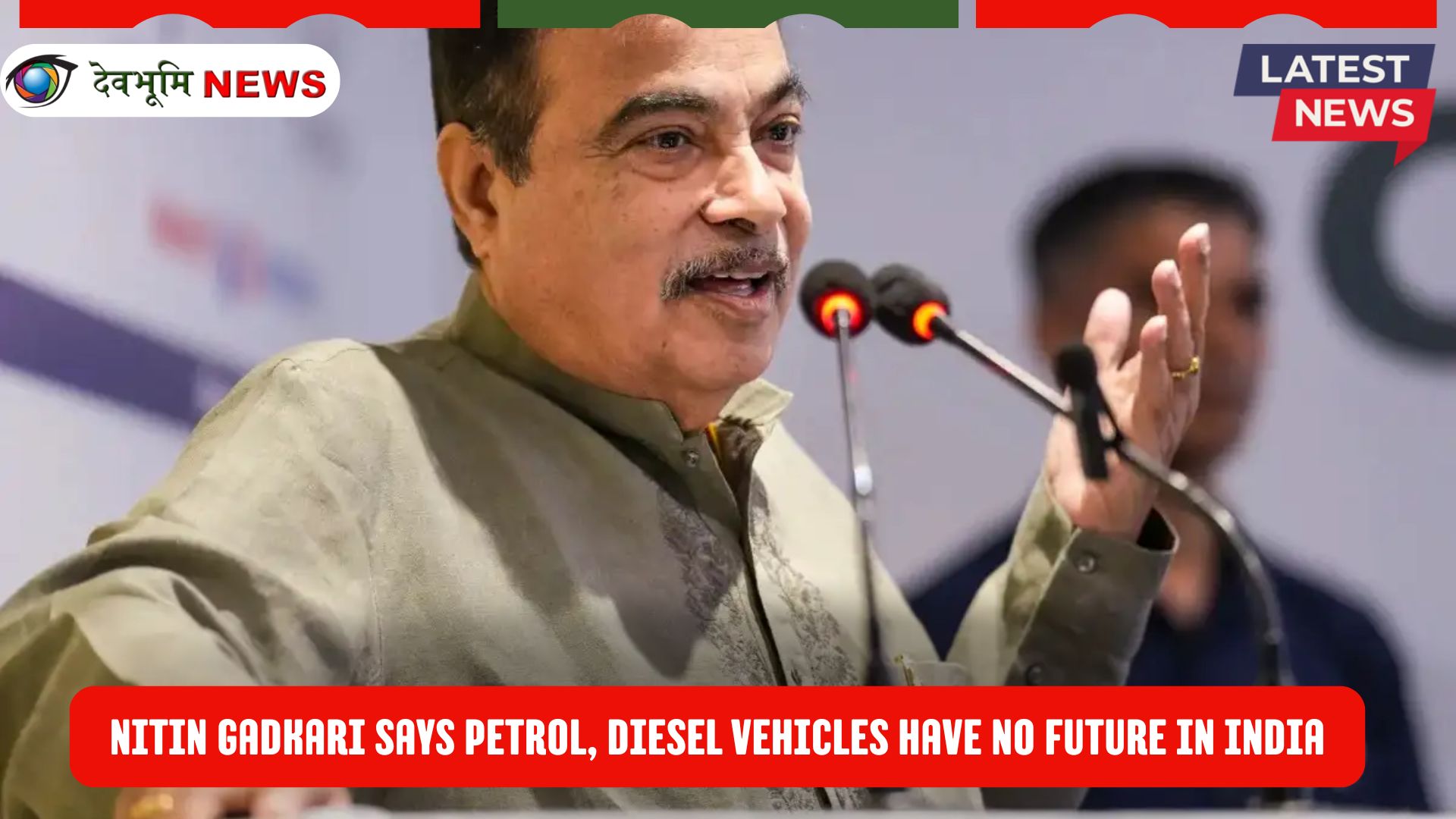
India’s transport sector may be heading toward one of its biggest transformations yet.
Union Road Transport and Highways Minister Nitin Gadkari has once again made his position crystal clear: petrol and diesel vehicles do not have a long-term future in India. Speaking at Busworld 2026, Gadkari urged automakers to move faster toward cleaner alternatives such as electric vehicles, hydrogen-powered mobility, ethanol, and other biofuels.
His comments have sparked widespread discussion across the auto industry, financial markets, and among everyday car buyers wondering whether this is the beginning of the end for conventional internal combustion engine (ICE) vehicles.
“No Future for Petrol and Diesel Vehicles”
During his address, Gadkari said that India cannot continue relying heavily on imported fossil fuels, especially as the country pushes for energy security, lower emissions, and reduced transportation costs.
India spends a massive amount annually on crude oil imports, which directly impacts the economy. According to Gadkari, shifting toward domestic clean fuels like ethanol, green hydrogen, bio-CNG, and electricity is not just an environmental move—it is an economic necessity.
He reportedly emphasized that the future lies in:
- Electric vehicles (EVs)
- Hydrogen fuel cell vehicles
- Flex-fuel vehicles running on ethanol blends
- Biofuels including compressed biogas and methanol
The minister has been one of the strongest voices behind India’s clean mobility mission and has repeatedly pushed the automobile industry to reduce dependence on petrol and diesel.
Why Is India Moving Away From Petrol and Diesel?
There are several reasons behind the government’s aggressive push.
1. Reducing Oil Import Dependency
India imports over 80% of its crude oil requirements. Rising global oil prices and geopolitical instability make this dependence risky.
By promoting ethanol, EVs, and hydrogen, the government wants India to rely more on locally produced energy sources.
2. Pollution Concerns
Major Indian cities continue to struggle with poor air quality. Vehicle emissions remain a significant contributor to urban pollution, especially in metro cities like Delhi, Mumbai, and Bengaluru.
Cleaner fuels are seen as critical for improving public health and meeting climate goals.
3. Lower Running Costs
Electric vehicles and ethanol-based mobility can significantly reduce operational expenses, especially for commercial fleets, buses, and public transport operators.
This explains why Gadkari particularly highlighted public transport as an early transition target.
Is India Banning Petrol and Diesel Cars?
Not exactly.
Despite the strong wording, Gadkari did not announce an immediate ban on petrol or diesel cars.
This is more of a strategic warning and policy direction rather than an overnight regulatory shift.
Petrol and diesel vehicles will continue to be sold in India in the near term, but the long-term regulatory and investment ecosystem is increasingly being designed around cleaner alternatives.
This means:
- Stricter emission norms are likely over time
- Higher focus on alternative fuels
- More incentives for EVs and flex-fuel vehicles
- Greater investment in charging and hydrogen infrastructure
For consumers, conventional cars are not disappearing tomorrow—but the writing on the wall is becoming harder to ignore.
Impact on Automakers
Auto stocks came into focus after Gadkari’s comments, as investors assessed how major manufacturers are positioned for the transition.
Companies already investing heavily in EVs and alternative fuels may gain an advantage, including:
- Tata Motors
- Mahindra & Mahindra
- Maruti Suzuki
- Hyundai Motor India
Manufacturers that are slower to diversify beyond ICE technology could face increasing pressure.
Gadkari also reportedly urged automakers to focus on quality rather than just cost competitiveness, signaling that India wants globally competitive clean mobility products.
What This Means for Car Buyers
If you’re planning to buy a petrol or diesel vehicle, there is no need to panic.
A petrol or diesel car bought today will remain usable for years, subject to existing state rules and scrappage norms.
However, buyers should increasingly consider:
- Total cost of ownership
- Future resale value
- Fuel price volatility
- Availability of charging or alternative fuel infrastructure
For city users with predictable daily driving patterns, EVs are becoming more practical than ever.
For long-distance or rural buyers, petrol, diesel, and hybrid vehicles may still remain relevant in the medium term.
India’s Mobility Future Is Multi-Fuel
While EVs get most of the attention, Gadkari’s broader vision is not EV-only.
India appears to be building a multi-path clean mobility ecosystem that includes:
- Battery electric vehicles
- Ethanol-powered vehicles
- Flex-fuel engines
- Green hydrogen
- Bio-CNG
This diversified approach could be more practical for a country as large and infrastructure-diverse as India.
Final Thoughts
Nitin Gadkari’s “no future for petrol and diesel” remark is less about immediate disruption and more about sending a strong signal to industry and consumers.
India is clearly accelerating toward cleaner mobility, and automakers that fail to adapt risk being left behind.
Petrol and diesel vehicles are not vanishing overnight—but their long-term dominance is being openly challenged by policy, economics, and technology.
For Indian buyers and manufacturers alike, the message is becoming unmistakable: the future of mobility will be cleaner, smarter, and far less dependent on fossil fuels.
Read Also:
- Larry Page Biography 2026 in Hindi: Google बनाने वाले दिमाग की पूरी कहानी – सफलता, संघर्ष और असली राज
- Tim Cook Biography 2026: संघर्ष, मेहनत और Apple Empire की Shocking Success Story
- Satya Nadella Biography: Microsoft CEO, Net Worth 2026, Career, Leadership & Success Story
- Sundar Pichai Biography in Hindi: Google & Alphabet CEO, Net Worth 2026, Career & Life Story
- Pastor Ken Graves Biography 2026: From Maine’s Poorest Kid to Calvary Chapel Bangor Founder
- Lourenco Goncalves Biography 2026: From Brazilian Steel Mills to Chairman & CEO of Cleveland-Cliffs Inc.