Join
 Shorts

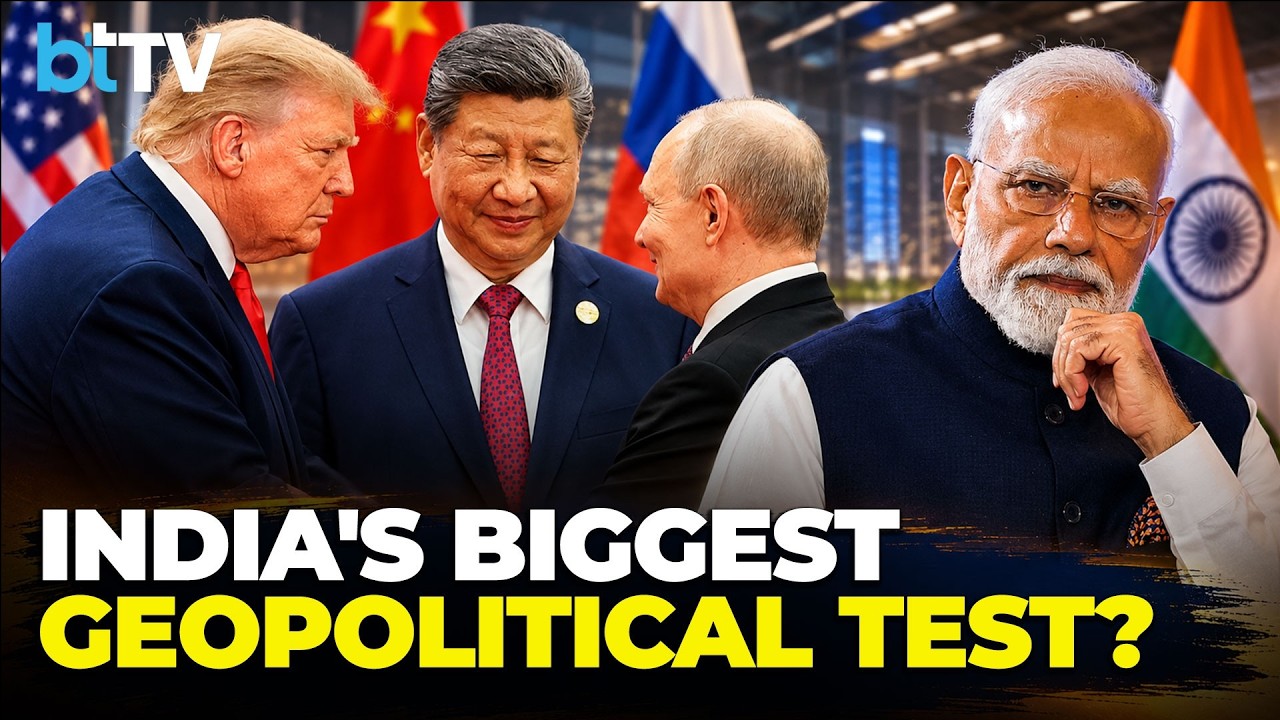
India has adopted a cautious diplomatic approach towards the historic trilateral summit involving United States President Donald Trump, Chinese President Xi Jinping and Russian President Vladimir Putin in Shenzhen, China. The Ministry of External Affairs (MEA) has stated that India has taken note of the meeting but will wait for a clearer understanding of its concrete outcomes before making any assessment.
The summit, held on November 19, 2026, has attracted international attention because it brought together the leaders of three major global powers at a time of geopolitical uncertainty, ongoing conflicts and changing international alliances. The meeting has also raised important questions about the future global order and its possible implications for India’s strategic interests.
India’s Official Response
MEA Calls for a Detailed Assessment
Responding to questions about the trilateral meeting during a media briefing on November 20, MEA spokesperson Randhir Jaiswal said that India had taken note of the engagement between the three APEC member countries.
He stated, “We have taken note of this meeting between three APEC member countries. We await a fuller accounting of the concrete outcomes of the meeting before offering our assessment.”
India’s response indicates that New Delhi does not want to draw conclusions without examining the actual decisions and commitments made by the three leaders.
The government is particularly interested in understanding whether the summit will lead to meaningful changes in international security, economic cooperation and diplomatic relations.
What Happened at the Trump-Xi-Putin Summit?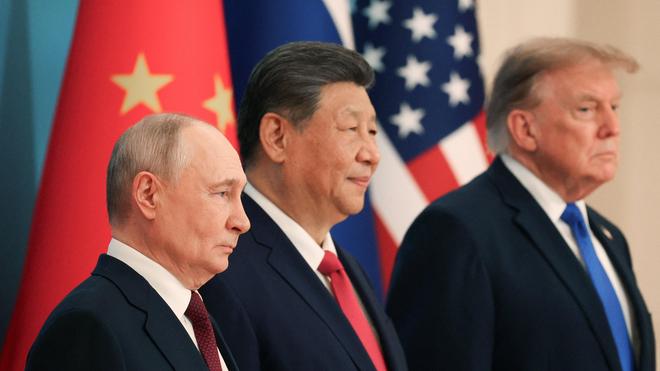
Focus on Global Peace and Strategic Stability
The 70-minute meeting took place at Kylin Villa in Shenzhen on the sidelines of the Asia-Pacific Economic Cooperation (APEC) gathering.
The three leaders discussed several important international issues, including nuclear risk reduction, energy security, international cooperation and reforms in the United Nations.
The joint declaration highlighted the importance of preventing nuclear conflict and maintaining global stability. The leaders reiterated that nuclear war must never be fought and supported dialogue to reduce nuclear risks.
They also discussed improving the effectiveness of the United Nations so that the international organisation could respond more effectively to global challenges.
Energy Security and International Institutions
Energy cooperation was another important subject discussed during the summit. The three countries expressed interest in strengthening petroleum production and supply.
The joint statement also raised concerns about the functioning of international institutions, including the International Criminal Court, particularly in relation to the immunity of state officials.
However, despite the historic nature of the meeting, it did not produce any major breakthrough on the ongoing conflicts in Ukraine and Iran. Nor did it announce specific commitments on nuclear disarmament.
Why Is the Summit Important for India?
Changing Global Power Equations
The meeting is significant for India because the United States, Russia and China are three influential countries with direct or indirect effects on India’s foreign policy, economy and national security.
India maintains important diplomatic, economic and strategic relationships with all three countries.
The United States is an important strategic partner for India, particularly in defence, technology, trade and Indo-Pacific security.
Russia remains a longstanding defence and energy partner, while China is India’s major neighbour and an important economic power. At the same time, border tensions and strategic competition continue to influence India-China relations.
Any understanding between these three countries could therefore affect India’s regional and international interests.
India’s Commitment to Strategic Autonomy
India has consistently supported a multipolar international order in which global decisions are not controlled by a small group of powerful countries.
New Delhi follows an independent foreign policy and seeks to maintain constructive relations with different global powers.
The government will therefore closely examine whether the summit strengthens international cooperation or creates new strategic arrangements that could affect India’s position.
Why Was India Not Part of the Meeting?
India’s absence from the trilateral summit has also become a subject of political discussion.
The meeting involved three countries that are members of APEC, whereas India is not a member of the 21-nation grouping.
Congress leader Rahul Gandhi criticised the government’s diplomatic position and suggested that India should have been represented at such an important global gathering.
He shared a photograph of the three leaders sitting together and remarked that if the Congress were in power, India’s Prime Minister would have been sitting at the table.
The criticism has brought attention to India’s representation in emerging international diplomatic arrangements.
India’s Focus on the Quad Summit
Strengthening Indo-Pacific Cooperation
The Indian government has also highlighted the outcomes of the Quad summit held earlier in the week in Manila, where Prime Minister Narendra Modi met US President Donald Trump.
The Quad brings together India, the United States, Japan and Australia to promote cooperation in the Indo-Pacific region.
MEA spokesperson Randhir Jaiswal highlighted initiatives related to emerging technologies, maritime surveillance, cybersecurity and regional security.
He also mentioned the proposed Quad Business Leaders Forum, which is expected to take place next year.
India considers these initiatives important examples of practical cooperation that can contribute to regional stability and economic development.
Read more like this:
- EPFO Approves SWP for Retirees to Withdraw PF Savings in Regular Instalments
- पहलगाम के पीड़ितों के जख्मों पर नमक छिड़कने का आरोप: SCO बैठक में पाकिस्तानी मंत्री की मौजूदगी पर सियासी घमासान
Conclusion
India’s decision to take note of the Trump-Xi-Putin summit without immediately offering an assessment reflects its cautious and independent diplomatic approach.
The meeting may influence global power relations, international security, energy cooperation and the future functioning of multilateral institutions.
For New Delhi, the key question is whether the summit will produce concrete outcomes or remain largely a symbolic diplomatic exercise.
India is likely to carefully examine the decisions taken by Washington, Moscow and Beijing while continuing to strengthen its own strategic partnerships, particularly through the Quad and other international platforms.
Ultimately, India’s priority will remain protecting its national interests, maintaining strategic autonomy and ensuring that its voice continues to matter in an evolving multipolar world.