Join
 Shorts

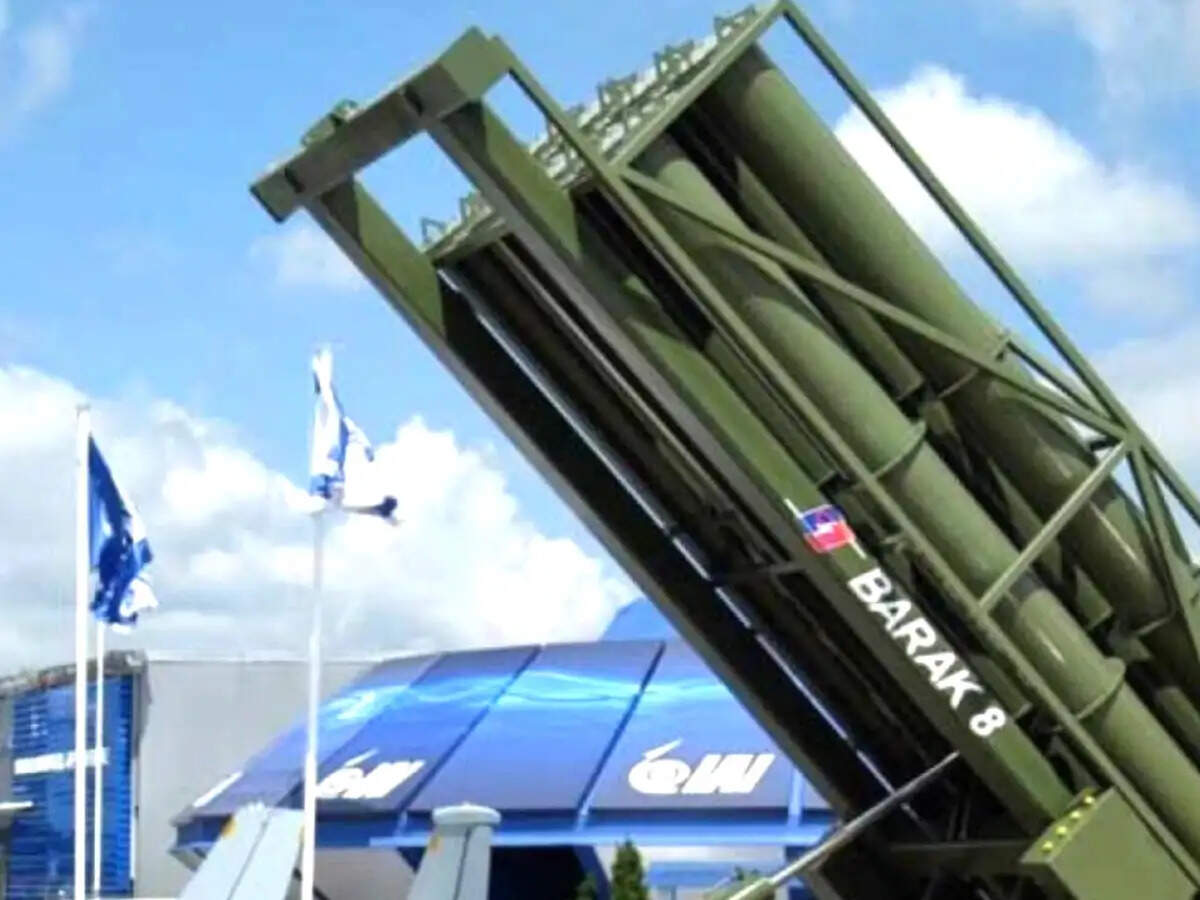
In a significant move to strengthen India’s maritime security, the Ministry of Defence has signed a ₹1,976.40 crore contract with Israel Aerospace Industries (IAI) for the upgradation and obsolescence management of the Barak Point Defence Missile System deployed on Indian Navy warships. The agreement was signed in New Delhi on November 18, 2026, in the presence of Defence Secretary Rajesh Kumar Singh.
The modernisation programme aims to enhance the Navy’s air defence capabilities through comprehensive hardware and software upgrades. The development comes at a time when maritime security challenges are increasing and advanced aerial threats are becoming more sophisticated.
1. Key Details of the ₹1,976 Crore Agreement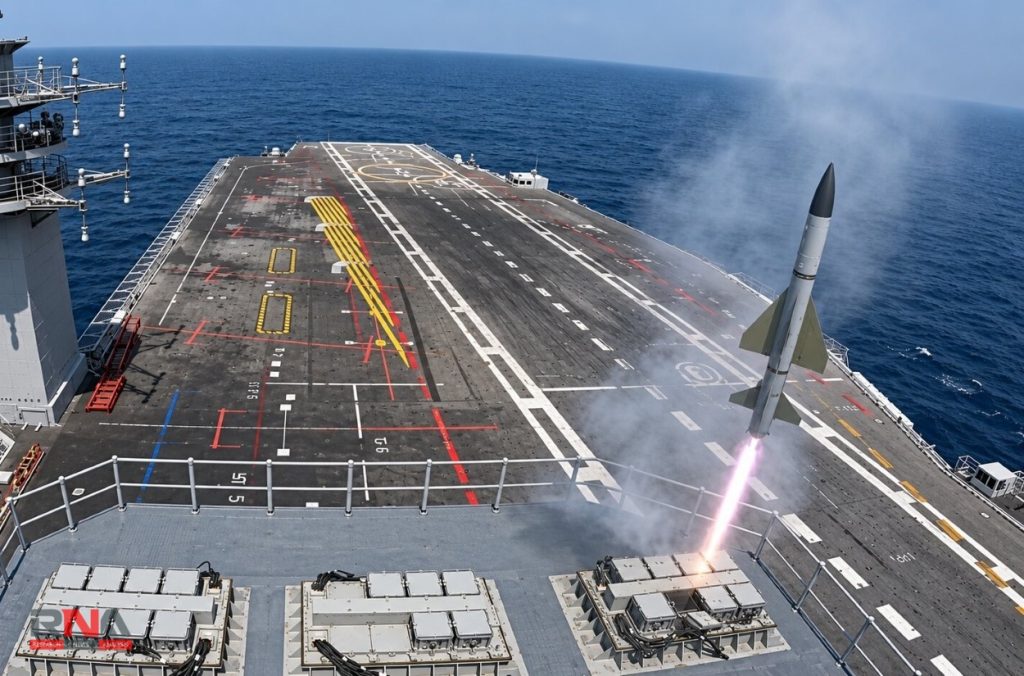
The Ministry of Defence has awarded the contract to Israel Aerospace Industries under the Other Capital Procurement Procedure.
The major highlights of the agreement include:
- Total cost: ₹1,976.40 crore.
- Indian agency: Ministry of Defence.
- Foreign partner: Israel Aerospace Industries.
- System: Barak Point Defence Missile System.
- Objective: Hardware and software modernisation and obsolescence management.
- Signing date: November 18, 2026.
- Location: New Delhi.
According to the Defence Ministry, the upgradation will provide enhanced features and stronger anti-air defence capabilities to Indian naval platforms.
However, the government has not yet disclosed the exact number of warships covered, detailed technical specifications or the programme’s implementation timeline.
2. Understanding the Barak Point Defence Missile System
The Barak Point Defence Missile System is a ship-based surface-to-air missile system designed to protect naval vessels against aerial threats.
It plays an important role in defending warships against hostile aircraft, helicopters, unmanned aerial vehicles (UAVs) and incoming anti-ship missiles.
As a point-defence weapon, its primary responsibility is to protect the individual vessel carrying the system. It provides an important defensive layer when hostile threats approach a warship.
The system is particularly significant against sea-skimming missiles, which fly at very low altitudes to avoid detection by naval radar systems.
3. Why Does the Barak Missile System Need Modernisation?
One of the major reasons behind the upgrade is technological obsolescence.
Naval weapon systems generally remain in service for several decades. However, their electronic components, processors, communication systems and software can become outdated much faster.
The availability of replacement components also becomes difficult as older technologies are discontinued.
The modernisation programme will address these challenges by upgrading hardware and software components. It is expected to improve the system’s reliability, maintainability and operational effectiveness.
The initiative will also help the Navy maintain its existing missile infrastructure without immediately replacing the entire system.
4. Rising Maritime Threats and the Need for Stronger Air Defence
The Indian Ocean Region has emerged as an increasingly important strategic area because of growing geopolitical competition, international trade routes and expanding naval activities.
Modern naval forces face multiple threats, including:
- Advanced anti-ship cruise missiles.
- Low-flying sea-skimming missiles.
- Armed and surveillance drones.
- Hostile aircraft and helicopters.
- Coordinated attacks involving multiple aerial platforms.
Modern missiles can travel at high speeds, fly at low altitudes and perform manoeuvres during their terminal approach.
Such developments reduce the reaction time available to naval crews. Therefore, modern sensors, advanced software and reliable missile interception capabilities are essential for protecting warships.
The Barak upgrade is expected to strengthen one of the important layers of the Indian Navy’s defensive architecture.
5. India-Israel Defence Cooperation
The agreement further strengthens the long-standing defence partnership between India and Israel.
Israel Aerospace Industries has been an important technology partner for India’s defence sector, particularly in missile development, radar technologies and air defence systems.
India and Israel have also collaborated on the Barak-8 programme, which involves the Defence Research and Development Organisation (DRDO) and IAI.
However, it is important to distinguish between the Barak Point Defence System covered under the latest agreement and the longer-range Barak-8 missile programme. They serve different operational requirements.
The latest contract specifically focuses on upgrading the existing point-defence system.
6. Importance for India’s Defence Modernisation
The agreement reflects India’s broader strategy of strengthening its military capabilities through modernisation and technological improvements.
Upgrading existing weapon systems can be more practical than replacing them entirely, particularly when naval platforms have considerable remaining operational life.
At the same time, the extent of indigenous participation and technology transfer under the latest agreement has not yet been publicly clarified.
Greater domestic involvement in maintenance, component production and future upgrades would help strengthen India’s defence industrial ecosystem.
The Navy is also pursuing indigenous technologies, including the Vertical Launch Short Range Surface-to-Air Missile (VL-SRSAM), which could contribute to reducing dependence on imported point-defence systems in the future.
7. Strategic Significance for India’s Maritime Security
The modernisation of Barak missile systems is important for protecting India’s maritime interests and strengthening the survivability of its frontline warships.
A strong naval air-defence network is essential for safeguarding aircraft carriers, destroyers, frigates and other important naval assets.
The upgraded systems are expected to improve the Navy’s ability to respond to evolving aerial threats and maintain operational readiness during challenging maritime situations.
Read more like this:
- Multiple NEET Attempts and Weightage to Class 12 Scores: States Suggest Major Reforms in Medical Admissions
- NEET-UG 2026 पेपर लीक मामला: दिल्ली कोर्ट का बड़ा फैसला, NTA के तीन विषय विशेषज्ञों समेत 14 आरोपियों पर आरोप तय करने का आदेश
Conclusion
The ₹1,976.40 crore Barak missile modernisation agreement represents an important step towards strengthening the Indian Navy’s air defence capabilities. By upgrading existing hardware and software and addressing technological obsolescence, India aims to keep its naval platforms better prepared against emerging aerial threats.
The agreement also highlights the continuing importance of India-Israel defence cooperation. However, its long-term success will depend on effective implementation, reliable lifecycle support and greater technological self-reliance.
As maritime competition intensifies in the Indian Ocean Region, modernising naval air defence will remain essential for protecting India’s strategic interests and maintaining its position as a capable maritime power.