Join
Join
 Shorts

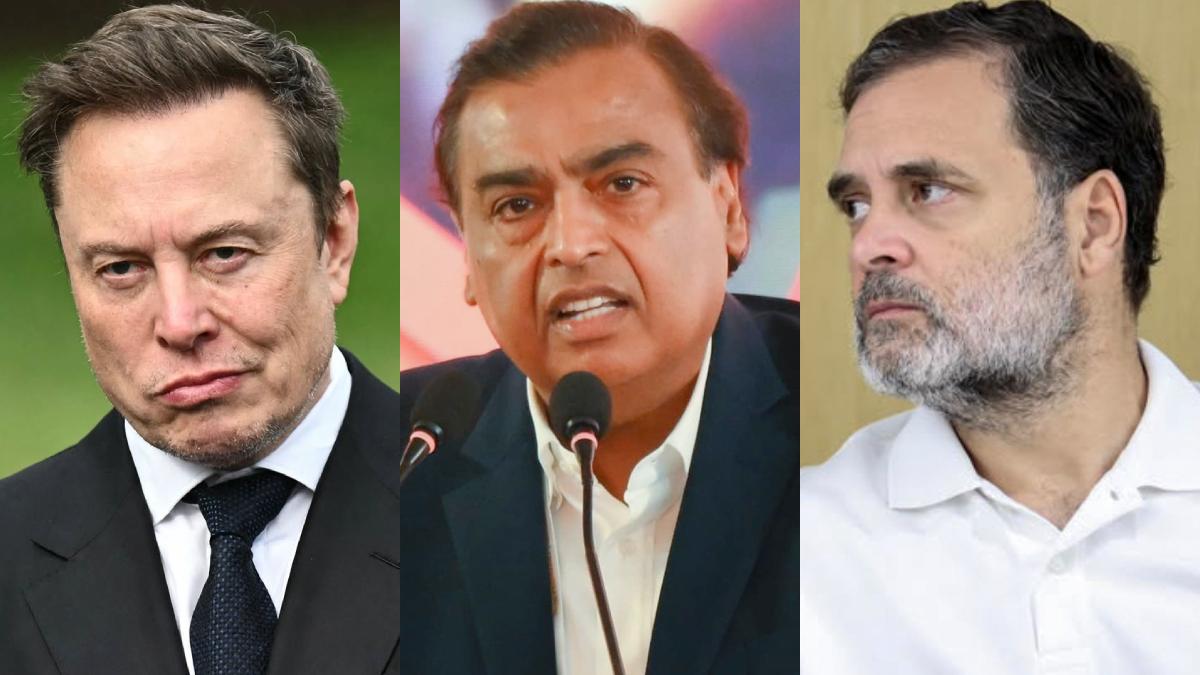
Elon Musk has once again intensified his war of words over the delay in Starlink’s entry into India, taking another swipe at billionaire businessman Mukesh Ambani. The ongoing dispute has brought the spotlight back on India’s satellite internet market, where global technology companies and established telecom operators are competing for a share of the country’s rapidly growing digital economy.
Starlink, the satellite internet service operated by Musk’s SpaceX, aims to provide high-speed internet connectivity through a network of satellites orbiting the Earth. The service is designed to reach areas where conventional broadband infrastructure is either unavailable or difficult to establish. However, its entry into India has involved regulatory approvals, security clearances and discussions over spectrum allocation.
Elon Musk Renews His Criticism
Musk’s latest remarks have renewed questions about the challenges Starlink faces in entering the Indian market. His criticism has focused attention on the influence of established telecom companies and the regulatory framework governing satellite-based internet services.
Mukesh Ambani, chairman of Reliance Industries and the driving force behind Reliance Jio, has become a central figure in the debate. Jio has transformed India’s telecommunications sector by offering affordable mobile data and expanding broadband connectivity across the country.
Musk has previously questioned the approach adopted towards satellite spectrum allocation, arguing for policies that allow new technology providers to compete fairly. His public exchanges have also highlighted the differences between satellite internet businesses and traditional telecom operators.
However, allegations of preferential treatment or deliberate obstruction should be distinguished from established facts. There is no basis to conclude solely from Musk’s remarks that Ambani personally caused Starlink’s regulatory delays.
Why Is Starlink’s Entry Important?
India represents a potentially significant market for satellite internet because millions of people live in areas where reliable high-speed connectivity remains a challenge. Although mobile internet services have expanded considerably, remote villages, mountainous regions and isolated communities can still face limitations in accessing dependable broadband.
Starlink could help address some of these gaps by delivering connectivity without requiring extensive ground-based infrastructure in every location. Its technology could benefit schools, hospitals, businesses and households that struggle with limited internet access.
Satellite connectivity could also support disaster management and emergency communications when floods, cyclones or other natural disasters damage conventional communication networks.
Nevertheless, Starlink’s success in India will depend on more than technological capability. The company must obtain the necessary permissions, comply with national security requirements and offer prices that Indian consumers can afford.
Spectrum Allocation at the Centre of the Debate
One of the most important issues surrounding satellite internet is spectrum allocation. Spectrum refers to the radio frequencies used to transmit communication signals between satellites and ground equipment.
The debate concerns how satellite spectrum should be assigned and what conditions providers must meet before offering commercial services. Traditional telecom operators have invested heavily in acquiring spectrum and developing mobile networks, while satellite internet providers argue that their services operate differently and require a suitable regulatory framework.
India’s government must balance these competing interests while ensuring fair competition, efficient spectrum use and national security.
The entry of companies such as Starlink, Eutelsat OneWeb and Reliance Jio’s satellite communications business has made the issue increasingly important. Their participation could expand consumer choice, but the regulatory process must ensure that all operators meet the applicable requirements.
Ambani’s Jio Versus Musk’s Starlink
The competition between Musk and Ambani reflects two different approaches to internet connectivity. Reliance Jio relies primarily on terrestrial telecommunications infrastructure, including mobile towers and fibre-optic networks. Starlink, meanwhile, uses satellites to deliver internet access directly to compatible terminals.
Jio’s biggest advantage is its established customer base and its ability to offer comparatively affordable connectivity. Starlink’s potential strength lies in reaching locations where building conventional infrastructure is difficult.
Rather than replacing existing telecom networks entirely, satellite internet could complement them by serving areas that are underserved by traditional broadband.
Read more like this:
- हिरासत में अभिजीत दिपके को मिली दादी के निधन की खबर, अंतिम संस्कार के लिए पुलिस की ओर से जाने की छूट
- India Reacts to US Move on IT Firms, Calls JD Vance’s Remark ‘Deeply Offensive
What Lies Ahead?
Starlink’s entry into India could reshape the satellite internet market, but the timing and commercial prospects will depend on regulatory clearances, spectrum arrangements, security compliance and pricing decisions.
For consumers, the most important outcome would be greater access to reliable and affordable internet. Increased competition could encourage innovation and improve services, particularly in underserved regions.
The controversy also highlights the importance of transparent policymaking. India must create an environment where domestic and international companies can compete fairly while complying with national laws.
Ultimately, Musk’s latest salvo against Ambani has brought renewed attention to India’s digital future. However, the real test will not be the billionaires’ public exchanges but whether satellite internet can become a practical and affordable option for millions of Indians.
As the debate continues, consumers and industry observers will be watching closely for developments that could determine the future of satellite connectivity in one of the world’s largest telecommunications markets.