Join
 Shorts

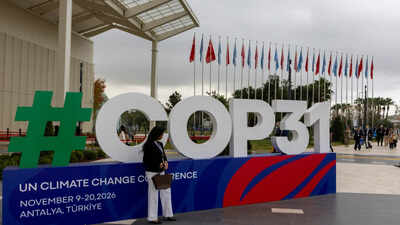
The 31st United Nations Climate Change Conference (COP31), held in Antalya, Turkey, ended on November 22, 2026, without a comprehensive political agreement. The talks collapsed after nearly two weeks of negotiations, exposing deep divisions among countries over fossil fuels, climate finance and the future of global energy.
The biggest disagreement involved Saudi Arabia, Iran and Russia, which opposed stronger language calling for a transition away from coal, oil and natural gas. Their resistance created a major obstacle to an agreement supported by the European Union and several climate-vulnerable nations.
This failure is significant because the world is already experiencing rising temperatures, extreme weather events and growing environmental risks.
Why Did COP31 Climate Talks Collapse?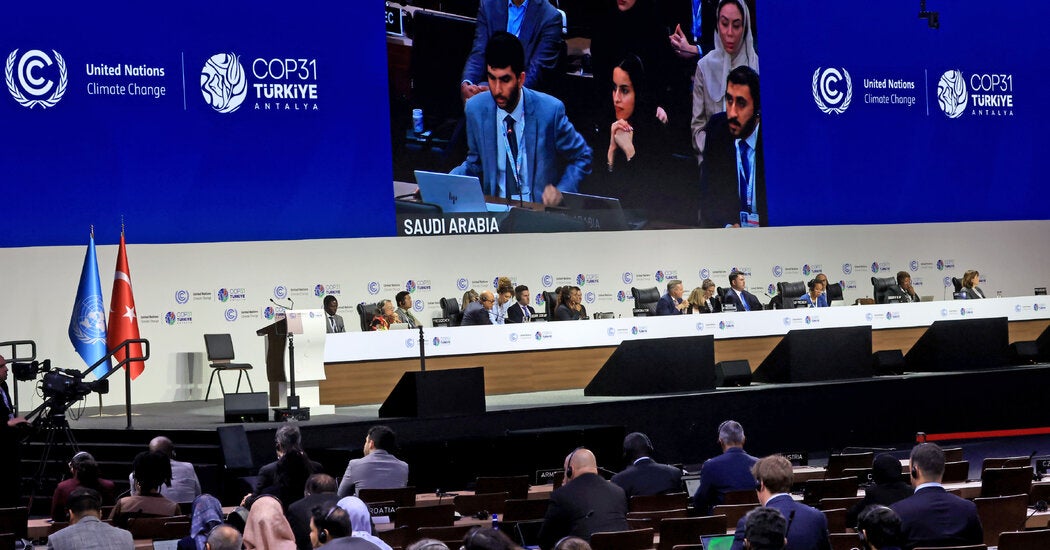
The main reason behind the collapse was the disagreement over whether the final agreement should explicitly mention fossil fuels.
Several countries wanted governments to strengthen the commitment made at COP28 in Dubai in 2023 to transition away from fossil fuels. They argued that reducing dependence on coal, oil and natural gas is essential to controlling global warming.
However, major oil-producing countries resisted stronger commitments. The final draft presented by the Turkish-Australian leadership did not explicitly mention fossil fuels.
The European Union and other countries rejected the proposed agreement, arguing that it failed to address the primary cause of climate change.
Consequently, negotiations ended without an overarching agreement, marking the first major collapse of this kind since the Copenhagen climate summit in 2009.
What Did Saudi Arabia Oppose?
Saudi Arabia emerged as one of the strongest opponents of stronger fossil fuel commitments.
As one of the world’s largest oil producers, its economy remains heavily dependent on petroleum exports. A rapid global transition away from oil could affect its economic interests and energy strategy.
Saudi Arabia argued that climate policies should not focus exclusively on eliminating fossil fuels. Instead, it supported keeping different technological solutions available, particularly carbon capture and storage (CCS).
Carbon capture technology aims to remove carbon dioxide emissions before they enter the atmosphere or capture them directly from the air.
However, environmental groups argue that excessive dependence on this technology could allow oil-producing countries to continue extracting and burning fossil fuels without making sufficient emission reductions.
Why Did Iran and Russia Resist the Proposal?
Iran and Russia also opposed stronger language targeting fossil fuels.
Iran: Iran’s energy sector depends significantly on oil and natural gas. The country opposed measures that could restrict fossil fuel production and consumption. Like other oil-producing nations, it maintained concerns about the economic consequences of a rapid energy transition.
Russia: Russia strongly resisted wording that could encourage restrictions on coal, oil and gas supplies. Its representative argued against accepting language targeting fossil fuels and warned that moving away from conventional energy sources too quickly could create energy insecurity and fuel poverty.
Russia’s economy is heavily influenced by energy exports. Therefore, strict international commitments to reduce fossil fuel dependence could have significant economic and geopolitical consequences.
Together, these countries highlighted the conflict between national economic interests and international climate responsibilities.
The Role of Climate Finance
Fossil fuels were not the only issue dividing countries. Climate finance was another major obstacle.
Developing countries demanded greater financial assistance from wealthy nations to address climate change. They need funding for renewable energy, flood protection, drought management, disaster recovery and climate adaptation.
Many developing nations argued that countries responsible for a larger share of historical emissions should provide greater financial support.
However, negotiations failed to establish sufficiently clear and reliable financial commitments.
This created frustration among vulnerable countries, particularly those in Africa, Asia and small island nations.
Why Does the COP31 Failure Matter?
The collapse of COP31 has several serious implications.
First, climate action could slow down. Without a common agreement, international cooperation on reducing greenhouse gas emissions becomes more difficult.
Second, vulnerable countries face greater risks. Developing nations are particularly exposed to heatwaves, floods, droughts and rising sea levels.
Third, global warming remains a major concern. The world is struggling to keep the Paris Agreement’s 1.5°C temperature limit within reach.
Fourth, international trust could weaken. When major economies prioritise national interests over collective action, confidence in global climate negotiations suffers.
What Happens Next?
Despite the failure, COP31 was not entirely without progress. Nearly 100 countries supported a separate initiative to increase electrification, while other initiatives addressed adaptation and a just transition for workers.
Countries will now have to continue negotiations ahead of the next climate summit in Ethiopia in 2027.
The challenge will be to build consensus on fossil fuels, climate finance and practical emissions-reduction measures.
Read more like this:
- यूपी चुनाव 2027: कांग्रेस और सपा के बीच पहले दौर की सीट बंटवारे पर बातचीत पूरी, जल्द हो सकता है गठबंधन का ऐलान
- विधानसभा चुनाव 2027 की तारीखों का कब होगा एलान? यूपी-पंजाब समेत 5 राज्यों के लिए आया बड़ा अपडेट
Conclusion
The collapse of COP31 demonstrates how difficult it has become to balance economic interests with environmental responsibilities. Saudi Arabia, Iran and Russia resisted stronger commitments on fossil fuels because of their energy and economic priorities, while the European Union and vulnerable nations demanded more ambitious climate action.
Ultimately, climate change is a global problem that cannot be solved by individual countries acting alone. Unless governments move beyond political disagreements and agree on meaningful action, the costs of climate change will continue to rise for present and future generations.