Join
Join
 Shorts

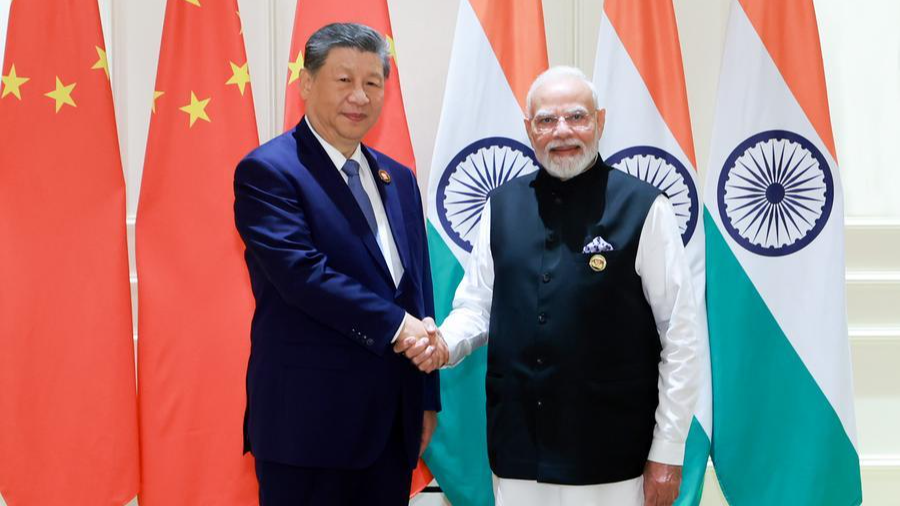
Prime Minister Narendra Modi told Chinese President Xi Jinping that India and China must show sensitivity towards each other’s core concerns during their recent bilateral meeting on the sidelines of the BRICS Summit in New Delhi, the Ministry of External Affairs said. The government statement highlighted India’s concerns and reiterated that relations between the two Asian neighbours should be based on mutual respect, mutual sensitivity and mutual interest.
The remarks came as both countries continue efforts to stabilise ties following years of tensions along their disputed border. According to the MEA, Modi raised India’s concerns during his discussion with Xi and stressed that both sides must avoid actions that could further complicate bilateral relations.
India Emphasises the Three Mutuals
MEA spokesperson Randhir Jaiswal said India’s approach towards China is guided by what the government calls the “three mutuals”: mutual respect, mutual sensitivity and mutual interest. The framework has increasingly become a central reference point in New Delhi’s diplomatic engagement with Beijing.
Jaiswal said both countries should remain sensitive to each other’s core concerns while pursuing a stable and constructive relationship. The statement reflects India’s position that improved bilateral ties require reciprocity rather than unilateral concessions.
The comments followed a Chinese account of the Modi-Xi meeting, in which Beijing said the two leaders agreed that China and India should view each other as partners rather than rivals. India’s clarification indicated that the discussion also included India’s own concerns and expectations from China.
Border Peace Remains Central to Relationship
India-China relations have remained strained since the 2020 military confrontation in eastern Ladakh. Although diplomatic and military channels have continued to function, the border issue has remained a major obstacle to the complete normalisation of ties.
During the BRICS meeting, both leaders reportedly discussed the importance of maintaining peace and tranquillity in border areas. India has consistently maintained that respect for existing agreements and protocols, along with the observance of the Line of Actual Control, is essential for rebuilding trust.
New Delhi has also argued that peace along the border is necessary for progress in other areas of the relationship. Economic cooperation, trade, people-to-people exchanges and wider diplomatic engagement have all been affected by the prolonged tensions.
Modi and Xi Discuss Long-Term Direction of Ties
The meeting between Modi and Xi was held during the 18th BRICS Summit in New Delhi, where leaders discussed global economic cooperation, international conflicts, supply chains, technology and reforms to global institutions. The bilateral meeting was seen as part of continuing efforts to manage differences between the two countries through direct dialogue.
India and China are two of Asia’s largest economies and share extensive commercial and regional interests. Both countries are also members of BRICS, the Shanghai Cooperation Organisation and several other multilateral forums. Despite their differences, cooperation in international platforms remains an important channel for maintaining communication.
The two governments have gradually increased diplomatic contacts in recent months. However, officials have made clear that progress in bilateral relations will depend on developments along the border and the ability of both sides to address outstanding concerns.
Beijing Says Differences Should Not Become Disputes
Chinese officials have also described the Modi-Xi interaction as an opportunity to improve relations. Chinese Foreign Minister Wang Yi said the two leaders had a candid and in-depth exchange on strategic and long-term issues affecting bilateral ties.
Beijing has emphasised the importance of cooperation and mutual development, while India has repeatedly stressed that peace and stability on the border must accompany broader engagement. The differing emphasis reflects the complex nature of the relationship, where economic and diplomatic cooperation exists alongside unresolved territorial disputes.
India’s latest statement suggests that New Delhi is open to improving ties but expects China to take India’s concerns into account. The language of mutual sensitivity also indicates that both sides are attempting to establish a framework for managing disagreements without allowing them to escalate into larger disputes.
Economic and Strategic Cooperation Remain Important
India and China have significant economic ties, although trade between the two countries remains uneven. New Delhi has raised concerns over the trade deficit, market access and restrictions affecting Indian businesses and critical supply chains.
Strategically, the relationship is also influenced by developments in the Indo-Pacific, regional security, connectivity projects and China’s relations with neighbouring countries. Both nations are seeking greater influence in global institutions and support reforms that give developing countries a stronger voice.
At the same time, India has maintained strategic partnerships with several other countries while continuing dialogue with China. The government’s emphasis on mutual respect and sensitivity is intended to preserve India’s interests while keeping diplomatic channels open.
Read more like this :
A Cautious Effort to Improve Relations
The Modi-Xi meeting does not by itself resolve the longstanding differences between India and China. The border dispute, trade imbalance and strategic mistrust remain significant challenges. Nevertheless, the latest government statement indicates that both sides continue to recognise the importance of dialogue.
For India, the message is that normalisation cannot be separated from sensitivity towards its security and territorial concerns. For China, closer engagement with India could support greater stability in Asia and cooperation within multilateral institutions.
As both countries move forward, the principle of mutual respect, mutual interest and mutual sensitivity is likely to remain an important part of their diplomatic discussions. The effectiveness of this approach will depend on whether the commitments made at the leadership level translate into concrete progress on the ground.