Join
Join
 Shorts

Unified Payments Interface (UPI), India’s widely used digital payments network, is set for a major change from October 15, with a Merchant Discount Rate (MDR) of 0.4 per cent being introduced on person-to-merchant (P2M) transactions above Rs 2,000.
The new charge will be borne by merchants rather than customers, according to the National Payments Corporation of India (NPCI) and the Finance Ministry. Person-to-person (P2P) transactions will continue to remain free, while UPI merchant payments of Rs 2,000 or less will also remain exempt from MDR.
The move marks a significant shift after years of zero-MDR UPI payments and is aimed at creating a more sustainable financial model for the country’s rapidly expanding digital payments ecosystem.
What will change from October 15?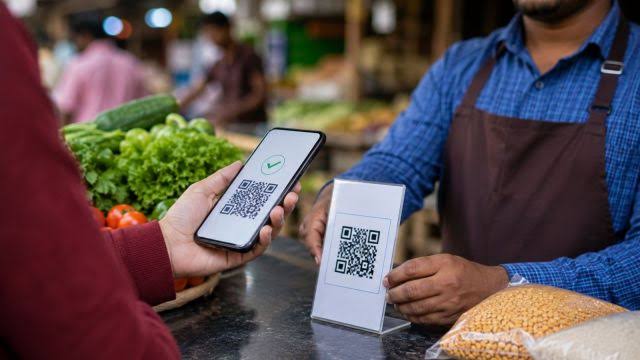
Under the new framework, a merchant receiving a direct UPI payment above Rs 2,000 will be charged 0.4 per cent of the transaction value. The charge will be capped at Rs 300 for transactions of Rs 75,000 and above.
For example, if a customer pays Rs 3,000 through UPI, the merchant will incur an MDR of Rs 12. On a Rs 10,000 payment, the charge will be Rs 40, while a Rs 50,000 transaction will attract Rs 200. For transactions of Rs 75,000 or more, the maximum MDR will be Rs 300.
Importantly, customers will not be charged separately for using UPI. The Finance Ministry has advised banks to ensure that merchants do not pass the MDR cost directly to consumers. UPI applications will also not be permitted to levy additional platform or hidden charges under the new framework.
In UPI Most everyday payments remain unaffected
The government has sought to limit the impact of the new system on ordinary UPI users and small-value transactions.
According to the new framework, more than 95 per cent of P2M UPI transactions are valued at Rs 2,000 or less and will therefore remain free of MDR. A customer paying Rs 500 for groceries, Rs 1,000 at a restaurant or Rs 1,500 at a local shop will see no change.
Person-to-person transfers will also remain free regardless of the amount involved. This means users sending money to family members, friends or their own accounts will not be affected by the new merchant fee.
Small merchants get exemption
The new rules also provide protection for small merchants. Vendors receiving up to Rs 1 lakh a month through UPI QR-code payments under the P2PM framework will continue to enjoy zero MDR.
This means a small shopkeeper will not automatically become liable for MDR merely because an individual customer makes a payment above Rs 2,000. Merchant classification will depend on their monthly UPI receipts.
The exemption is intended to protect small businesses and prevent additional payment-processing costs from affecting local vendors and micro-enterprises.
Special rates for essential services
Not all transactions above Rs 2,000 will attract the standard 0.4 per cent rate.
Payments to certain sectors, including railways, fuel, agriculture, telecom, insurance and selected government utility services, will attract a flat MDR of Rs 5 for transactions above Rs 2,000. Educational fee payments and some utility bill collections are also covered under special treatment.
Capital-market transactions will have a much lower MDR of 0.02 per cent, with the charge capped at Rs 300.
Why is MDR being introduced?
The change comes as UPI has grown into one of the world’s largest real-time payment systems. UPI processed around 24 billion transactions worth $311 billion in August 2026, according to Reuters.
Maintaining such a large network involves substantial costs related to technology infrastructure, servers, cybersecurity, fraud prevention and technical support. The new MDR is intended to create a revenue stream within the payments ecosystem and support further investment in infrastructure and innovation.
The revenue generated through MDR will be distributed among participants in the payments ecosystem, including banks and payment service providers.
Read more like this:
- Mutual Funds में CAS Statement क्या होता है और इसे कैसे पढ़ें?
- आदि कैलाश यात्रा का दूसरा चरण टला, भूस्खलन और पुल बहने से रास्ता बंद
- दिल्ली के कई स्कूलों को बम धमकी, 29 सितंबर तक मेट्रो से दूर रहने की चेतावनी
What does it mean for consumers?
For most UPI users, the immediate impact is expected to be limited. Everyday payments below Rs 2,000 will remain free, P2P transfers will continue without charges, and customers will not be permitted to be charged the MDR separately.
The change will primarily affect merchants handling larger-value direct UPI transactions. For businesses, the additional cost could become a new component of payment-processing expenses.
The introduction of MDR therefore represents a shift in how the cost of maintaining India’s UPI infrastructure is funded. While the government has protected consumers and small merchants from direct charges, larger merchants will now contribute towards the cost of the digital payments ecosystem.
The new rules will take effect from October 15, 2026, marking a new phase in the evolution of India’s UPI payment system.