Join
Join
 Shorts

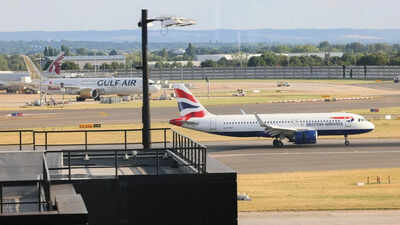
Air travel across the United Kingdom was thrown into chaos after a major technical problem affected the country’s air traffic control system, disrupting operations at several major airports and leaving thousands of passengers facing cancellations and lengthy delays. The disruption occurred on Tuesday, September 8, after engineers at the UK’s air traffic control provider, National Air Traffic Services (NATS), identified a fault in its flight-processing system.
Initial reports indicated that nearly 300 flights had been cancelled across the UK, while hundreds more were delayed. As the disruption developed, however, flight-tracking data showed that the overall impact was substantially larger, with more than 1,000 flights eventually cancelled or affected by the failure.
The incident affected both domestic and international services and created significant operational problems at some of Britain’s busiest airports. Heathrow, Gatwick, Manchester and Stansted were among the airports reporting disruption. Other airports, including Luton, Birmingham, Aberdeen, Glasgow and Edinburgh, were also affected.
Technical fault brings air traffic operations under pressure in UK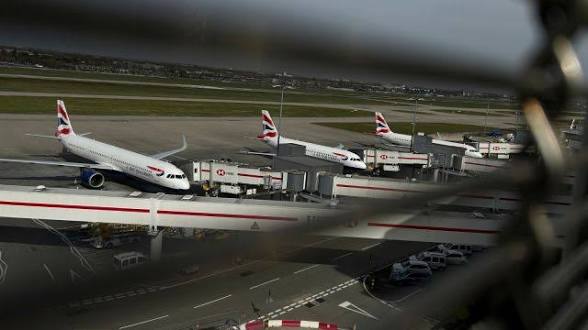
NATS said the problem originated in its flight-processing system. The system is a critical part of the infrastructure used to manage aircraft movements and flight information across UK-controlled airspace.
After identifying the fault, NATS engineers were deployed to resolve the problem. The organisation later announced that a technical fix had been implemented and that the system was beginning to recover.
NATS said the technical issue had been resolved and stressed that safety had not been compromised. However, the organisation acknowledged that restoring normal operations would take time because the initial failure had created a large backlog of flights.
Even after the system was repaired, airlines and airports faced the difficult task of reorganising aircraft, crews and passenger bookings. This meant that delays and cancellations continued even after the original technical problem was fixed.
UK Heathrow among the worst-hit airports
London’s Heathrow Airport, one of the world’s busiest international aviation hubs, was significantly affected by the disruption.
Flight data showed that a large number of Heathrow services were cancelled or delayed. The airport advised passengers to check directly with their airlines before travelling to the terminal because flight schedules were changing rapidly.
Heathrow later resumed some operations, but the airport continued to face the consequences of the earlier disruption. The cancellation of flights at such a major hub also created a knock-on effect because aircraft and crew scheduled for one destination were often unable to reach the next airport on their routes.
Gatwick was also badly affected. Hundreds of flights were delayed, accounting for a significant proportion of the airport’s scheduled services.
Airlines struggle to manage passenger disruption
Major airlines operating in Britain and across Europe were forced to deal with the consequences of the air traffic control failure.
British Airways said its operations had been disrupted and described the problem as being outside the airline’s control. The carrier said its teams were working to help passengers reach their destinations as quickly as possible.
EasyJet also reported significant disruption, with delays spreading beyond the UK to other European destinations. Airlines such as Ryanair and Wizz Air were also affected.
Ryanair said tens of thousands of passengers were impacted by the disruption and sharply criticised NATS. The airline called for stronger action over what it described as repeated failures in the UK’s air traffic control infrastructure.The disruption also affected Virgin Atlantic and other carriers operating through British airports.
Impact spreads beyond Britain
The problem was not limited to flights physically operating within the UK. Because Britain’s airspace is closely connected to the wider European aviation network, the disruption had consequences for flights arriving from or departing to other countries.
Some aircraft were held on the ground outside Britain because of the uncertainty surrounding air traffic flows. Airports in Ireland also warned passengers about delays involving flights connected with the UK.
This illustrates how dependent modern aviation is on interconnected air traffic control systems. A technical problem at one major control provider can quickly affect airports and airlines across several countries.
Why does an air traffic control failure have such a big impact?
Air traffic control systems coordinate the movement of aircraft in the sky and on the ground. Controllers need accurate and timely information about flight plans, aircraft positions, routes and destinations.
When a critical processing system develops a technical fault, authorities may have to reduce the number of aircraft allowed to depart or enter particular areas of airspace. This is done primarily to maintain safety.
As a result, even when the failure does not directly threaten aircraft, it can produce severe delays because fewer flights can be handled simultaneously.
Once aircraft are delayed, the disruption can quickly multiply. An aircraft arriving late at one airport may be scheduled to operate another flight shortly afterward. If the first journey is delayed, the second flight is also affected. Crews can exceed their permitted working hours, while passengers miss connecting flights and aircraft become positioned at the wrong airports.
Questions over NATS reliability
The latest incident has renewed questions about the resilience of Britain’s air traffic control infrastructure.
The UK aviation industry has experienced significant technical disruptions in recent years. A major NATS failure in 2023 caused widespread cancellations and delays and led to scrutiny of the organisation’s contingency arrangements. The latest incident has therefore revived concerns about whether sufficient backup systems are available when critical technology fails.
Britain’s Civil Aviation Authority has requested a full report from NATS on the incident. The regulator is expected to examine what caused the failure, how quickly the problem was identified, and whether contingency arrangements worked effectively.
Airlines demand reforms
The disruption has also intensified criticism from airlines.
Ryanair called for stronger action against NATS leadership, while Wizz Air argued that the incident demonstrated the need for a comprehensive overhaul of the UK’s air traffic control system. The airlines have pointed to previous technical failures and questioned whether adequate investment has been made to guarantee reliable service.
NATS, meanwhile, apologised for the disruption and said its engineers were working to restore normal operations and clear the backlog as quickly as possible.The organisation has maintained that the failure did not compromise aviation safety.
Passengers advised to check before travelling
For passengers, the immediate advice from airports and airlines has been straightforward: check flight status before leaving for the airport.
Because the technical fault generated a significant backlog, fixing the original system problem did not immediately restore normal schedules. Travellers whose flights were cancelled or delayed were advised to contact their airlines regarding rebooking and updated departure information.
Passengers also faced the possibility of further disruption as airlines attempted to reposition aircraft and crews and accommodate travellers from cancelled services.
Read more like this:
- Centre Invites Ladakh Leaders for Talks Amid Renewed Statehood Demand
- नौकरीपेशा लोगों के लिए क्यों जरूरी है पीएफ (PF) अकाउंट? जानिए इसके फायदे
- PM Modi Inaugurates 150 Km Key Stretch of Vadodara Mumbai Expressway
A warning for modern aviation infrastructure
The UK incident has highlighted the vulnerability of modern aviation to failures in digital infrastructure. Air travel depends on sophisticated computer systems that coordinate thousands of aircraft movements every day.
While technological systems have dramatically improved the efficiency of aviation, a failure in one critical component can have consequences far beyond the location where the fault occurs.
The incident therefore presents a wider question for governments, regulators and aviation companies: how can increasingly complex air traffic systems be made sufficiently resilient to withstand major technical failures?
Conclusion
The UK air traffic control glitch on September 8 caused widespread disruption across Britain’s aviation network, initially resulting in hundreds of cancellations and delays and eventually affecting more than 1,000 flights. Major airports including Heathrow, Gatwick, Manchester and Stansted were among those hit.
Although NATS identified the problem as a fault in its flight-processing system and later implemented a fix, the recovery process remained difficult because of the resulting backlog. Airlines had to reorganise aircraft and crews, while passengers faced cancellations, long delays and uncertainty.
The incident has also reignited concerns over the reliability of Britain’s air traffic control infrastructure. With the Civil Aviation Authority seeking a detailed report and airlines demanding reforms, the latest disruption could lead to renewed scrutiny of NATS, its contingency systems and the UK’s broader aviation infrastructure.
For passengers, the immediate crisis may ease as operations return to normal, but the larger debate over the resilience of Britain’s air traffic control network is likely to continue.