Join
Join
 Shorts


India’s two largest airlines, IndiGo and Air India, have voiced strong opposition to any proposal that would allow airport operators to own and operate airlines, arguing that such a move would create a serious conflict of interest and undermine fair competition in the country’s rapidly expanding aviation sector.
The debate has intensified following reports that the Central government is considering relaxing existing cross-ownership restrictions, potentially allowing airport operators such as the Adani Group and GMR Group to launch or acquire stakes in scheduled airlines.
Airlines Raise Red Flags Against Adani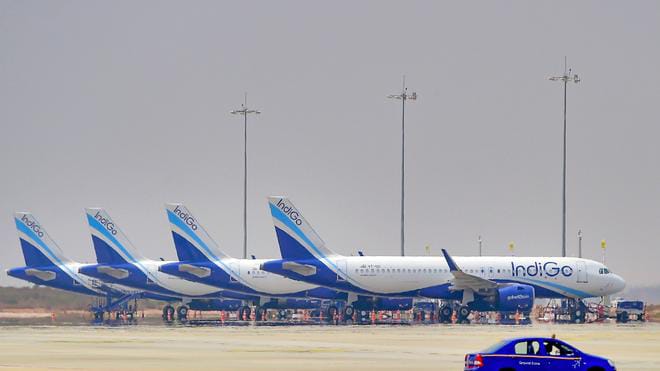
IndiGo Managing Director Rahul Bhatia publicly opposed the proposed policy change, describing it as a move that could lead to a “massive conflict of interest.”
Speaking after the airline’s quarterly earnings announcement, Bhatia argued that airports serve as essential public infrastructure and must remain neutral toward all airlines operating from their terminals. Allowing airport operators to own airlines, he said, could compromise that neutrality and create an uneven competitive environment.
Air India has echoed similar concerns, arguing that airports should remain independent infrastructure providers rather than participants in airline operations.
Why the Proposal Matters
The discussion stems from reports that the Ministry of Civil Aviation is examining possible amendments to rules governing cross-ownership between airport operators and airlines.
Under the current framework, operators of major airports such as Delhi and Mumbai are generally restricted from holding more than a 10% stake in scheduled airlines. The government is reportedly evaluating whether these restrictions should be relaxed to encourage greater competition in India’s airline market, which is currently dominated by IndiGo and Air India.
Together, the two carriers account for nearly 90% of India’s domestic passenger traffic, leading policymakers to explore ways to encourage the emergence of a strong third airline.
Why Adani’s Entry Is Different
Unlike previous airline startups, the Adani Group already has a substantial presence in India’s aviation infrastructure.
Through Adani Airports Holdings, the conglomerate operates several major airports, including Mumbai, Ahmedabad, Lucknow, Jaipur, Guwahati, Mangaluru, Thiruvananthapuram, and other aviation-related businesses such as ground handling and airport services.
That dual role lies at the heart of the concerns expressed by IndiGo and Air India. Critics argue that even without any deliberate bias, the perception of preferential treatment could damage confidence in the fairness of airport operations.
Government’s Perspective
Government officials reportedly believe that India’s aviation market needs stronger competition beyond the existing duopoly.
Officials have argued that a financially strong third airline could improve passenger choice, strengthen connectivity, and reduce excessive dependence on just two dominant carriers.
Reports suggest that if the policy is eventually amended, safeguards would likely be introduced to maintain an arm’s-length relationship between airport businesses and airline operations.
Market Reaction
The reports of a possible policy change immediately attracted investor attention.
Shares of InterGlobe Aviation, the parent company of IndiGo, declined after media reports suggested that airport operators might soon be allowed to own airlines.
Investors interpreted the development as a potential long-term competitive challenge for India’s largest airline, particularly if a well-capitalized player such as the Adani Group were to enter the market.
Adani Group Issues Clarification
Amid growing speculation, Adani Enterprises issued a formal clarification stating that it is not evaluating any proposal to enter the airline business.
The company described recent reports suggesting that it planned to launch an airline as “entirely baseless and factually incorrect.”
The clarification came shortly after earlier reports citing unnamed sources claimed that the conglomerate was considering various strategic options, including the possibility of starting a new airline or investing in an existing carrier.
Experts Divided
Aviation experts remain divided over the proposal.
Supporters argue that India needs more airlines to meet rapidly growing passenger demand and reduce market concentration. They believe that a financially strong industrial group could build a credible third national carrier capable of challenging the current market leaders.
Industry analysts point out that airports control critical infrastructure, including runway slots, terminal facilities, parking bays, boarding gates, and operational charges. Even if strict safeguards exist, maintaining complete neutrality could become increasingly difficult
Read more like this:
- Gold Loan लेने से पहले जान लें ये सावधानियां, पढ़िए पूरी Gold Loan Guide
- जंतर-मंतर आंदोलन पर सरकार और CJP के बीच वार्ता, धर्मेंद्र प्रधान के इस्तीफे की मांग पर अड़ा संगठन; तीसरे दौर की वार्ता कल
- घर का बीमा क्यों जरूरी है? Property Insurance Guide में समझिए प्रीमियम, कवर, क्लेम और GST का पूरा गणित
Regulatory Challenge Ahead
The proposal now presents policymakers with a delicate balancing act.
On one hand, encouraging new airlines could improve competition, increase passenger choice, and strengthen India’s aviation ecosystem.
On the other hand, regulators must ensure that airport infrastructure remains accessible on equal terms for every airline, regardless of ownership.
If cross-ownership restrictions are eventually relaxed, the government is expected to develop detailed regulatory mechanisms to prevent conflicts of interest while maintaining confidence among existing airlines and investors.
Conclusion
The debate over allowing airport operators to own airlines has become one of the most significant aviation policy discussions in India in recent years. While IndiGo and Air India argue that airport neutrality is essential for fair competition, the government is exploring ways to encourage greater competition in a market dominated by two major carriers.
Although the Adani Group has officially denied any current plans to launch an airline, the broader policy debate is unlikely to fade. The outcome of the government’s review could reshape India’s aviation industry for years to come, determining whether airport operators remain neutral infrastructure providers or evolve into direct competitors in the skies.