Join
Join
 Shorts
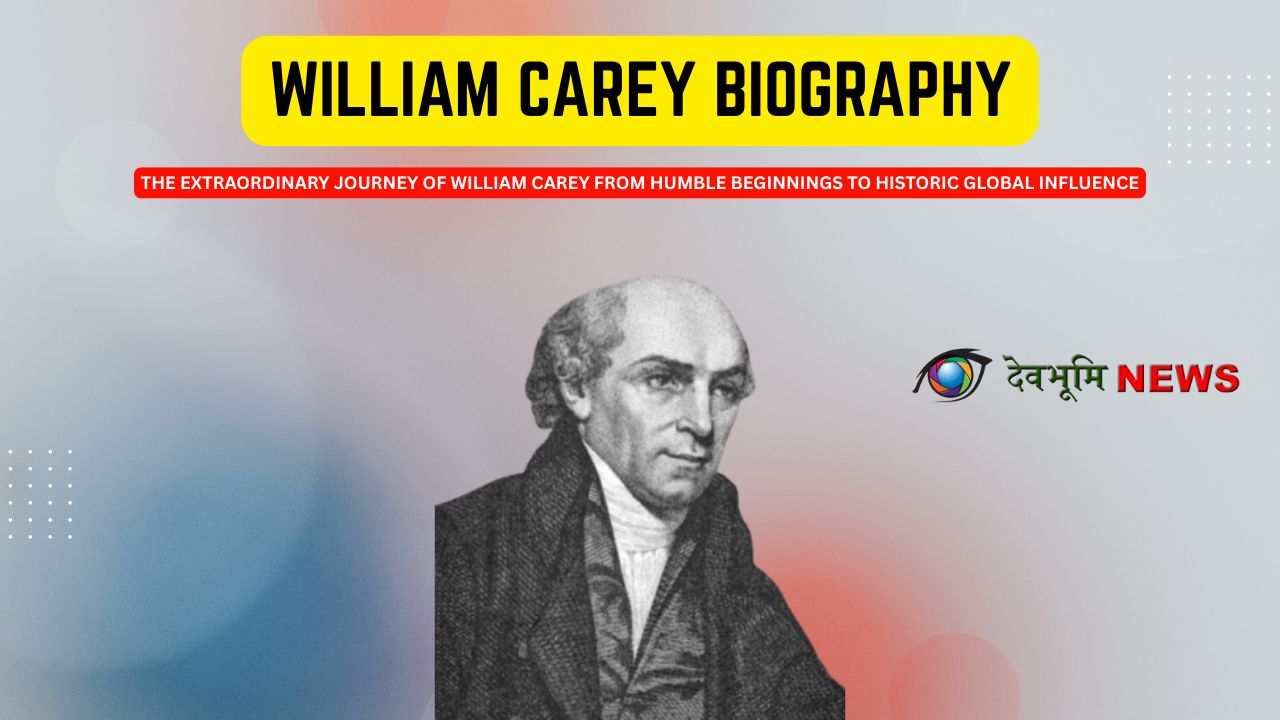
From a humble English shoemaker’s bench to the shores of Bengal – how one man’s unshakeable faith reshaped education, language, and society across the Indian subcontinent.
Imagine a man with no formal university degree, no wealthy patron, and no political power — who translated the Bible into over 40 languages, founded one of Asia’s oldest universities, helped abolish a centuries-old practice of widow-burning, and sparked a global missionary movement that continues to this day. That man was William Carey. His story isn’t just the story of a missionary. It is one of history’s most extraordinary tales of human determination and intellectual courage.
Who Was William Carey?
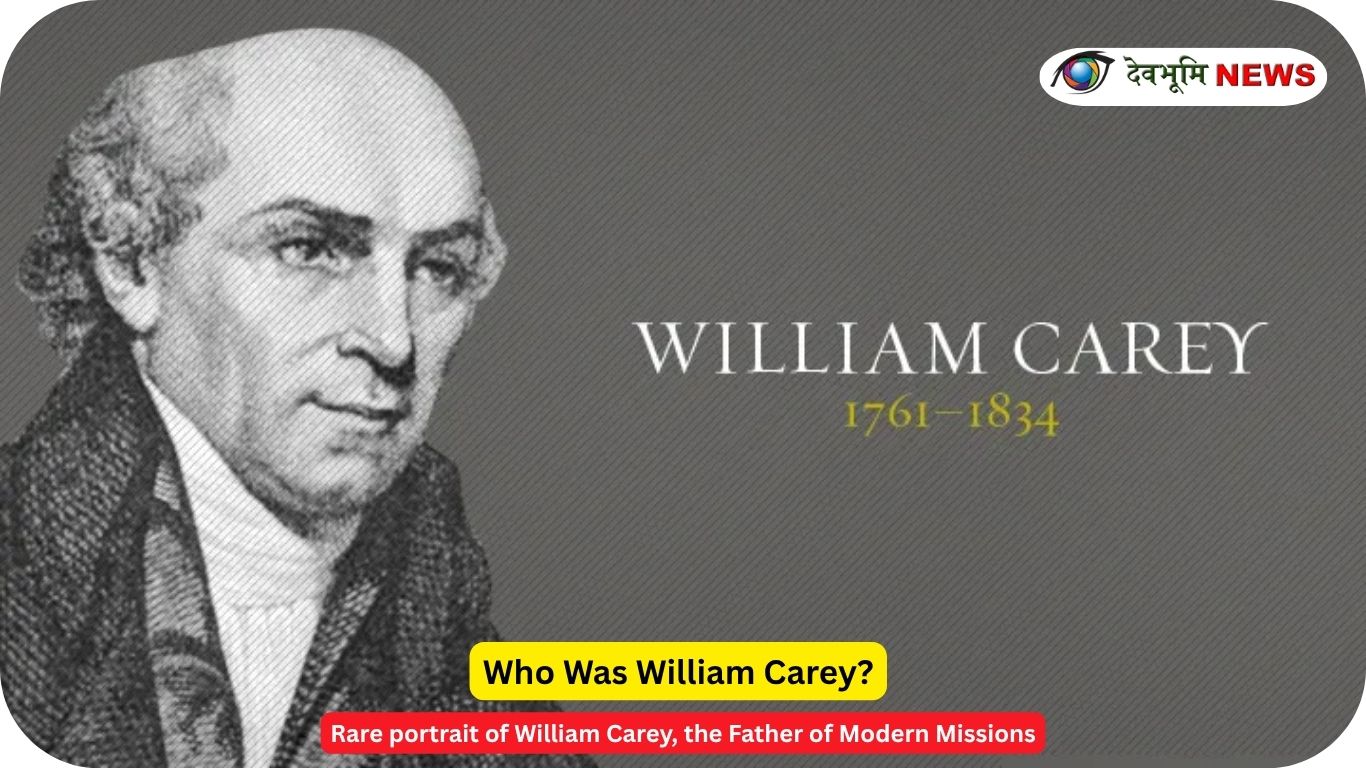
William Carey (1761–1834) was an English Baptist minister, linguist, translator, social reformer, and botanist who served as a missionary in India for over 40 years. Widely regarded as the “Father of Modern Missions,” William Carey biography is a testament to what passionate conviction and disciplined effort can achieve against overwhelming odds.
His contributions – from producing the first complete Bible in Bengali to founding Serampore College – placed him among the most influential figures in South Asian history.
William Carey Early Life and Background
William Carey was born on 17 August 1761 in Paulerspury, Northamptonshire, England. He was the eldest child of Edmund Carey, a weaver who later became a parish clerk and schoolmaster, and Elizabeth Wells Carey. The family was modest but respectable.
As a child, Carey developed a deep curiosity about the natural world. He was particularly fascinated by plants, insects, and geography – a passion that would later earn him recognition in botanical circles in India. Formal education was limited for him; he left school at the age of 12 due to a skin condition aggravated by outdoor fieldwork.
At 16, Carey was apprenticed to a shoemaker in nearby Piddington. It was during these years that he came under the religious influence of a fellow apprentice, John Warr, a Dissenter whose faith sparked a transformation in young Carey. By his late teens, Carey had embraced Baptist Christianity and was preaching in local chapels.
His self-education was remarkable. Working at his cobbler’s bench, he taught himself Latin, Greek, Hebrew, and Dutch – largely from a borrowed Latin grammar book and through sheer persistence. He later added Bengali, Sanskrit, and numerous other languages to his repertoire.
“Expect great things from God. Attempt great things for God.” — William Carey, 1792 sermon
William Carey Journey to India
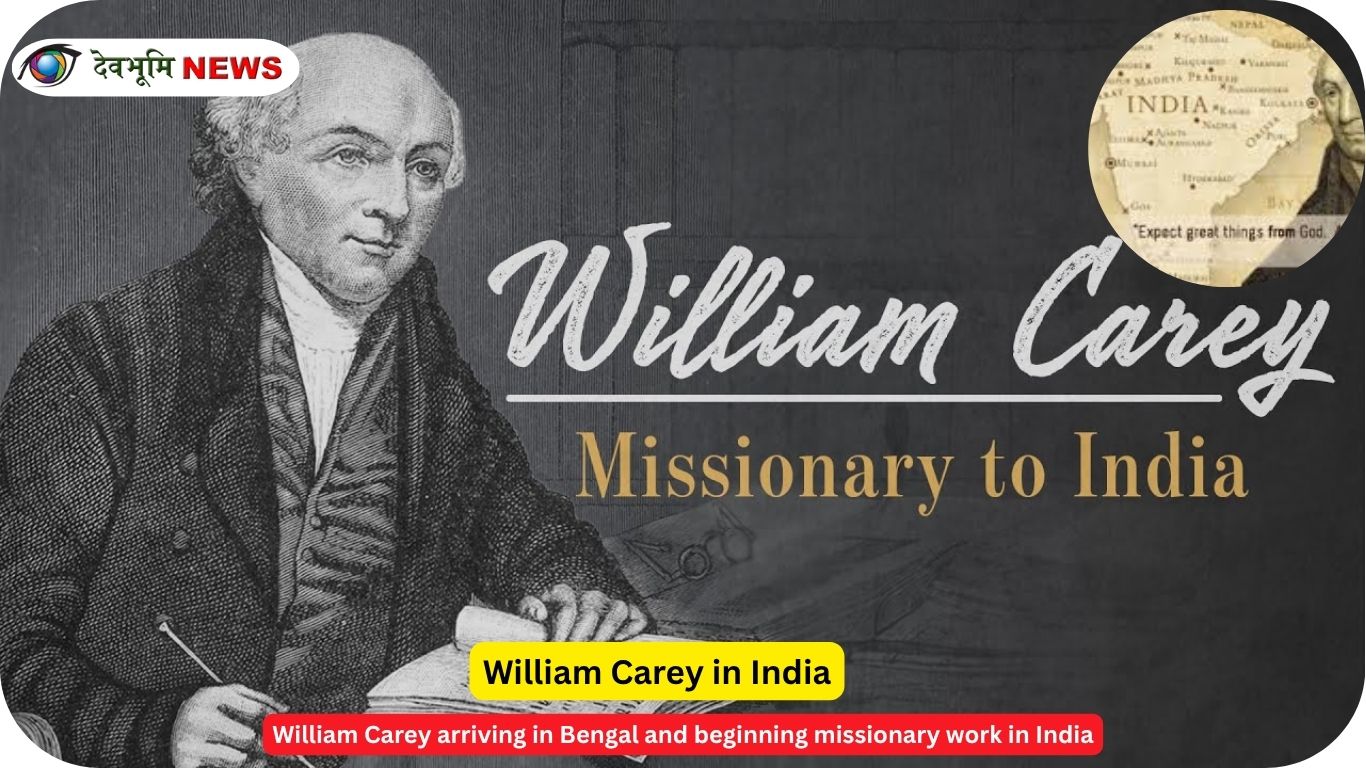
Missionary Purpose
Carey’s missionary calling crystallised through his reading of accounts of global exploration, particularly the voyages of Captain James Cook. In 1792, at a ministers’ meeting in Nottingham, he delivered a now-legendary sermon based on Isaiah 54:2–3, issuing his famous double call: “Expect great things from God; attempt great things for God.”
That same year, he co-founded the Particular Baptist Society for Propagating the Gospel amongst the Heathen – later known as the Baptist Missionary Society (BMS). This was one of the earliest modern Protestant missionary organizations in history.
William Carey Arrival and Early Struggles
Carey sailed for India in 1793, initially without permission from the British East India Company, which strongly discouraged missionary activity in its territories. He arrived in Bengal, and the early years were marked by brutal hardship. His wife Dorothy, who had reluctantly joined him after initial refusal, struggled deeply with the climate, isolation, and grief after losing their son Peter to dysentery in 1794.
Financial difficulties forced Carey to manage an indigo plantation in Mudnabatti for several years. Yet even here, he studied Bengali intensively and began translating the New Testament.
In 1800, Carey relocated to Serampore, a Danish colonial settlement (near Calcutta) where missionary activity was permitted. This move proved to be the turning point of his William Carey life story.
👉 Read Also:
- Andrew Santino Net Worth 2026: Biography, Income & Rise
- Matthew Schissler Net Worth 2026: Biography, Career, Income Sources & Business Ventures
- Apostle Kathryn Krick Biography: Age, Ministry, Net Worth & 5F Church (2026)
- Cody Jinks Biography 2026: From Fort Worth Metal Vocalist to Outlaw Country’s Most Independent Star
- Pastor Ken Graves Biography 2026: From Maine’s Poorest Kid to Calvary Chapel Bangor Founder
- Lourenco Goncalves Biography 2026: From Brazilian Steel Mills to Chairman & CEO of Cleveland-Cliffs Inc.
William Carey Major Contributions
Bible Translations
Carey’s linguistic output was staggering. Working alongside fellow missionaries Joshua Marshman and William Ward – a trio known as the Serampore Trio – he supervised or produced translations of the Bible (or portions of it) into more than 40 languages and dialects, including Bengali, Sanskrit, Oriya, Hindi, Marathi, and Gujarati.
The complete Bengali Bible was published in 1809. These translations were not merely religious texts – they became foundational documents for the standardization and development of several South Asian literary languages.
Printing Press and Publishing
Understanding that translation was useless without distribution, Carey established the Serampore Press, which became one of the most prolific publishing houses in early 19th-century Asia. The press produced Bibles, grammars, dictionaries, and literature in dozens of languages.
Carey compiled the first Sanskrit dictionary and grammar available to European scholars, contributing enormously to the emerging field of Indology.
Education and Serampore College
In 1818, Carey co-founded Serampore College (now Serampore University), which holds the distinction of being one of the oldest degree-granting institutions in Asia. The college was radical for its era: it admitted students regardless of caste, creed, or nationality – a deeply progressive stance in early 19th-century India.
Carey also established over 100 rural schools in Bengal and was a pioneer in arguing that education – not just religious conversion – was central to social upliftment.
Social Reforms
Perhaps Carey’s most consequential social contribution was his decades-long campaign against sati – the practice of widows immolating themselves on their husband’s funeral pyre. He documented cases, petitioned the colonial government, and translated anti-sati literature.
When Governor-General Lord William Bentinck finally abolished sati in 1829, Carey – then 68 – reportedly left a translation session to personally translate the abolition regulation into Bengali so it could be distributed across the subcontinent immediately.
Carey also opposed child marriage, infanticide, and caste discrimination – positions that put him in direct conflict with entrenched social norms.
Career Milestones and Achievements
📜 William Carey Major Milestones Timeline
1792
Co-founded the Baptist Missionary Society, launching a new era of Protestant missions.
1793
Arrived in India as a missionary, beginning his lifelong service in the country.
1800
Established the famous Serampore Mission base in Bengal.
1801
Appointed Professor at Fort William College, Calcutta.
1809
Published the complete Bengali Bible, a historic translation achievement.
1818
Co-founded Serampore College, one of India’s landmark educational institutions.
1823
Elected Fellow of the Linnaean Society for his contributions to botany.
1829
When Sati was abolished, Carey translated the regulation into Bengali.
William Carey Personal Life
Carey married Dorothy Plackett in 1781. Dorothy was initially reluctant to join him in India and struggled deeply after their arrival. She suffered a prolonged mental breakdown – likely triggered by the death of their son Peter and the sheer disorientation of colonial Bengal – and spent her final years in a state of psychological distress. She passed away in 1807.
Carey married Charlotte Rumohr, a Danish aristocrat and fellow believer, in 1808. Charlotte was educated, supportive of his work, and provided him with years of companionship. She passed away in 1821. His third marriage in 1823 was to Grace Hughes, a widow, who survived him.
Carey had six children with Dorothy. His sons Felix, William Jr., and Jabez all spent time in India, though their careers took varied paths.
Challenges and Controversies
Carey’s life was not without difficulties or debate. The Serampore Controversy (1817–1827) was a painful internal conflict between the Serampore Trio and the Baptist Missionary Society in London, which sought greater control over their operations. Carey and his colleagues ultimately maintained independence, but the dispute strained relationships significantly.
Some historians have critiqued colonial-era missionaries, including Carey, for operating within – and at times benefiting from – British imperial structures, even when they challenged specific practices. This remains a nuanced academic discussion, and most scholars balance this critique against Carey’s genuine advocacy for Indian people and his opposition to several forms of colonial exploitation.
His handling of his first wife Dorothy’s illness has also attracted reflection – though given the medical understanding and societal constraints of the 18th century, most historians approach this with contextual sensitivity.
Later Years and Death
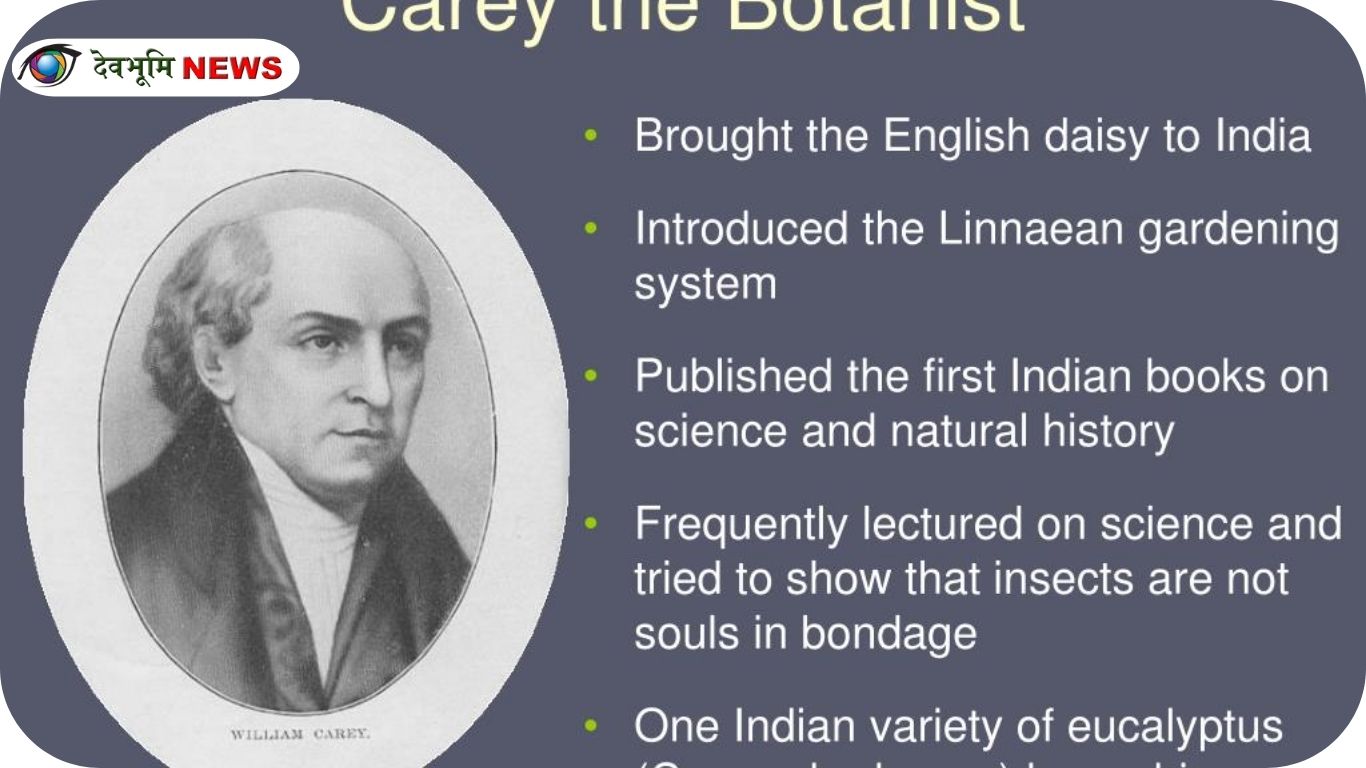
As Carey aged, his physical health declined, but his intellectual productivity did not. He continued translating, teaching, and working on his botanical garden at Serampore – a garden that became a serious scientific resource and introduced many plant species to wider horticultural knowledge.
William Carey died on 9 June 1834 in Serampore, aged 72, having spent 41 years in India without returning to England. At his own request, his tombstone bore the inscription:
“A wretched, poor, and helpless worm / On thy kind arms I fall.” — Epitaph chosen by Carey himself
Legacy and Impact on India and the World
The William Carey biography is inseparable from the story of modern India’s intellectual and social awakening. His contributions laid groundwork across multiple domains:
🌟 William Carey Lasting Contributions
🗣️ Linguistics
Standardized written forms of Bengali, Sanskrit, and other languages while producing the first grammars and dictionaries used by European scholars.
🎓 Education
Founded institutions and schools that challenged caste-based exclusion and promoted broader access to learning.
⚖️ Social Reform
Directly contributed to the abolition of Sati and campaigned against other harmful social practices.
🖨️ Publishing
The Serampore Press democratized access to printed knowledge across South Asia.
🌍 Missions
Inspired a global wave of Protestant missionary organizations and modern mission models.
🌿 Botany
The plant genus Careya (family Lecythidaceae) was named in his honor.
Serampore University, which grew from Carey’s college, continues to function as a recognized degree-granting institution under an 1827 Royal Charter — still valid today.
Interesting Facts about William Carey
- Carey never received a university degree yet was appointed professor at Fort William College, Calcutta in 1801.
- He maintained a meticulous botanical garden at Serampore and corresponded with leading naturalists of his era.
- The plant genus Careya is named after him by botanist William Roxburgh.
- He is credited with introducing the concept of “savings banks” in India for the benefit of the poor.
- Carey helped establish India’s first newspaper printed in an Indian language — the Bengali periodical Dig-Darshan (1818).
- He taught himself at least six languages before arriving in India — and added dozens more during his 41 years there.
- Despite spending four decades in India, Carey never returned to England after his arrival in 1793.
- He was a passionate horticulturist — his garden at Serampore was one of the finest in colonial Asia.
Frequently Asked Questions (FAQs) – William Carey
Why is William Carey called the “Father of Modern Missions”?
William Carey is called the Father of Modern Missions because he co-founded the Baptist Missionary Society in 1792 – one of the first organized Protestant missionary agencies — and demonstrated that systematic, language-based, culturally engaged missionary work was both possible and transformative. His model influenced virtually every subsequent Protestant mission movement worldwide.
How many languages did William Carey translate the Bible into?
Carey and his Serampore colleagues translated the complete Bible or portions of it into more than 40 languages and dialects, including Bengali, Sanskrit, Hindi, Marathi, Oriya, Gujarati, and others across South and Southeast Asia. The complete Bengali Bible was completed in 1809.
What role did William Carey play in abolishing sati in India?
Carey campaigned actively against sati for decades — documenting cases, petitioning the colonial government, and publishing anti-sati literature. When Governor-General Lord William Bentinck abolished sati in 1829, Carey translated the abolition regulation into Bengali the same day so it could be immediately distributed across the subcontinent.
What is Serampore College and who founded it?
Serampore College was co-founded by William Carey, Joshua Marshman, and William Ward in 1818 in the Danish colonial settlement of Serampore (near Calcutta). It is one of Asia’s oldest degree-granting institutions and was remarkably progressive for admitting students regardless of caste, religion, or nationality. It operates to this day under an 1827 Royal Charter.
Where and when did William Carey die?
William Carey died on 9 June 1834 in Serampore, India, at the age of 72. He had spent 41 continuous years in India and never returned to England after his original departure in 1793.
What are Carey’s contributions to education in India?
Carey’s contributions to education in India were wide-ranging. He co-founded Serampore College, established over 100 rural schools in Bengal, was appointed Professor of Bengali and Sanskrit at Fort William College in Calcutta, and championed education as a tool for social reform — independent of religious conversion.
What was the Serampore Controversy?
The Serampore Controversy (roughly 1817–1827) was a significant internal conflict between Carey and his Serampore colleagues and the Baptist Missionary Society in London, which sought administrative control over the mission’s finances and operations. The dispute caused considerable tension but ultimately resulted in Serampore maintaining greater autonomy.
Conclusion
The William Carey biography is, at its core, a story about the audacity of ordinary beginnings. A shoemaker from Northamptonshire – with no institutional advantages, no prestigious education, and no powerful connections – crossed oceans, learned dozens of languages, fought social injustice, and built institutions that outlasted him by centuries.
His William Carey contributions to India – in translation, education, publishing, and social reform – were so profound that even secular historians rank him among the most consequential figures in 19th-century South Asia. His William Carey missionary work didn’t merely spread a religious message; it catalysed a broader awakening that touched science, literature, law, and human rights.
Whether you approach this William Carey life story from a religious, historical, or social perspective, one truth is inescapable: here was a man who expected great things and, against every odd, achieved them. His legacy is not confined to church walls – it lives in the libraries, universities, printed pages, and social freedoms of a nation he chose to call home.
Sources & References
Last Updated: April 25, 2026
Disclaimer: All net worth figures mentioned in this article are estimates based on publicly available information, media reports, and known business activities. No official financial disclosures have been made. These numbers should not be treated as verified facts.