Join
Join
 Shorts
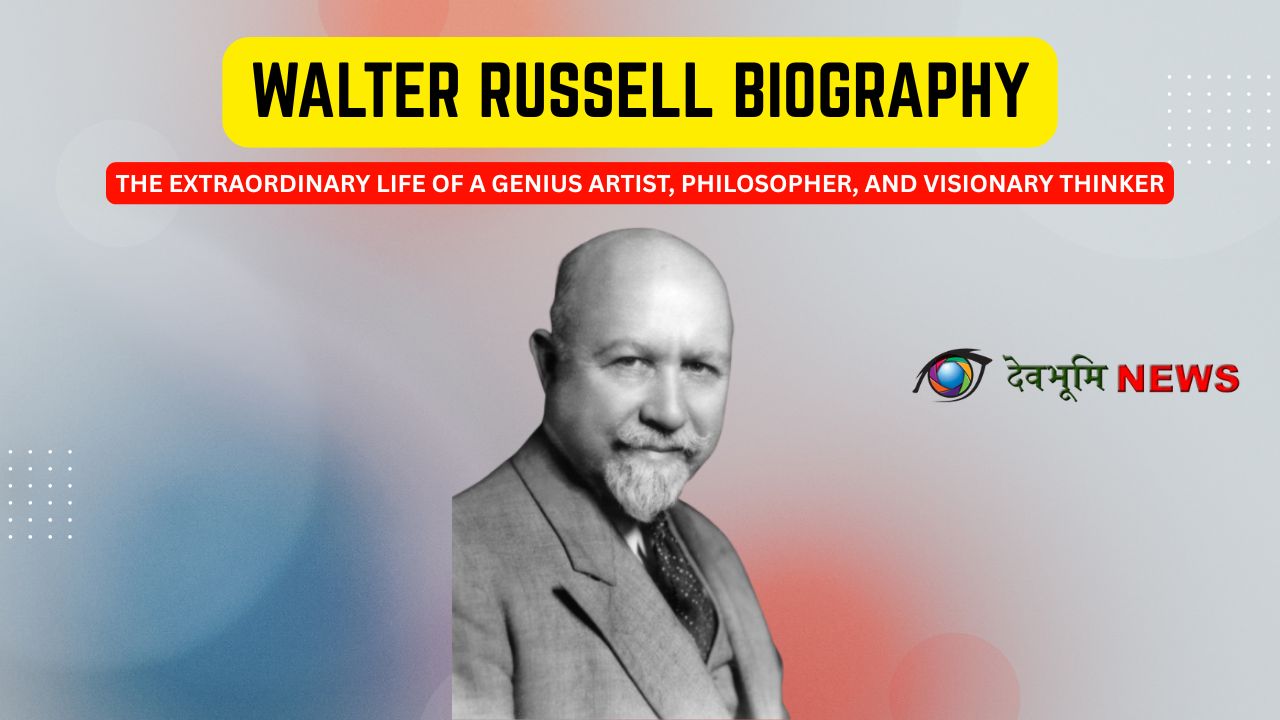
Introduction: A Man Ahead of His Time
What if one person could master painting, sculpture, architecture, music, philosophy, and science – not just dabble in them, but truly excel at every single one?
That person was Walter Russell.
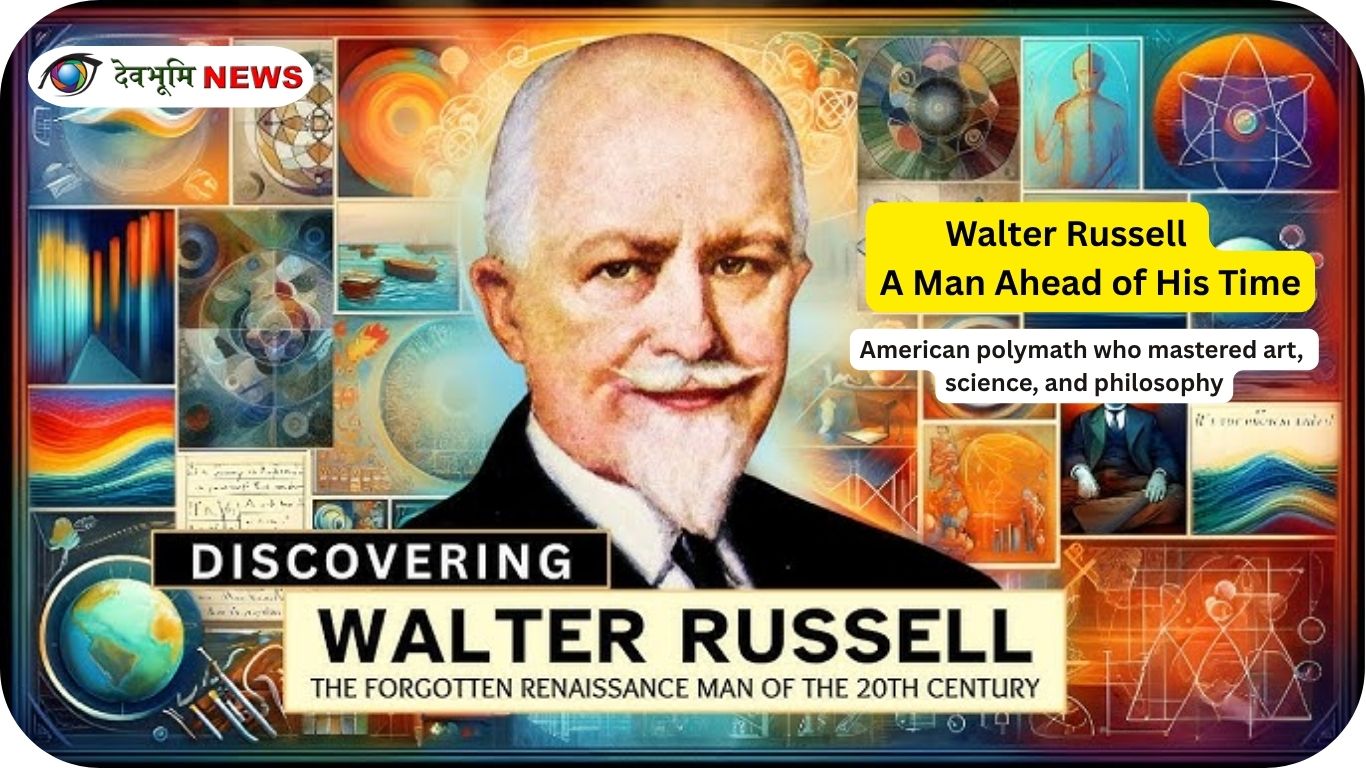
Born in 1871, Russell is one of history’s most extraordinary yet underappreciated minds. He was called “the Leonardo da Vinci of our age” by those who knew him best. His Walter Russell biography is not just the story of a talented man – it is the story of a human being who refused to accept limits and reshaped how we think about creativity, consciousness, and the universe itself.
Who Was Walter Russell?
Walter Russell was an American polymath – a painter, sculptor, author, architect, philosopher, and self-taught scientist. He lived from May 19, 1871, to May 19, 1963 and is remembered as one of the most versatile creative minds in American history.
Russell believed that genius was not a gift given to a lucky few. He argued it was a universal state of mind available to anyone willing to tap into it. His Walter Russell life story is living proof of that belief.
He founded the University of Science and Philosophy in Swannanoa, Virginia, alongside his wife Lao Russell, and spent decades teaching his unified theory of the cosmos to students and thinkers around the world.
Walter Russell’s Early Life and Background
Birth and Family
Walter Bowman Russell was born on May 19, 1871, in Boston, Massachusetts. He came from a modest family and showed an unusual creative spark from a very young age.
By the time he was nine years old, he was already selling his sketches to neighbors. His natural talent was undeniable – but formal opportunity was not always available to him.
Education and Upbringing
Russell received very little formal schooling. Financial constraints meant he could not pursue the kind of education his intellect deserved. Yet this never stopped him.
He was largely self-taught, reading voraciously and learning through direct experience. He studied at the École des Beaux-Arts in Paris briefly and trained under various artists, but his greatest teacher, as he often said, was his own inner illumination.
His early years instilled in him a fierce self-reliance that would define his entire career. The Walter Russell biography is, in many ways, the story of a man who invented himself from the ground up.
Walter Russell Career Journey
Artist and Sculptor
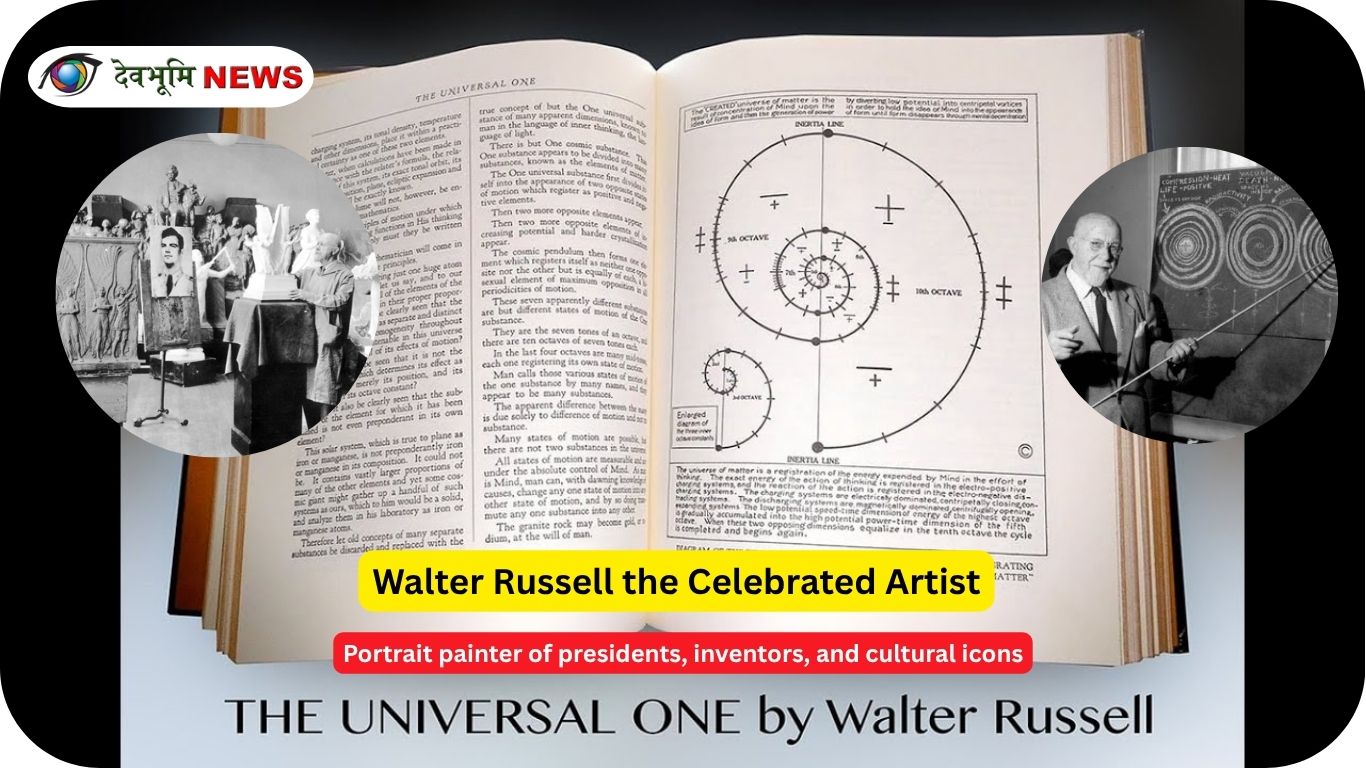
Russell’s career as an artist began in his teens, and by his twenties, he was already earning recognition. He became one of the most celebrated portrait painters in early twentieth-century America.
His subjects included four U.S. Presidents – Theodore Roosevelt, Franklin D. Roosevelt, Calvin Coolidge, and Warren G. Harding – as well as Thomas Edison and Mark Twain. These were not casual sittings; they reflected Russell’s standing among the cultural and political elite.
As a sculptor, Russell is perhaps best known for his bust of Mark Twain and his monumental Four Freedoms sculpture series, commissioned during World War II to honour Franklin D. Roosevelt’s famous speech.
His ability to capture the inner essence of his subjects – not just their physical likeness – made his portraits feel alive.
Author and Philosopher
Russell was also a prolific writer. His books dived deep into his philosophy of consciousness, creativity, and the nature of the universe.
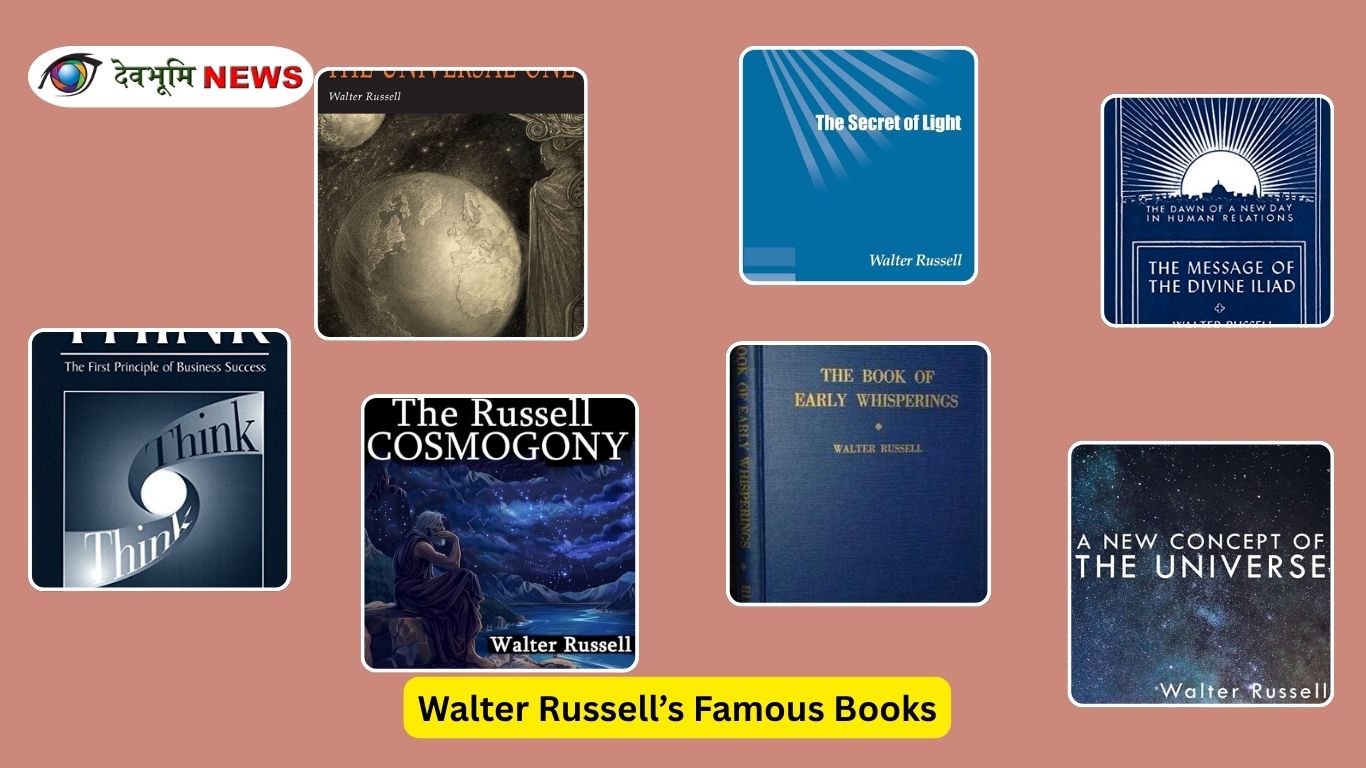
His most famous works include The Universal One (1926), The Secret of Light (1947), and The Message of the Divine Iliad (1948). These titles form the core of Walter Russell’s philosophy – a framework that blended science, spirituality, and metaphysics in a way few had attempted before.
He wrote not just for academics but for everyone, believing that universal truths should be accessible to all human beings.
Architect and Lecturer
Russell also practiced architecture. He designed the Westinghouse War Memorial in Pittsburgh, among other notable structures.
As a lecturer, he was in constant demand. He spoke at Harvard, Yale, and many other institutions on topics ranging from art to cosmogony. His presence on a stage was described as magnetic – a man who could make even the most abstract ideas feel urgently relevant.
👉 Read Also:
- Andrew Santino Net Worth 2026: Biography, Income & Rise
- Matthew Schissler Net Worth 2026: Biography, Career, Income Sources & Business Ventures
- Apostle Kathryn Krick Biography: Age, Ministry, Net Worth & 5F Church (2026)
- Cody Jinks Biography 2026: From Fort Worth Metal Vocalist to Outlaw Country’s Most Independent Star
- Pastor Ken Graves Biography 2026: From Maine’s Poorest Kid to Calvary Chapel Bangor Founder
- Lourenco Goncalves Biography 2026: From Brazilian Steel Mills to Chairman & CEO of Cleveland-Cliffs Inc.
Major Works and Contributions
Books and Publications
Walter Russell’s books remain his most enduring legacy for millions of readers worldwide:
These books continue to influence readers, thinkers, and spiritual seekers decades after his death.
Scientific and Philosophical Ideas
Russell’s scientific claims were bold and controversial. He proposed a new model of the periodic table and offered an alternative to conventional atomic theory. He predicted the existence of elements later discovered by mainstream science, though his work was largely dismissed by the academic establishment of his day.
His philosophy centred on the idea that all matter is light in motion – that everything in the universe is an expression of a single, rhythmic, pulsing energy. He called this the principle of “interchange” and believed the universe was governed by divine, mathematical law.
Russell also introduced the concept that the universe “breathes” – expanding and contracting in rhythmic cycles. This idea resonates with modern cosmological theories, even if he arrived at it through mystical rather than empirical means.
Art Achievements
Beyond his painted portraits and sculptures, Russell contributed deeply to the visual arts as a teacher and theorist. He created a large body of paintings exploring light, energy, and spiritual themes.
His Four Freedoms sculptures were exhibited at the United Nations and attracted widespread admiration. He also painted a famous portrait of Mark Twain that was praised as one of the finest likenesses ever made of the American writer.
Walter Russell’s Personal Life
Marriage and Partnership
Russell was married twice. His first marriage produced children, but it was his second marriage – to Daisy “Lao” Cook in 1948 – that became the defining personal relationship of his life.
Lao Russell was more than a life partner. She was his intellectual equal, his co-author, and the co-founder of the University of Science and Philosophy. The couple moved to Swannanoa Palace in the Blue Ridge Mountains of Virginia, transforming it into a centre for the teaching of their shared philosophy.
Their partnership was described by many who knew them as one of extraordinary harmony – two people who truly embodied the principles of unity and love that they taught.
Beliefs and Legacy
Influence on Spirituality, Art, and Philosophy
Walter Russell’s legacy spans multiple domains. In spirituality, his books have influenced generations of seekers interested in consciousness, divine law, and the nature of reality. Writers like Paramahansa Yogananda praised his work.
In art, he demonstrated that technical mastery and deep spiritual awareness are not opposites – they are partners. His portraits remain in collections and institutions across the United States.
In philosophy, his unified theory of the universe – though never accepted by mainstream science – continues to attract devoted readers who find in it a coherent, inspiring vision of reality.
His Walter Russell philosophy is perhaps best summarised in his own words: “Mediocrity is self-inflicted. Genius is self-bestowed.”
Net Worth and Financial Success
Accurate historical records of Walter Russell’s personal wealth are not comprehensively documented. However, based on his career arc and clientele, it is clear that he achieved considerable financial success.
As a portrait painter to presidents, industrialists, and celebrities, he commanded significant fees. His architectural commissions, lecture tours, and book sales added to his income over decades.
He and Lao Russell operated their university from Swannanoa Palace – a large, grand estate – suggesting a level of financial stability and institutional support that placed him well above the average artist or philosopher of his time.
Later Years and Death
In his later decades, Russell focused increasingly on writing, teaching, and expanding the reach of the University of Science and Philosophy.
He remained intellectually and creatively active well into his eighties – a testament to the vitality he attributed to his philosophical and spiritual practices. His eyesight faded in his final years, but his mind remained sharp.
Walter Russell passed away on May 19, 1963, exactly on his 92nd birthday. It was a death that felt, to those who knew him, almost as though he had chosen the moment himself.
He was buried at Swannanoa, Virginia, where the university he helped found continues to preserve and spread his work.
Interesting Facts About Walter Russell
- Russell claimed to have experienced 39 days of cosmic illumination in 1921, during which he received the insights that formed the foundation of his philosophy.
- He designed his own tomb and planned the details of his memorial – a reflection of his belief in the continuity of consciousness.
- Russell was an accomplished ice skater and competed at a national level in his youth.
- He taught himself to play the piano and composed music.
- Despite having little formal education, he received honorary degrees from multiple universities.
- At age 49, with no formal architectural training, he won the commission for the Westinghouse War Memorial over hundreds of professionally trained architects.
- His painting of Mark Twain was completed after just a single sitting and was immediately hailed as a masterpiece. He was elected to the National Sculpture Society and the Royal Society of Arts in London.
FAQs: Walter Russell Biography
What is Walter Russell best known for?
Walter Russell is best known as an American polymath — a gifted artist, sculptor, philosopher, and author. He is particularly renowned for his portraits of U.S. Presidents and his philosophical books on consciousness and the nature of the universe.
What are Walter Russell’s most famous books?
His most celebrated books include The Universal One, The Secret of Light, The Message of the Divine Iliad, and Atomic Suicide? These form the core of Walter Russell’s philosophy and continue to be widely read today.
What was Walter Russell’s philosophy about?
Walter Russell’s philosophy centered on the unity of all life and matter. He taught that everything in the universe is an expression of light and divine energy, that genius is available to all people, and that the universe operates according to rhythmic, knowable laws.
When and where did Walter Russell die?
Walter Russell died on May 19, 1963, in Swannanoa, Virginia — exactly on his 92nd birthday. He passed away at the Swannanoa Palace, which had served as his home and the base of his University of Science and Philosophy.
What was the University of Science and Philosophy?
Founded by Walter and Lao Russell, the University of Science and Philosophy was an educational institution based at Swannanoa Palace in Virginia. It was dedicated to teaching Russell’s unified philosophy of science, spirituality, and creative living through home study courses and lectures.
Did Walter Russell have any scientific discoveries?
Russell proposed a new model of atomic structure and claimed to have predicted elements later discovered by mainstream science. While his scientific ideas were not accepted by the academic establishment, they continue to attract interest from alternative science researchers and philosophers.
Who was Lao Russell?
Lao Russell (born Daisy Cook) was Walter Russell’s second wife and lifelong partner. She co-authored several books with him, co-founded the University of Science and Philosophy, and played a central role in preserving and promoting his work after his death.
Conclusion: A Legacy That Refuses to Be Forgotten
The Walter Russell biography is not simply a record of achievements – though the achievements alone are staggering. It is the story of a human being who lived as proof of his own philosophy.
Russell believed that every person carries within them the seed of genius. He himself grew from humble beginnings – little formal education, modest means, no inherited advantages – into a painter of presidents, a sculptor of monuments, a philosopher of the cosmos, and a teacher to thousands.
His Walter Russell legacy endures because it speaks to something deep in the human spirit: the refusal to accept limits, the hunger for meaning, and the belief that the universe is not a cold, mechanical thing but a living, luminous expression of a greater intelligence.
In an age that often separates art from science and spirit from intellect, Walter Russell stands as a reminder that these divisions are artificial – and that the greatest human beings have always known it.
Whether you encounter his work through his books, his sculptures, or his philosophy, one thing is certain: once you meet Walter Russell’s ideas, they are very difficult to forget.
Sources & References
Last Updated: April 20, 2026
Disclaimer: All net worth figures and income estimates in this article are based on publicly available information and analyst estimates. This content is for informational purposes only and should not be treated as verified financial data.