Join
Join
 Shorts

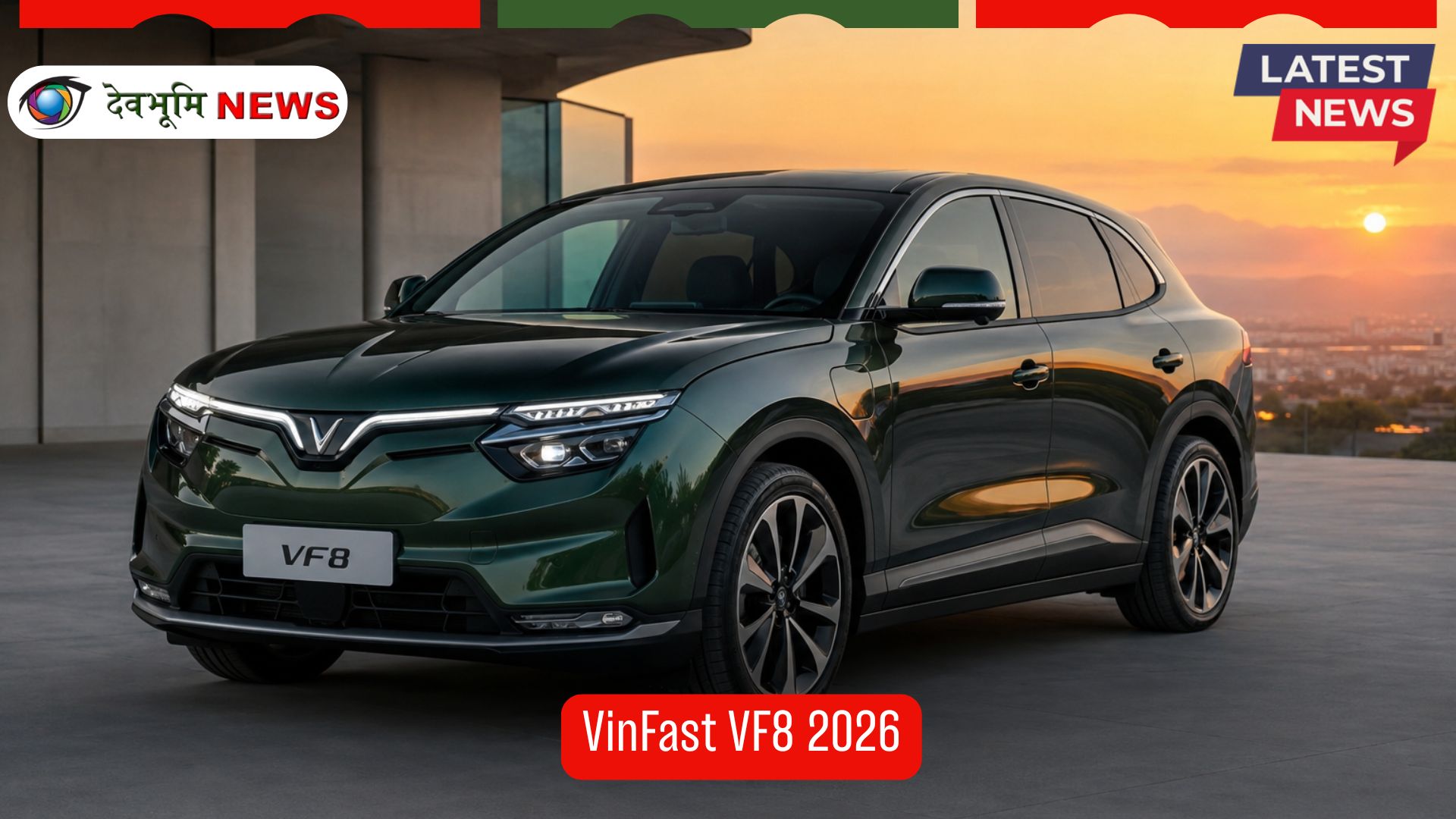
The VinFast VF8 2026 has officially broken cover, and surprisingly, the biggest story here isn’t outrageous performance or giant touchscreen drama.
It’s maturity.
That may sound boring in the hyperactive EV world where brands throw around terms like “AI ecosystem,” “quantum platform,” and “future mobility experience” every six minutes. But sometimes the smartest evolution is knowing when to calm down.
And honestly? The new-generation VinFast VF8 feels exactly like that.
Instead of doubling down on excess, VinFast has completely reworked the VF8 around efficiency, software integration, thermal management, and everyday usability. The result is a premium electric SUV that suddenly feels far more believable in the real world.
Not “concept-car believable.”
Actual Tuesday-morning-traffic believable.
What Changed in the VinFast VF8 2026?
Here’s the biggest surprise: the new VinFast VF8 2026 is actually less aggressive on paper than the old model.
And weirdly, that might be the smartest thing VinFast has done so far.
Instead of focusing on huge horsepower numbers, the second-generation VF8 prioritizes:
- efficiency,
- software optimization,
- lighter packaging,
- improved ergonomics,
- and better thermal management.
Here’s a quick overview of the officially revealed updates:
| Feature | VinFast VF8 2026 |
|---|---|
| Driving Range | Up to 500 km (NEDC claimed) |
| Battery | 60.13 kWh |
| Drivetrain | Single-motor FWD |
| Power Output | 228 hp |
| Charging | 10-70% in under 30 mins |
| Infotainment | 12.9-inch touchscreen |
| Driver Display | Dedicated digital instrument cluster |
| Platform | SDV Architecture with Central Vehicle Computer |
| Thermal System | Integrated Thermal Management (ITM) |
That’s a dramatic shift from the older dual-motor AWD setup that pushed over 350 hp.
Some enthusiasts may complain.
But most actual SUV buyers? They’ll probably appreciate a setup designed around efficiency instead of drag-race bragging rights.
Because deep down, most people don’t need launch control.
They need confidence that their EV won’t become emotionally unstable during summer traffic with the AC running at full blast.
VinFast VF8 2026 Design: Cleaner, More Mature, Less “Look At Me”

The original VF8 looked futuristic in the same way some startup offices look futuristic — exciting at first glance, but slightly exhausting after a while.
The VinFast VF8 2026 tones things down in a good way.
The SUV now gets:
- slimmer LED lighting,
- cleaner bumper detailing,
- improved aerodynamics,
- sharper body surfacing,
- and redesigned alloy wheels.
The illuminated V-shaped front signature remains the centerpiece, giving the SUV a distinctive night-time identity.
What’s refreshing is that VinFast didn’t overdo fake aggression. There are no unnecessary cuts, fake vents, or “performance-inspired” plastic drama.
It finally looks like a premium electric SUV instead of a concept sketch that accidentally reached production.
Inside the Cabin: VinFast Finally Fixed the Biggest Problem

The cabin changes might actually be the most important upgrade in the entire car.
The old VF8 relied heavily on its massive center display for critical information, including speed readouts. It looked cool during launch presentations, but in daily driving it wasn’t exactly intuitive.
For 2026, VinFast has corrected course.
The central screen is now smaller at 12.9 inches instead of the previous 15.6-inch setup, but the big improvement is the addition of a dedicated digital driver’s display behind the steering wheel.
And honestly, this matters more than screen size.
Because while automakers love pretending every driver wants a spaceship cockpit, most humans still prefer seeing speed directly in front of them instead of glancing sideways like they’re checking cricket scores.
Other cabin highlights include:
- OTA software updates,
- enhanced voice commands,
- connected car functions,
- upgraded ADAS integration,
- faster software processing,
- and a more refined interface layout.
The overall experience now feels more mature and less experimental.
VinFast VF8 2026 Range, Battery & Charging Explained
This is where the new VF8 becomes genuinely interesting.
The SUV now uses a significantly smaller 60.13 kWh battery pack, down from the previous 87.7 kWh unit.
Yet VinFast still claims up to 500 km of range under the NEDC cycle.
That sounds backwards until you realize modern EV development is increasingly about efficiency rather than simply stuffing in the biggest battery possible.
The new specs are as follows:
| Specification | VinFast VF8 2026 |
|---|---|
| Range | Up to 500 km (NEDC claimed) |
| Powertrain | Single-motor FWD |
| Power Output | 228 hp |
| Torque | 330 Nm |
| Battery Capacity | 60.13 kWh |
| Fast Charging | 10-70% in under 30 mins |
The older VF8 lineup offered dual-motor AWD versions producing over 400 hp in some markets. Those variants are currently absent from the second-generation reveal.
Instead, VinFast seems focused on:
- better energy optimization,
- improved weight management,
- lower operating costs,
- and smarter thermal efficiency.
And that makes sense.
Most EV buyers aren’t trying to outrun sports cars at traffic lights. They just want:
- predictable range,
- stable charging performance,
- and enough battery left after navigating terrible traffic.
If an EV survives peak Delhi-Gurgaon traffic while running the AC at full power, that’s already a stronger stress test than most Nürburgring laps.
SDV Tech: The SUV Is Basically Becoming a Rolling Computer
The VinFast VF8 2026 is built around an updated SDV platform — short for Software Defined Vehicle.
Yes, the auto industry desperately loves acronyms.
But this technology genuinely matters.
Instead of multiple isolated electronic systems, SDV architecture uses centralized computing to manage:
- battery functions,
- infotainment,
- ADAS systems,
- charging optimization,
- and thermal efficiency.
This allows:
- faster OTA updates,
- smarter energy management,
- predictive diagnostics,
- and long-term software improvements.
VinFast has also introduced its in-house Integrated Thermal Management (ITM) system.
This system simultaneously manages:
- battery temperature,
- motor cooling,
- and cabin climate efficiency.
That may sound technical, but in hot-weather markets like India, thermal management is critical for battery longevity and charging consistency.
Cars parked in Indian summers don’t just get hot.
They evolve into air fryers with seatbelts.
VinFast VF8 India Launch: Could It Actually Work Here?
VinFast has already filed patents related to the new-generation VF8 in India, strongly indicating future launch intentions.
And timing-wise, the market may finally be ready.
Indian premium EV buyers are becoming more open to newer brands, especially when the product offers:
- advanced software,
- premium interiors,
- strong range claims,
- and competitive pricing.
If launched here, the VinFast VF8 2026 is expected to be priced around ₹50 lakh to ₹55 lakh.
That would place it against:
- Hyundai Ioniq 5
- Kia EV6
- BYD Sealion 7
- Volvo EX40
The biggest challenge for VinFast won’t be specs.
It’ll be trust.
Indian buyers can forgive average cupholders.
They can forgive slightly firm suspension.
They can even forgive confusing touchscreen menus.
But weak after-sales support?
That becomes family gossip for the next seven weddings.
Read more
- अमेरिका का नया ग्रीन कार्ड नियम: अब US छोड़कर ही करना होगा इमिग्रेंट वीज़ा प्रोसेस
- भारत-अमेरिका संबंधों को नई दिशा देगा मार्को रुबियो का भारत दौरा
- Twisha Sharma Death Case: मौत से कुछ घंटे पहले सैलून पहुंचीं ट्विशा शर्मा, CCTV वीडियो ने बढ़ाए सवाल
Final Verdict: The VinFast VF8 2026 Finally Feels Grounded
The VinFast VF8 2026 doesn’t feel like an EV startup trying to prove something anymore.
It feels like a company beginning to understand what real buyers actually want.
And that’s important.
The new VF8 may have:
- less power,
- a smaller battery,
- and a smaller touchscreen—
—but somehow it ends up feeling smarter.
Because modern EV ownership isn’t just about numbers anymore.
It’s about:
- usability,
- software stability,
- charging confidence,
- cabin comfort,
- and whether the car quietly fits into your life without creating new problems.
The second-generation VF8 seems built around that philosophy.
And in a market full of EVs trying desperately to look futuristic, there’s something oddly refreshing about a car finally choosing practicality over performance theater.