Join
Join
 Shorts

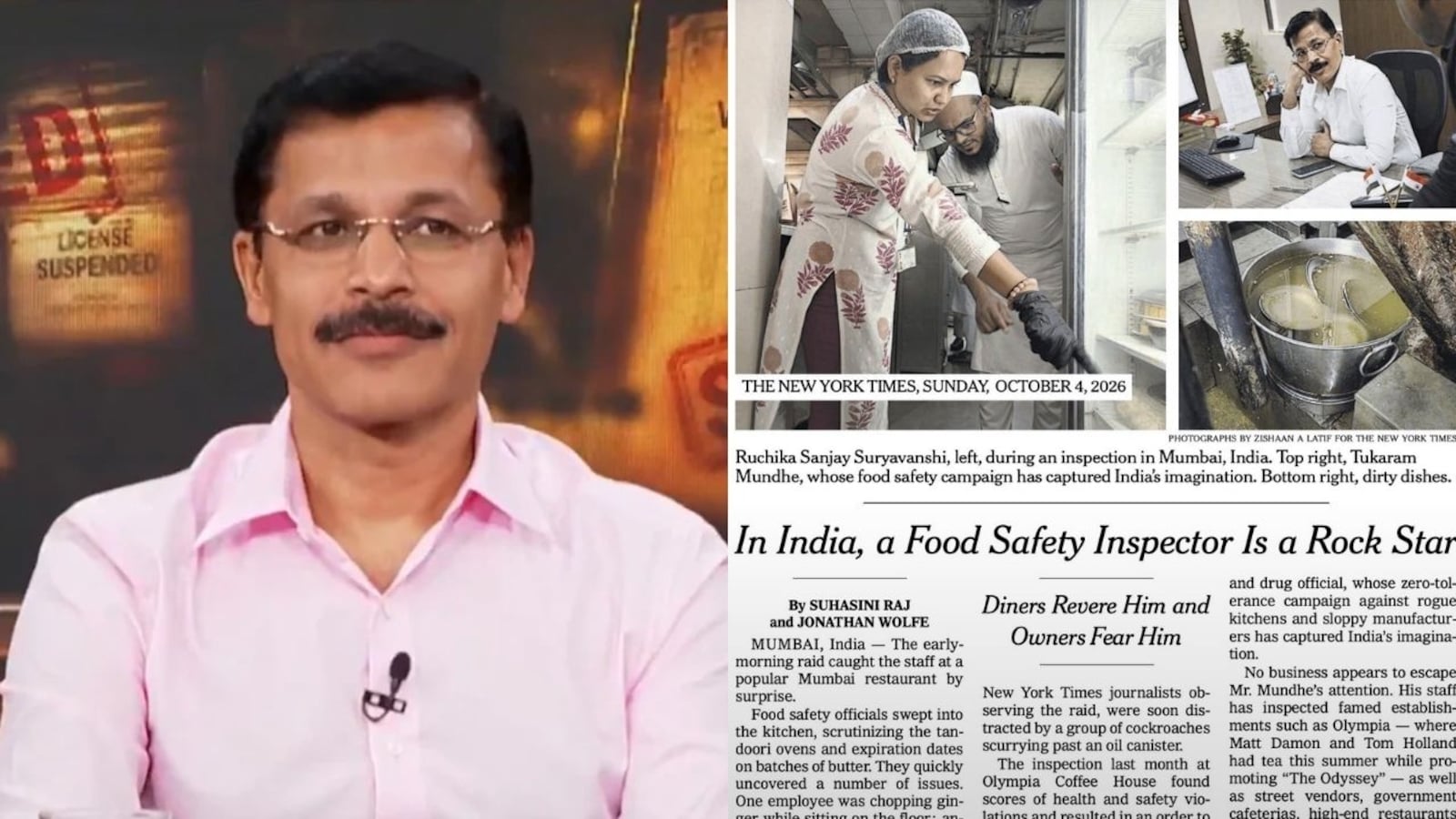
Maharashtra Food and Drug Administration (FDA) Commissioner Tukaram Mundhe has drawn international attention after The New York Times featured him on its front page, describing the Indian food-safety official as a “rock star.” The international spotlight follows an intensive enforcement campaign led by Mundhe against food-safety violations across Maharashtra, including surprise inspections at restaurants, food businesses, pharmacies and warehouses.
The New York Times highlighted the unusual public profile Mundhe has developed through his strict inspections, noting the contrast between diners who welcome his actions and business owners who are wary of his enforcement drives. The report has also brought wider attention to the role of food regulators in protecting public health.
Who Is Tukaram Mundhe?
A 2005-batch IAS officer, Tukaram Mundhe has previously served in several administrative positions and has developed a reputation for taking firm action on regulatory violations. In Maharashtra, he has become particularly visible since taking charge of the FDA, where his department has intensified inspections and enforcement against establishments allegedly violating food and drug safety norms.
His public image has also been shaped by his direct style of administration. On social media, he has been referred to by nicknames such as “Singham” and “Nayak,” reflecting the attention generated by his enforcement activities.
More Than 12,000 Food Inspections
The international recognition comes amid a significant enforcement campaign by the Maharashtra FDA.
According to data reported by The Times of India, the department conducted 12,083 food inspections between June 1 and August 31 and collected 37,604 food and drug samples. During the same period, authorities issued 5,269 improvement notices and suspended 603 food licences.
The department also seized food stock valued at approximately ₹67.2 crore and reported 875 arrests in food-related cases. On the pharmaceutical side, the FDA carried out 2,902 inspections and seized illegal medicines and cosmetics worth ₹11.41 crore.
The crackdown has extended to banned gutkha and pan masala products, with hundreds of FIRs registered and substantial quantities of prohibited stock seized.
From Restaurants to Pharmacies
Mundhe’s enforcement campaign is not limited to restaurants and eateries. The Maharashtra FDA has also increased scrutiny of pharmacies, including action against the alleged sale of antibiotics without prescriptions.
The department has additionally focused on food adulteration and hygiene-related violations. Recent initiatives have included action against analogue paneer and scrutiny of food packaging practices.
The FDA has also begun paying greater attention to food served at weddings, community gatherings and other large events, with caterers and organisers being brought under greater food-safety scrutiny.
Technology and AI to Strengthen Enforcement
One of the notable aspects of the Maharashtra FDA’s approach is the increasing use of technology.
The department’s digital systems track complaints, assign them to officers and establish response deadlines. Senior officials can monitor pending cases and delays through an audit trail.
The FDA is also exploring the use of artificial intelligence to analyse inspection records, laboratory results, complaints, licences and previous violations. The objective is to help officials identify establishments and products that may require closer scrutiny.
Mundhe has described AI as a means for the existing workforce to “see more, respond faster”, rather than as a replacement for human inspectors.
Mundhe’s Response to the Global Attention
Despite the international attention, Mundhe has sought to shift the focus away from personal publicity.
Sharing the New York Times report on X, he said: “Good governance is not about making headlines. It is about making a difference.”
He emphasised that food safety is ultimately about protecting people, maintaining standards and building public trust. According to Mundhe, fair, consistent and fearless enforcement is important for strengthening the credibility of public institutions.
His response has added another dimension to the story, with the FDA chief making clear that he sees the international coverage as secondary to the broader objective of regulatory enforcement.
Public Health at the Centre of the Campaign
The Maharashtra FDA’s campaign comes amid growing public concern over food adulteration, hygiene standards and the safety of products consumed by millions of people every day.
The department has also undertaken awareness initiatives. Under its “Safe Food for Every School Child” programme, hundreds of workshops have been conducted across Maharashtra, involving thousands of schools.
Mundhe’s approach broadly revolves around three themes — Empower, Enable and Enforce — combining regulatory action with public awareness and technology.
Read more like this:
- हैदराबाद में 30 मुस्लिम मतदाताओं के नाम हटाने की कोशिश का आरोप, BJP बूथ एजेंट पर FIR
- Flydubai Flight Incident: कॉकपिट हमले में Captain Smit Machchhar के सिर में गंभीर चोट, इलाज जारी
Why the NYT Spotlight Matters
The New York Times feature has given international visibility to an otherwise routine but critical area of government administration: food safety enforcement.
For Mundhe, the “rockstar” label reflects the unusual public attention surrounding his work. For Maharashtra’s FDA, however, the larger challenge remains ensuring that enforcement translates into sustained compliance across restaurants, food manufacturers, pharmacies, caterers and other businesses.
The international spotlight may have made Mundhe a more recognisable public official, but his own message remains focused on the underlying objective — safer food, stronger regulatory standards and greater public trust.