Join
Join
 Shorts

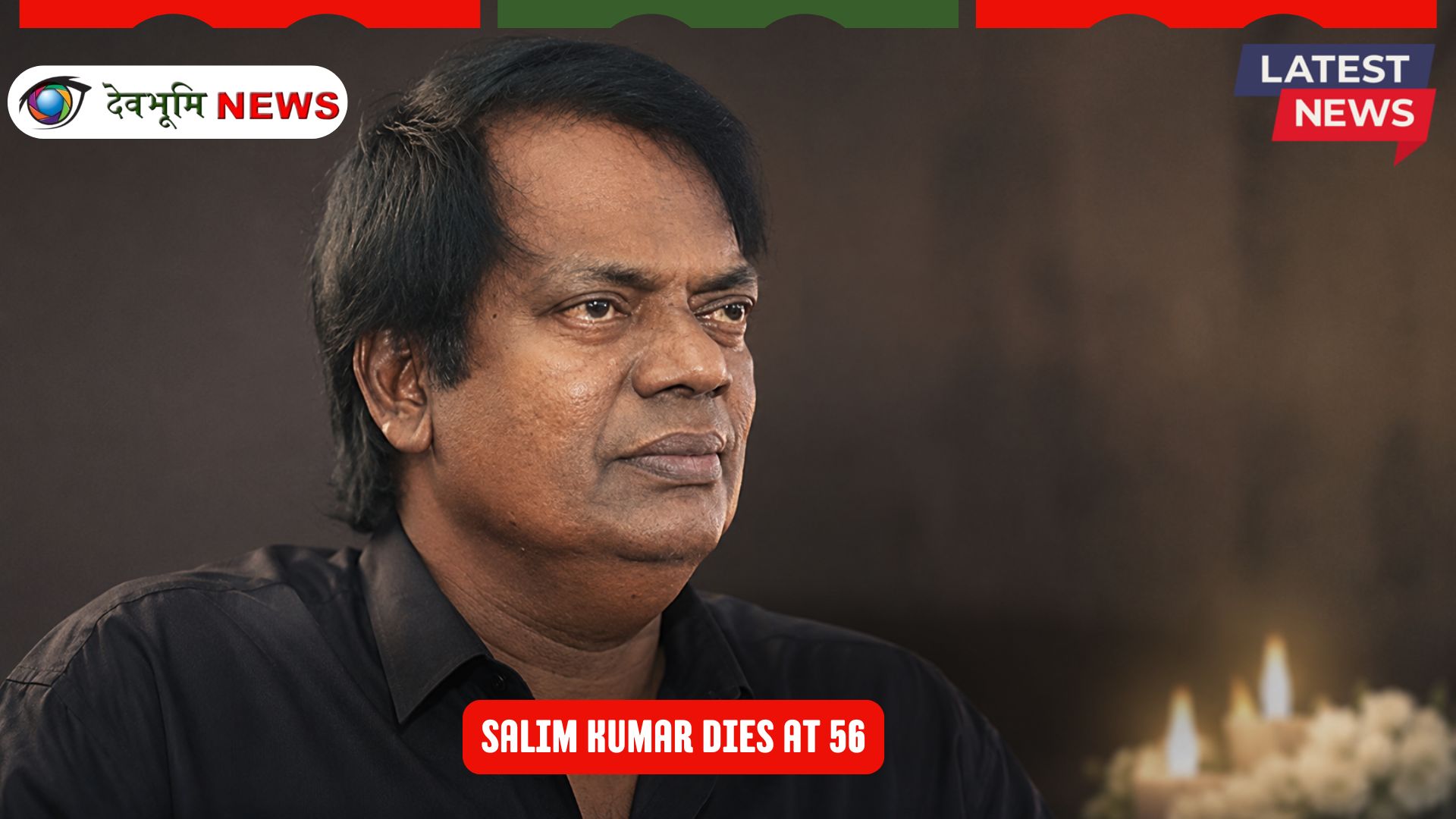
Salim Kumar dies at 56 — and with that one line, Malayalam cinema lost one of its rarest performers: a man who could make an entire theatre laugh like a family function gone out of control, and then, in the very next role, make the same audience sit in silence with a lump in the throat.
The National Award-winning actor passed away on June 6, 2026, in Kochi after suffering a cardiac arrest, according to multiple reports. He had also been battling serious health complications, including liver-related illness, and was reportedly on ventilator support before his passing.
His funeral was held at his residence in North Paravur, Ernakulam, and he was cremated with State honours. Fans, political leaders, film personalities, and ordinary Malayalis gathered to say goodbye to a man who had somehow become everyone’s neighbour, uncle, friend, philosopher, and favourite chaos machine.
Who Was Salim Kumar?
Salim Kumar was not just a Malayalam actor. He was a mood.
Born on October 10, 1969, in North Paravur, Kerala, he rose from mimicry stages to become one of Malayalam cinema’s most beloved faces. His career stretched across hundreds of films, and his filmography moved comfortably between loud comedy, subtle satire, political humour, emotional drama, and deeply humane character roles.
That is why the phrase Salim Kumar dies at 56 feels heavier than a regular celebrity headline. It marks the end of a screen presence that had become part of Malayali memory.
He was the kind of actor who did not need a grand entry shot. Sometimes, one glance was enough. Sometimes, one pause. Sometimes, one absurdly timed line. Comedy, after all, is not just about saying funny things. It is about knowing when the audience is about to laugh and reaching there half a second before them.
Salim Kumar had that timing. Malayalam cinema had that gift.
Why Salim Kumar Dies at 56 Feels Like a Personal Loss
Some actors entertain you. Some actors grow up with you.
Salim Kumar belonged to the second category.
For many viewers, he was part of childhood television reruns, family DVD nights, festival movie marathons, and those random Sunday afternoon films where nobody remembers the plot but everyone remembers his scenes. In an industry blessed with legendary comic actors, Salim Kumar built his own lane.
He was never just “the funny man.” He often played the ordinary man pushed into extraordinary absurdity. A confused husband. A helpless worker. A proud fool. A frightened villager. A man too honest for his own benefit. A man too foolish to realise he was being brilliant.
And that was the magic.
His comedy rarely felt manufactured. It had the flavour of real life — the kind you hear in tea shops, bus stands, wedding halls, government offices, and family WhatsApp groups before they became dangerous places for misinformation and “good morning” flowers.
Salim Kumar Dies at 56: The Comedy Genius Behind Manavalan
One of Salim Kumar’s most unforgettable creations was Manavalan from Pulival Kalyanam. The character became a Malayalam pop-culture legend, living far beyond the film itself.
Writer Sibi K Thomas recently reflected on how Salim Kumar elevated Manavalan beyond what was written on paper, adding his own rhythm, body language, and comic imagination. That is the difference between a performer and a creator. A performer delivers the line. A creator gives it afterlife.
Manavalan became meme material before memes became an official department of human communication. He was ridiculous, dramatic, wounded, confident, foolish, and oddly lovable — basically every Malayali cousin during a wedding negotiation.
But the brilliance of Salim Kumar was that even his funniest characters never felt empty. Behind the comedy, there was always a human being. That is why the joke stayed.
From Laughing Buddha to National Award Winner
The biggest proof of Salim Kumar’s range came with Adaminte Makan Abu. His performance as Abu, an ageing perfume seller longing to go for Hajj, earned him the National Film Award for Best Actor. The film also became one of Malayalam cinema’s most respected works and was selected as India’s official entry for the Academy Awards.
For audiences who knew him mainly through comedy, this was not just a career shift. It was a revelation.
Suddenly, the man who made people laugh until their stomachs hurt was making them reflect on faith, poverty, dignity, ageing, and the quiet heartbreak of unfulfilled dreams.
That performance remains one of the finest examples of how a comic actor can carry deep tragedy. In fact, comedians often understand sorrow better than anyone else. Maybe because laughter and pain live in the same neighbourhood. They share a compound wall.
Salim Kumar understood both.
The Final Farewell and the Funeral Controversy
After Salim Kumar dies at 56 became national news, thousands turned up to pay their respects. His mortal remains were kept for public homage before the funeral at his residence in North Paravur. The ceremony was attended by family, colleagues, leaders, and fans.
However, the farewell was also marked by an uncomfortable moment. A video from the funeral showed his son, Chandu Salim Kumar, asking media personnel to move back as cameras crowded the grieving family. Supriya Menon strongly criticised the paparazzi behaviour, calling it “vulgar” and questioning the lack of dignity shown during a family’s private moment of grief.
It was a necessary reminder.
Public figures may belong to public memory, but their final moments belong first to their families. Grief is not content. A funeral is not a red carpet with tears.
Salim Kumar spent his life giving audiences laughter, emotion, and art. The least he deserved in death was space.
Salim Kumar’s Legacy in Malayalam Cinema
Salim Kumar’s legacy is not limited to one award, one character, or one era. It lies in the way he expanded what a “comedian” could be.
In Malayalam cinema, comic actors have often carried enormous emotional intelligence. Salim Kumar continued that tradition, but with his own earthy flavour. He could be loud without becoming hollow. He could be silly without becoming disposable. He could be serious without looking like he was trying to prove a point.
He also directed and wrote films, including Karutha Joothan, which won recognition at the Kerala State Film Awards for Best Story.
That creative journey matters. It shows that Salim Kumar was not just someone who appeared in scenes. He understood stories. He understood people. He understood the strange comedy of existence — that life can break your heart in the morning and still make you laugh at lunch because someone slipped on a banana peel or mispronounced “philosophy.”
Why Salim Kumar Will Never Be Forgotten
When people say Salim Kumar dies at 56, they are not only reporting an age or a date. They are mourning a voice, a face, a timing, a style, a cinematic memory.
They are remembering the actor who made side characters unforgettable.
They are remembering the comedian who could steal a scene without stealing the film.
They are remembering the National Award winner who proved that laughter and greatness are not opposites.
They are remembering the man who made the ordinary look profound and the profound look painfully ordinary.
That is why his passing hurts.
Malayalam cinema has lost many legends over the years, but Salim Kumar’s absence will be felt in a very specific way. Somewhere, in some future comedy scene, viewers will think, “Salim Kumar would have done this differently.” That is when you know an actor has become part of a language.
Not just cinema language. Everyday language.
Read More :
- H-1B Visa Fee पर अमेरिकी अदालत का बड़ा फैसला: भारतीय प्रवासी समुदाय ने जताई खुशी, ट्रंप की $100,000 फीस हुई रद्द
- जसप्रीत बुमराह के वर्कलोड मैनेजमेंट पर संजय मांजरेकर का बड़ा सवाल, बोले- ‘मैं उनके करियर को लेकर भ्रमित हूं’
- यूपी में बीजेपी संगठन में बड़े बदलाव का ऐलान, मिशन 2027 के लिए भगवा दल की बड़ी तैयारी
Final Thoughts
Salim Kumar dies at 56, but the laughter he created will remain stubbornly alive.
It will live in old film clips, family jokes, meme pages, tribute posts, award speeches, and late-night rewatch sessions. It will live in Manavalan. It will live in Abu. It will live in every Malayali who has ever repeated one of his lines with terrible imitation but full confidence.
And maybe that is the strange mercy of cinema.
An actor leaves.
The screen stays lit.
The audience cries.
Then, somewhere, somehow, he makes them laugh again.