Join
Join
 Shorts

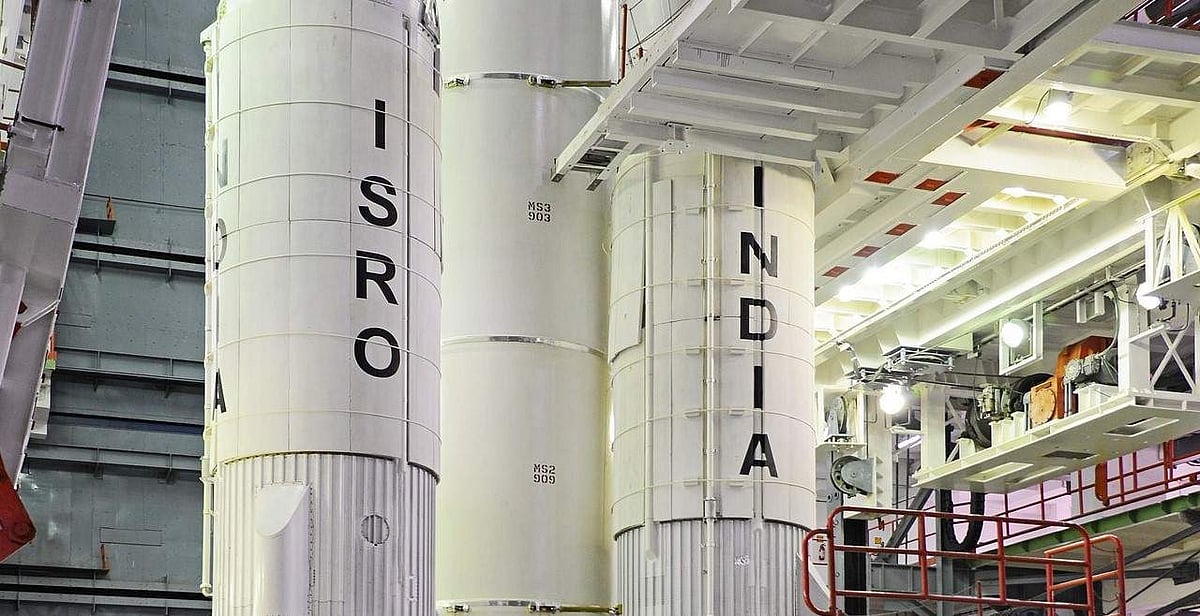
The Indian Space Research Organisation (ISRO) has strongly rejected reports and speculation suggesting that the country’s premier space agency is being privatised or that its role is being reduced as part of ongoing space-sector reforms. In an official clarification issued on September 6, ISRO described such claims as “completely baseless and incorrect” and categorically stated that the organisation will neither be privatised nor have its importance diminished.
The clarification comes amid concerns reportedly circulating among sections of ISRO’s workforce over the growing involvement of private companies in India’s space programme and the possibility of transferring some mature technologies, manufacturing activities and operational responsibilities to industry.
ISRO said these concerns stem from a misunderstanding of the government’s broader space reforms. According to the agency, the objective is not to replace ISRO with private players but to build a larger and more capable Indian space ecosystem in which government institutions, private companies, start-ups and academic institutions complement one another.
ISRO says its core role will remain intact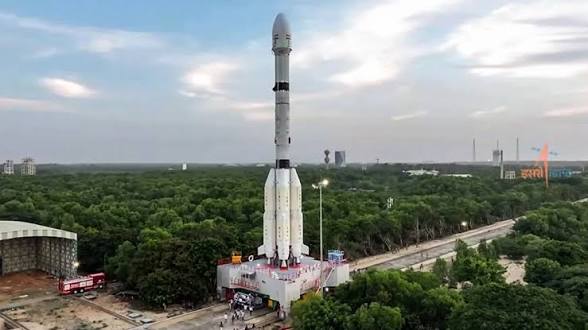
In its statement, ISRO made clear that it will continue to remain India’s principal institution for advanced space research and technology development, national and strategic missions, space science and exploration, and critical and frontier space capabilities.
The agency argued that greater private-sector participation should not be interpreted as a withdrawal by ISRO. Instead, it would allow the organisation’s scientific and technical workforce to concentrate more heavily on complex missions and next-generation technologies.
“Participation of private sector in space is not about reducing ISRO’s role,” the organisation said, adding that the changes are about expanding the scale and structure of India’s overall space ecosystem.
The clarification is particularly significant because India has been steadily opening its space sector to private participation since reforms began in 2020.
What are the space-sector reforms?
India’s space reforms were initiated in 2020 and subsequently institutionalised through the Indian Space Policy 2023. The government has also liberalised foreign direct investment rules and established mechanisms to facilitate greater participation by non-government entities.
The reforms aim to allow private companies to participate across the space value chain, including satellite manufacturing, launch vehicles, propulsion systems, ground infrastructure and space-based applications.
ISRO maintains that these changes should be viewed as “ecosystem expansion and capability multiplication” rather than privatisation.
The organisation has already transferred several mature technologies to industry. According to ISRO, transferring a technology to a private company for large-scale production does not mean that the space agency is abandoning that field. Instead, it allows industry to manufacture and commercialise established technologies while ISRO turns its attention towards more advanced areas of research.
Private companies to scale mature technologies
The emerging division of responsibilities is intended to allow Indian industry to take up technologies that have already reached a mature stage.
Private companies can bring additional investment, manufacturing capacity, commercial expertise and access to global markets. ISRO, meanwhile, can focus its resources on developing technologies that are still at the frontier of scientific and engineering research.
The model is expected to be particularly important as India seeks to expand its space economy and compete more strongly in the global commercial space market.
According to ISRO, the reforms have already contributed to the emergence of a much larger private ecosystem. The agency said that India had only a handful of space start-ups in 2020, whereas the country now has more than 450, operating in areas ranging from launch vehicles and satellites to propulsion, Earth observation, communications and space applications.
Critical infrastructure will remain under government control
ISRO also sought to address concerns over national security and ownership of strategic assets.
The agency said that ownership and control of critical national space infrastructure and strategic capabilities will continue to remain with the government. Private participation in operations and services may be permitted where appropriate, but such activities will remain subject to national-security, safety and regulatory requirements.
This distinction is important because ISRO handles several programmes with direct strategic and national-security implications. The agency’s statement indicates that the reforms are designed to broaden commercial participation without transferring control of nationally critical capabilities.
Reassurance amid concerns within ISRO
The clarification also appears aimed at reassuring ISRO employees and scientists amid concerns about how the reforms could affect the organisation’s future responsibilities.
Recent reports had suggested apprehension among sections of the workforce over a possible shift in ISRO’s responsibilities and greater reliance on private and state-run enterprises for manufacturing and operations. Reuters reported that ISRO leadership sought to reassure employees and the public that the agency would remain the country’s primary institution for space research and technology.
ISRO’s latest statement therefore attempts to draw a clear distinction between privatisation and greater private-sector participation.
Read more like this:
- Free AI tools for daily use: रोजमर्रा के काम आसान करने वाले 10 टूल
- PM Modi Virtually Inaugurates BAPS Swaminarayan Temple Near Paris, Says India-France Ties Have Reached New Heights
- भारत के UN मानचित्र बयान के एक दिन बाद पाकिस्तान का फिर जम्मू-कश्मीर राग, नई दिल्ली के दावे को बताया ‘बेबुनियाद’
A new phase for India’s space programme
The debate comes at a time when India is seeking to significantly expand its space capabilities. The country has developed an increasingly diverse space industry, with start-ups working alongside established government institutions.
ISRO has said that this broader ecosystem will help increase manufacturing capacity, accelerate innovation and create opportunities for skilled professionals. At the same time, the organisation believes its scientists and engineers will be able to devote more time to ambitious missions and advanced technologies.The agency’s position is that the ultimate objective is not to reduce government involvement but to multiply India’s overall space capabilities.
Conclusion
ISRO’s strong rejection of privatisation claims has sought to put an end to speculation over the future of India’s premier space agency. The organisation has categorically stated that it will not be privatised and that its importance will not be diminished.
Instead, ISRO says India is entering a new phase in which private companies, start-ups and academic institutions will play a larger role in scaling mature technologies and expanding commercial capabilities.
For ISRO, the stated goal is to focus increasingly on advanced research, strategic missions, space science and frontier technologies while allowing Indian industry to handle activities that have already reached technological maturity.
The success of this model will ultimately depend on how effectively responsibilities are divided, how national-security interests are protected and whether private participation genuinely complements rather than weakens India’s public-sector space capabilities. For now, ISRO’s message is unequivocal: space-sector reforms are about expanding India’s space ecosystem, not privatising ISRO.