Join
Join
 Shorts

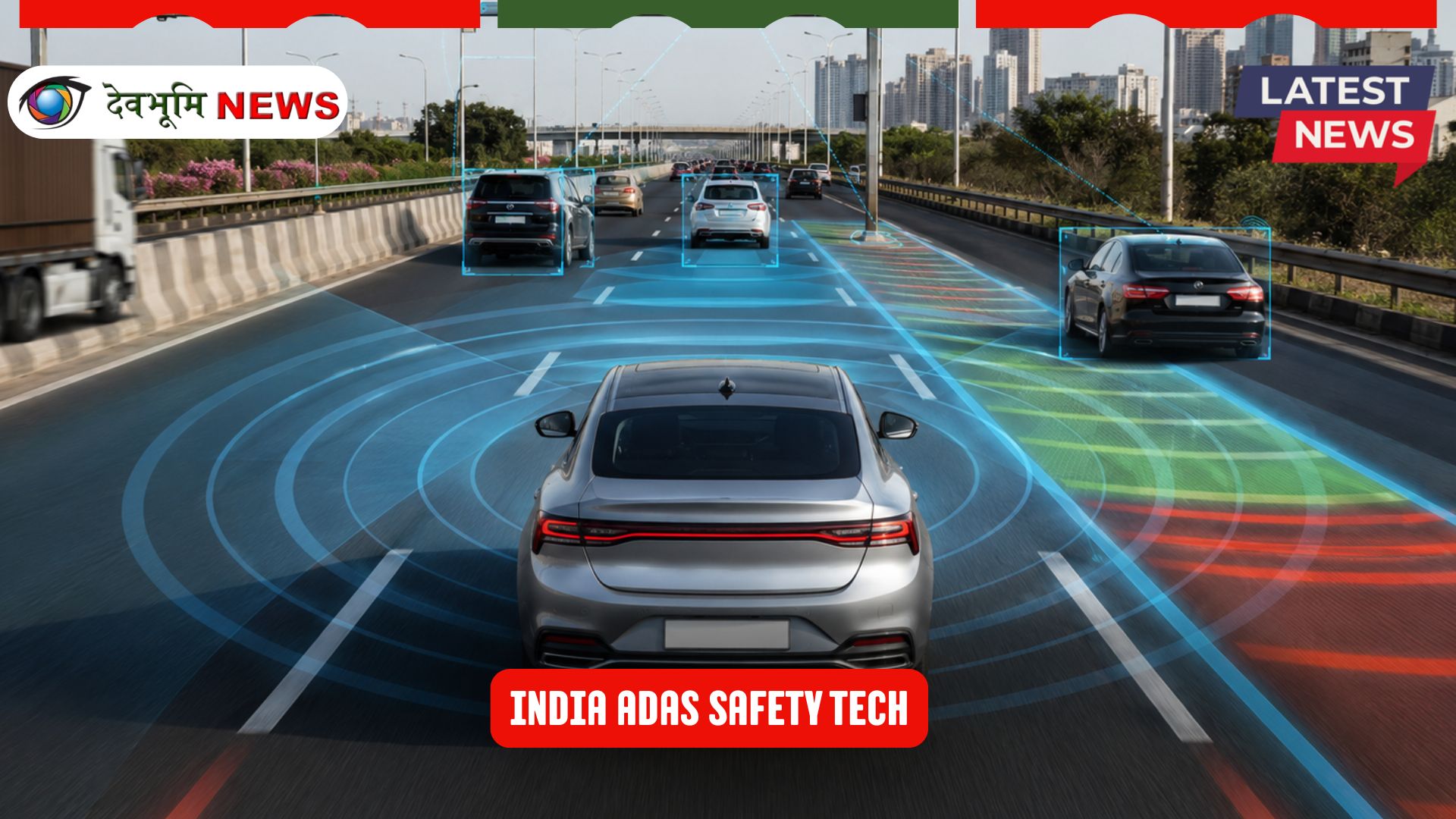
India ADAS safety tech may soon get a serious push after the government removed licensing requirements for key vehicle safety spectrum bands. In simple words, carmakers may now find it easier to bring radar-based safety systems and connected vehicle technology to Indian roads.
According to Reuters, India has scrapped licensing requirements for radio spectrum used by crash-avoidance and self-driving systems. The government waived licence requirements for radar sensors in the 77GHz to 81GHz band and vehicle communication systems in the 5.9GHz band.
That may sound like boring telecom paperwork, but it could be one of the most important car safety updates of 2026. Sometimes, the biggest road safety news does not arrive with a loud exhaust. It arrives as a government notification.
What Changed For India ADAS Safety Tech?
The big update for India ADAS safety tech is that automakers and suppliers no longer need separate spectrum licensing for certain vehicle safety technologies. Reuters reported that the move aligns India with standards used in the US and European Union, allowing companies to use standardised hardware instead of costlier India-specific systems.
Economic Times also reported that the government has exempted devices operating in the 5.9GHz and 77-81GHz radio frequency bands from traditional licensing requirements.
This could reduce friction for carmakers. And in the auto industry, reducing friction is usually good — unless we are talking about tyres, in which case friction is literally the plan.
India ADAS Safety Tech and 77-81GHz Radar
The India ADAS safety tech story starts with radar. Radar sensors help cars detect objects, measure distance, track movement, and support features such as adaptive cruise control, emergency braking, and blind-spot monitoring. Reuters specifically noted that radar sensors form a foundation for autonomous driving and several driver-assistance systems.
In India, this matters because traffic is not always predictable. A car may face pedestrians, two-wheelers, cattle, sudden braking, wrong-side driving, and the occasional uncle crossing the road with the confidence of a Supreme Court order.
ADAS cannot fix bad driving culture overnight, but it can add another layer of protection. And sometimes, that one extra layer is the difference between a close call and a crash.
India ADAS Safety Tech and 5.9GHz V2X
The second part of India ADAS safety tech is V2X, or vehicle-to-everything communication. V2X allows vehicles to communicate with other vehicles, road infrastructure, traffic systems, and possibly emergency services.
Reuters explained that V2X systems can warn drivers about hazards beyond direct line of sight, such as a vehicle braking around a blind curve or an approaching ambulance.
This is where things get exciting. Radar sees what is nearby. V2X can warn about what is coming. One is like your eyes. The other is like a friend calling ahead and saying, “Bro, slow down, chaos is waiting after the turn.”
Why This Rule Could Help Indian Car Buyers
The India ADAS safety tech rule could help buyers in three big ways.
First, it may make advanced safety hardware easier and cheaper for manufacturers to offer. Reuters noted that standardised hardware could lower costs and speed up adoption.
Second, it could push ADAS beyond luxury cars. Right now, many radar-based features are found in premium models. If regulatory barriers reduce, mass-market brands may be more comfortable offering these systems in mid-range vehicles.
Third, it could improve competition. Once one brand starts offering better safety tech, rivals usually follow. In India, nothing motivates carmakers like another brand advertising “segment-first” in bold letters.
Which Companies Could Benefit?
The India ADAS safety tech move could benefit both global and domestic automakers. Reuters mentioned Mercedes-Benz and BMW among luxury brands that already offer radar-based driver assistance abroad. It also noted that domestic players such as Maruti Suzuki, Tata Motors, and Mahindra & Mahindra could more easily introduce advanced driver-assistance systems.
Suppliers may also gain. Bosch, Continental, and Qualcomm were among the companies Reuters listed as potential beneficiaries of the change.
That means this is not only a carmaker story. It is also a supplier, chip, sensor, and software story. Modern cars are no longer just engines and wheels. They are rolling computers that also carry groceries.
Why India Needs Better Safety Tech
The India ADAS safety tech update comes at a time when road safety remains a serious concern. Reuters reported that India recorded more than 177,000 deaths in nearly half a million road accidents in 2024, based on the latest government data cited in its report.
That number is not just a statistic. It is families, commutes, highways, festivals, work trips, and ordinary days that went wrong. The deep thought here is simple: a safer car is not only about protecting the person who bought it. It is about protecting everyone sharing the road.
Challenges Still Remain
The India ADAS safety tech rule is a strong step, but it is not magic. ADAS systems need proper calibration, road markings, driver education, maintenance, and responsible use. A driver cannot switch on adaptive cruise control and then mentally leave the vehicle like it is a Netflix episode.
Indian roads also create unique challenges. Lane markings can disappear. Traffic can be mixed. Two-wheelers can appear from unexpected angles. Animals may enter highways. Pedestrians may cross wherever life feels convenient.
So, while ADAS and V2X can help, they must be adapted carefully for Indian conditions. Technology should assist drivers, not give them false confidence.
Read More
- Elon Musk First Trillionaire: The headline that sounds fake, but isn’t
- Syrup दवाओं पर बड़ा फैसला: अब इन Syrup Medicines को खरीदने के लिए डॉक्टर का प्रिस्क्रिप्शन होगा अनिवार्य
- समाजवादी पार्टी में टूट की अटकलें तेज: क्या अखिलेश यादव की SP में होने वाला है बड़ा विभाजन?
Final Verdict
India ADAS safety tech has received a major boost with the government removing licensing requirements for 77-81GHz radar and 5.9GHz V2X systems. This could make it easier for automakers to introduce advanced driver assistance, crash-avoidance features, and connected vehicle systems in India.
For buyers, this could mean safer cars in the coming years. For carmakers, it means fewer regulatory hurdles. For India’s roads, it means a chance to move from “drive carefully” posters to actual technology that helps prevent crashes.
The best safety feature is still a responsible driver. But if radar, V2X, emergency braking, and blind-spot alerts can help that driver avoid one bad moment, then this rule is more than technical reform. It is progress with seatbelts on.