Join
Join
 Shorts

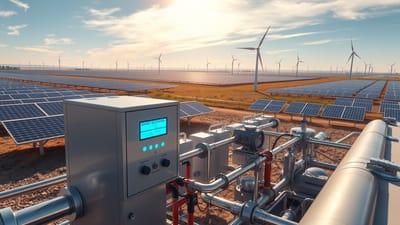
India has achieved a significant milestone in clean energy innovation by inaugurating the world’s first hydrogen production facility that uses nuclear reactor heat instead of electricity to produce hydrogen. Located at the Indira Gandhi Centre for Atomic Research (IGCAR) in Kalpakkam, Tamil Nadu, the pilot plant represents a major advancement in hydrogen technology and places India at the forefront of next-generation clean energy solutions.
The project is expected to play a crucial role in reducing carbon emissions, improving energy efficiency, and supporting India’s long-term energy security goals.
For India A World-First Achievement
Unlike conventional hydrogen plants that rely on electricity to split water molecules through electrolysis, India’s new facility uses the high-temperature heat generated by a nuclear reactor. This makes the production process significantly more energy-efficient because it eliminates the need for large amounts of electrical power.
Scientists describe the project as the first successful demonstration anywhere in the world of producing hydrogen using the Copper-Chlorine (Cu-Cl) thermochemical cycle powered directly by nuclear heat.
Built at Kalpakkam’s Nuclear Research Centre in Tamilnadu- India 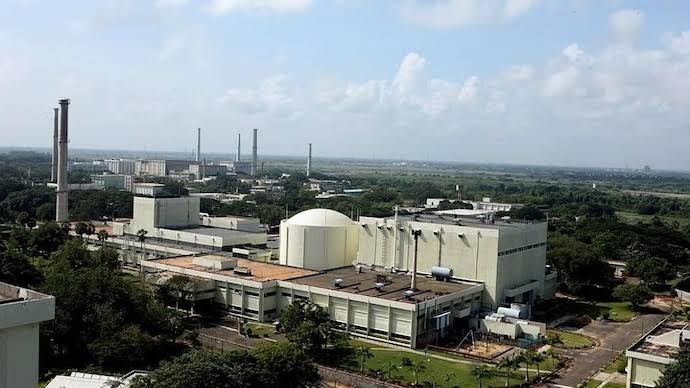
The hydrogen production facility has been established at the Fast Breeder Test Reactor (FBTR) complex inside the Indira Gandhi Centre for Atomic Research in Kalpakkam.
The project has been developed under the Department of Atomic Energy (DAE) as part of India’s broader clean energy strategy. The reactor, operational for decades as a research facility, is now demonstrating an entirely new application beyond electricity generation by supplying process heat for hydrogen production.
How Does the Technology Work?
Traditional green hydrogen plants use renewable electricity from solar or wind farms to split water into hydrogen and oxygen through electrolysis.
India’s new plant follows a completely different approach.
Instead of electricity, it uses reactor heat to drive a sequence of chemical reactions known as the Copper-Chlorine thermochemical cycle. In this process, copper and chlorine compounds undergo multiple reactions that ultimately separate hydrogen from water.
What Is Pink Hydrogen for India?
The hydrogen produced at the Kalpakkam facility is classified as pink hydrogen.
Hydrogen is commonly categorized according to its production method:
– Grey hydrogen: Produced using natural gas, resulting in high carbon emissions.
– Blue hydrogen: Produced from fossil fuels with carbon capture technology.
– Green hydrogen: Produced using renewable electricity such as solar or wind.
– Pink hydrogen: Produced using nuclear energy.
Since nuclear reactors generate heat without emitting carbon dioxide during operation, pink hydrogen offers environmental benefits comparable to green hydrogen while providing continuous production independent of weather conditions.
Why This Matters for India ?
Hydrogen is increasingly viewed as one of the most important clean fuels for the future because it can replace fossil fuels in sectors where electrification is difficult.
These include:
Steel manufacturing
Fertilizer production
Petroleum refining
Heavy transport
Shipping
Aviation
Long-duration energy storage
India’s breakthrough could significantly lower production costs and improve the commercial viability of hydrogen-based industries.
Boost to India’s National Green Hydrogen Mission
The project aligns closely with India’s ambitious National Green Hydrogen Mission, which aims to make the country a global hub for hydrogen production and exports.
Although the Kalpakkam facility produces pink hydrogen rather than green hydrogen, scientists note that both technologies generate hydrogen with very low carbon emissions.
Officials believe nuclear-powered hydrogen production can complement renewable energy projects by ensuring uninterrupted hydrogen generation even when solar or wind resources are unavailable.
A Milestone for India’s Nuclear Programme
The hydrogen plant also represents a major achievement for India’s long-term nuclear energy programme.
The facility has been integrated with the Fast Breeder Test Reactor, an important component of India’s three-stage nuclear strategy envisioned by physicist Homi J. Bhabha.
Fast breeder reactors are designed to maximize fuel efficiency and support India’s long-term objective of utilizing its abundant thorium reserves.
The successful integration of hydrogen production with reactor heat demonstrates an entirely new industrial application for nuclear technology beyond electricity generation.
Current Capacity and Future Plans
The present facility serves primarily as a technology demonstration project.
According to scientists associated with the project, the pilot plant currently has the capacity to produce approximately 150 normal litres of hydrogen per hour.
The Department of Atomic Energy is already planning a much larger commercial-scale facility capable of producing nearly 3,000 normal litres per hour, which could pave the way for industrial applications of nuclear-powered hydrogen production.
Advantages Over Conventional Electrolysis
Experts identify several benefits of using nuclear heat instead of electricity:
– Lower overall energy consumption.
– Continuous 24-hour hydrogen production.
– Reduced dependence on weather conditions.
– Better energy efficiency.
– Lower long-term production costs.
– Near-zero carbon emissions.
Global Significance
Countries around the world—including the United States, Canada, Japan, France, and South Korea—have researched thermochemical hydrogen production for years.
However, India has become the first country to successfully commission a functioning facility using reactor heat for this purpose.
Energy experts believe this achievement could influence future global hydrogen technologies and encourage other nations to integrate hydrogen production with nuclear energy infrastructure.
Challenges Ahead
While the technological breakthrough has been widely welcomed, experts caution that commercial deployment will require significant investments.
Scaling the technology to industrial levels will involve:
– Larger hydrogen production plants.
– Advanced safety systems.
– Industrial hydrogen storage.
– Pipeline infrastructure.
– Cost optimization.
– Regulatory approvals.
Read more like this:
- Supreme Court to Hear Plea Alleging TVK Ministers Influenced Witnesses in Karur Stampede Case
- 5G कैसे काम करता है? मोबाइल इंटरनेट की पूरी टेक्नोलॉजी समझें
- क्लॉड सॉनेट 5 हुआ फ्री: Anthropic के नए AI मॉडल की पूरी जानकारी (2026)
Strengthening India’s Clean Energy Leadership
The inauguration of the Kalpakkam hydrogen facility comes as India continues expanding its renewable energy capacity, nuclear programme, and clean fuel initiatives.
The government has identified hydrogen as one of the pillars of India’s future energy economy, alongside solar, wind, nuclear, and battery storage technologies.
Industry observers believe combining nuclear energy with hydrogen production could help India reduce fossil fuel imports while supporting decarbonisation across multiple industrial sectors.
Conclusion
India’s launch of the world’s first hydrogen production facility powered directly by nuclear reactor heat marks a landmark achievement in global clean energy innovation. By replacing electricity with nuclear process heat through the Copper-Chlorine thermochemical cycle, the country has demonstrated a potentially more efficient and sustainable pathway for hydrogen production.
Although the current project is a pilot facility, its successful operation could pave the way for commercial-scale nuclear hydrogen plants in the coming years. As nations worldwide search for reliable low-carbon energy solutions, India’s breakthrough positions it as a global leader in next-generation hydrogen technology and reinforces its ambition to become a major player in the international clean energy transition.