Join
 Shorts

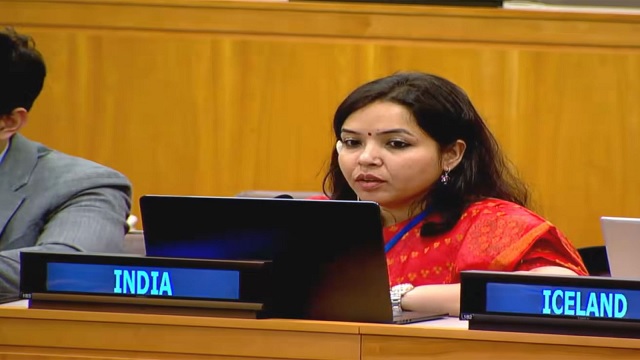
India has strongly criticised Pakistan at the United Nations over its remarks on minority rights, asserting that Islamabad has no moral authority to lecture New Delhi on the protection of minorities. The sharp response reflects the continuing diplomatic tensions between the two neighbouring countries, particularly over human rights, religious freedom and the treatment of minority communities.
India’s statement at the United Nations comes amid recurring exchanges between the two countries on issues concerning democracy, human rights and the protection of vulnerable groups. New Delhi has consistently maintained that Pakistan should address its own human rights concerns rather than make allegations against India.
India Rejects Pakistan’s Remarks
Responding to Pakistan’s comments on minority rights, India reportedly challenged Islamabad’s credibility and questioned its record on the treatment of religious and ethnic minorities.
The Indian position emphasised that a country facing serious concerns over the rights and security of minority communities cannot claim the authority to lecture another nation on the same subject. New Delhi has repeatedly used international platforms to highlight what it describes as discrimination, persecution and restrictions faced by minorities in Pakistan.
India’s response also underlined the importance of examining human rights claims objectively and consistently, without using them as instruments of political pressure or diplomatic confrontation.
However, the specific context of the latest exchange, including the full statements delivered by both delegations, is important for understanding the precise arguments made at the United Nations.
Minority Rights Become a Diplomatic Flashpoint
Minority rights remain a sensitive issue in relations between India and Pakistan. Both countries have frequently accused each other of failing to adequately protect vulnerable communities.
India has raised concerns over the treatment of religious minorities in Pakistan, including reports involving attacks on places of worship, allegations of forced conversions, discrimination and violence against members of minority communities. Such issues have periodically featured in India’s diplomatic statements and international interventions.
Pakistan, meanwhile, has often raised questions about the treatment of minorities in India, particularly in discussions concerning religious freedom, communal tensions and the rights of vulnerable groups.
New Delhi has rejected several of Islamabad’s allegations, describing them as politically motivated and an attempt to divert attention from Pakistan’s domestic challenges.
The latest exchange at the United Nations demonstrates how human rights issues can become part of the broader diplomatic contest between the two countries.
India’s Stand at the United Nations
India has traditionally argued that human rights should be discussed through credible evidence, impartial assessment and respect for national sovereignty. It has also maintained that international institutions should not be used to advance selective political narratives.
For New Delhi, the credibility of a country’s statements on minority rights depends partly on its own record and willingness to address concerns within its borders.
At the same time, human rights standards apply to all countries, and allegations involving the treatment of minorities require careful examination based on reliable evidence. International scrutiny of such issues is an important part of the wider global human rights framework.
The United Nations provides a platform where member states can raise concerns, respond to criticism and explain their positions. However, sharply worded exchanges can also reflect the political rivalry between countries rather than produce immediate progress on the underlying issues.
A Long History of India-Pakistan Disputes
India and Pakistan have experienced decades of political tension since their independence and Partition in 1947. Disputes over terrorism, Jammu and Kashmir, cross-border security and diplomatic relations have repeatedly strained ties.
Human rights allegations have become another recurring feature of this rivalry. Both governments have sought to challenge the international credibility of the other, often using multilateral forums to present their respective positions.
Such exchanges can attract international attention, but their long-term significance depends on whether they lead to meaningful engagement, greater transparency and improved protection for affected communities.
Why the Issue Matters
The protection of minorities is a fundamental human rights concern. Religious and ethnic communities should be able to practise their beliefs, preserve their cultural identities and participate in public life without fear of discrimination or violence.
For India and Pakistan, the issue carries particular importance because both countries have diverse populations and complex social histories.
Diplomatic criticism may highlight genuine concerns, but lasting improvements require effective law enforcement, accountability for violence, equal protection under the law and safeguards for vulnerable communities.
International organisations can help encourage dialogue and monitor human rights commitments, provided that concerns are assessed consistently and on the basis of credible information.
Read more like this:
- RTI का खुलासा: कैबिनेट सचिव ने दो चुनाव आयुक्तों के पत्रों की पावती मुख्य चुनाव आयुक्त को ‘सूचनार्थ’ भेजी
- अनाहत सिंह ने स्क्वैश जगत को किया हैरान, अपनी आदर्श और 8 बार की वर्ल्ड चैंपियन शेरबिनी को दी मात
Conclusion
India’s reported response at the United Nations, declaring that Pakistan has no standing to lecture it on minority rights, underscores the continuing friction between New Delhi and Islamabad.
The exchange highlights the competing narratives the two countries present on the international stage. It also reinforces the importance of applying human rights principles consistently, regardless of political boundaries.
Ultimately, the protection of minorities should remain a priority for every government. Rather than allowing the issue to become solely a source of diplomatic confrontation, both countries face the challenge of ensuring that all communities within their territories enjoy security, dignity, equality and freedom.