Join
 Shorts

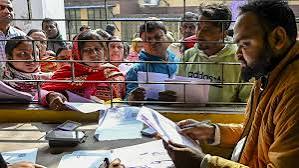
The Supreme Court of India has directed the Election Commission of India (ECI) to examine allegations of irregularities and misuse of Form 7 applications during the Special Intensive Revision (SIR) of electoral rolls in Uttar Pradesh. The court has also asked the poll panel to take necessary corrective measures and submit a compliance report after examining the facts.
The development is significant because the controversy concerns the possible wrongful deletion of voters’ names from electoral rolls, raising serious questions about electoral transparency, democratic rights and the impartial functioning of election authorities.
What Is Form 7?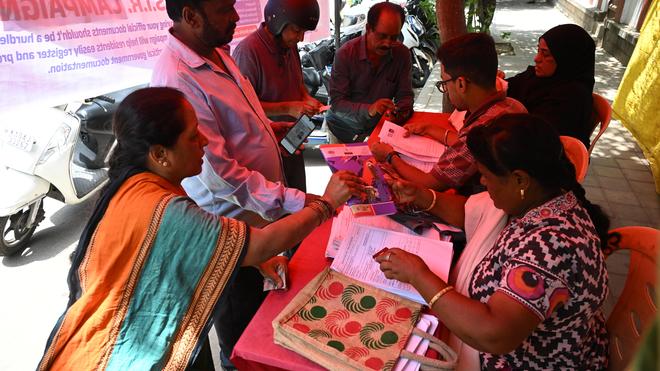
Form 7 is an official application prescribed under the Registration of Electors Rules, 1960. It is used to raise objections to the inclusion of a person’s name in the electoral roll or to request the deletion of an existing entry on specified grounds.
The form is an important mechanism for maintaining accurate voter lists by removing duplicate entries, deceased voters and individuals who are no longer eligible to remain registered at a particular address.
However, allegations of its misuse have raised concerns that this legal provision could be exploited to target genuine voters and prevent them from exercising their constitutional right to vote.
Allegations of Mass Misuse in Uttar Pradesh
During the hearing, petitioners alleged that Form 7 applications had been submitted in large numbers with the intention of removing voters belonging to a particular community from the electoral rolls.
The petitioners’ counsel informed the Supreme Court that 32 Form 7 applications had reportedly been submitted against members of a particular community in one Assembly constituency.
It was further alleged that two applications on record carried the signatures of Booth Level Officers (BLOs), raising questions about the authenticity of the documents and the procedure followed in submitting them.
The petitioners also pointed towards alleged inconsistencies in the Election Commission’s affidavit and questioned why similar complaints had resulted in directions for FIR registration in Telangana and Karnataka, while comparable action had not been taken in Uttar Pradesh.
These allegations have brought the issue of voter protection and accountability of election officials into the national spotlight.
Election Commission’s Response
Representing the Election Commission of India, senior advocate D.S. Naidu acknowledged before the Supreme Court that bulk Form 7 applications had been submitted.
However, he clarified that the Commission’s officials had examined and cross-checked the applications and found them to be false. According to him, no action had been taken on those applications to delete voters’ names.
He also submitted that the Commission could examine specific allegations if formal complaints and supporting details were provided.
The ECI’s response indicates that scrutiny mechanisms were used to prevent questionable applications from resulting in wrongful deletions. Nevertheless, the petitioners have sought further investigation into the alleged irregularities.
Supreme Court’s Directions
A three-judge bench headed by Chief Justice of India Surya Kant, along with Justices Joymalya Bagchi and V. Mohana, heard the matter on October 30, 2026.
The bench directed the petitioners to submit a written note detailing the unresolved irregularities to the senior counsel representing the Election Commission.
The court instructed the ECI to examine the factual aspects of the allegations, take necessary corrective steps and file a compliance report.
This direction places responsibility on the Election Commission to investigate the specific complaints and ensure that any established irregularities are appropriately addressed.
Importantly, the court has not declared the allegations proven. Its intervention is aimed at ensuring that the concerns receive proper examination.
Importance of the Special Intensive Revision
The Special Intensive Revision is an exercise undertaken to verify and update electoral rolls. Its objective is to ensure that voter lists remain accurate, comprehensive and free from duplicate or ineligible entries.
However, such an exercise must be conducted with transparency and adequate safeguards. Any incorrect deletion of a genuine voter’s name can directly affect that person’s ability to participate in elections.
The Form 7 controversy highlights the need for proper verification of applications, transparent procedures and opportunities for affected voters to present their objections before a final decision is taken.
Impact on Democracy and Electoral Integrity
The right to vote is a fundamental pillar of representative democracy and is closely connected with the constitutional principle of universal adult suffrage under Article 326.
The controversy highlights several important concerns:
- Protection of voters: Genuine voters must not lose their voting rights because of fraudulent or unverified applications.
- Transparency: The process of adding and deleting names from electoral rolls must remain open, accountable and properly documented.
- Accountability: Officials and individuals responsible for submitting fraudulent applications must face appropriate action if wrongdoing is established.
- Public confidence: Fair and impartial electoral procedures are essential to maintaining citizens’ trust in democratic institutions.
- Judicial oversight: The judiciary plays an important role in ensuring that administrative authorities act within the framework of the law.
Way Forward
The Election Commission should conduct a thorough investigation into every specific complaint raised before the court. Digital verification, proper documentation, independent scrutiny and timely hearings can help prevent the misuse of Form 7.
The Commission must also ensure that no voter is removed without following the prescribed legal procedure, including notice and a reasonable opportunity to be heard.
Strict action should be considered against individuals found responsible for deliberately submitting false information or forged documents.
Read more like this:
- दिल्ली के मंगोलपुरी औद्योगिक क्षेत्र में भीषण आग का तांडव, जूता फैक्ट्री में 4 लोगों की दर्दनाक मौत; 2 गंभीर रूप से घायल
- ‘अखंड भारत के शिल्पकार’ सरदार पटेल को पीएम मोदी और अमित शाह ने किया नमन, 151वीं जयंती पर याद किया लौह पुरुष का योगदान
Conclusion
The Supreme Court’s direction to the Election Commission to examine allegations of Form 7 misuse is an important step towards protecting electoral integrity in Uttar Pradesh. Although the ECI has maintained that the questionable bulk applications were identified and not acted upon, the allegations require transparent and credible examination.
Ultimately, electoral roll revision should strengthen democracy rather than create obstacles for eligible voters. Ensuring that every genuine citizen can exercise the right to vote without fear of arbitrary deletion is essential for free, fair and trustworthy elections in India.