Join
 Shorts

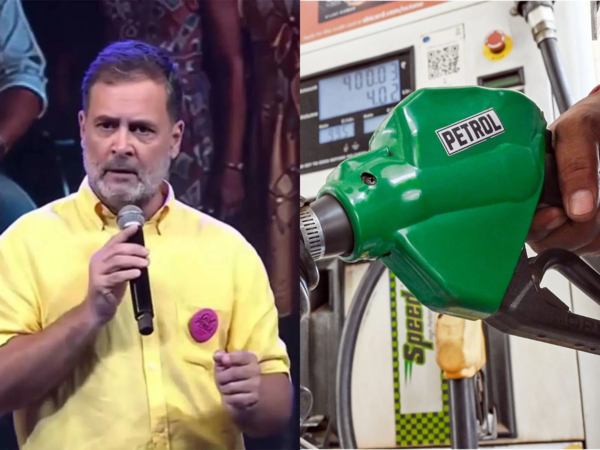
Rahul Gandhi Targets Modi Government Over E20 Petrol
A fresh political controversy has erupted over India’s ethanol-blended petrol programme after Congress leader and Leader of Opposition in the Lok Sabha, Rahul Gandhi, accused major oil companies of supplying petrol containing ethanol beyond the prescribed 20 per cent limit.
On November 7, 2026, Gandhi launched a sharp attack on the Narendra Modi government, referring to the controversy as “E20 turned into 420”. Citing laboratory test results from Karnataka, he alleged that 11 out of 14 petrol samples contained more than 20 per cent ethanol.
The allegations have raised questions about fuel quality, vehicle performance, consumer protection and the accountability of oil marketing companies.
Karnataka Laboratory Tests Reveal Higher Ethanol Levels
11 Out of 14 Samples Allegedly Exceeded the Limit
According to Rahul Gandhi, the Karnataka government collected petrol samples from seven districts and sent them to an accredited laboratory for testing.
The results reportedly showed that 11 of the 14 samples contained ethanol concentrations above the prescribed 20 per cent level.
Among the most significant findings were:
- Indian Oil Corporation (IOCL): 31.2 per cent ethanol.
- Hindustan Petroleum Corporation (HPCL): 30.5 per cent ethanol.
- Other samples from different fuel companies also reportedly exceeded the prescribed threshold.
The samples were collected from Bengaluru, Kolar, Chikkaballapura, Bengaluru Rural, Ramanagara, Mangaluru and Tumakuru.
Karnataka Food and Civil Supplies Minister Rizwan Arshad also raised concerns over the findings, demanding accountability from oil marketing companies and action from the central government.
Government and Private Fuel Companies Named
Gandhi alleged that the issue was not limited to government-owned oil companies. He also named Bharat Petroleum Corporation Limited (BPCL), Nayara Energy and Shell among the companies whose fuel samples were included in the testing exercise.
He further questioned why the companies’ internal laboratory reports allegedly did not disclose the actual ethanol concentration.
Why Has Rahul Gandhi Called It ‘420’?
Allegations of Petrol Theft From Consumers
The expression “420” used by Rahul Gandhi refers to Section 420 of the former Indian Penal Code, which dealt with cheating.
Through the phrase, Gandhi attempted to highlight what he described as a financial loss to ordinary consumers.
His argument is that motorists are paying for petrol advertised under the E20 standard, but if the ethanol concentration exceeds the prescribed level, consumers may not be receiving fuel that meets the required specifications.
He questioned whether motorists were being adequately informed about the actual composition of the petrol supplied at fuel stations.
Gandhi also demanded answers from Prime Minister Narendra Modi regarding the actual ethanol content of petrol sold across the country and the action proposed against companies found violating fuel standards.
What Is E20 Petrol and Why Is It Important?
Understanding the Ethanol-Blending Programme
E20 petrol is a blend containing approximately 20 per cent ethanol and 80 per cent petrol. Ethanol is an alcohol-based fuel generally produced from agricultural crops such as sugarcane and maize.
India has promoted ethanol blending to reduce its dependence on imported crude oil, improve energy security, support farmers and reduce certain vehicle emissions.
The programme has been expanded significantly under the Modi government, with the country achieving its 20 per cent blending target ahead of the original deadline.
However, maintaining the prescribed blending standards is essential. Under the relevant Bureau of Indian Standards specifications, E20 petrol is required to meet the prescribed ethanol-content range of 19–21 per cent.
Therefore, the reported findings of concentrations exceeding 30 per cent have raised serious questions that require independent verification.
Oil Companies Reject Karnataka’s Findings
Dispute Over Testing Procedures
The controversy has also triggered a response from India’s three major public-sector oil marketing companies: Indian Oil, Bharat Petroleum and Hindustan Petroleum.
The companies have disputed Karnataka’s reported findings, arguing that the testing was not conducted according to prescribed statutory and technical procedures.
In a joint statement, they maintained that their own tests of 56 samples collected in Karnataka showed ethanol concentrations between 19 and 20 per cent.
They also questioned the testing methodology and requested the Karnataka government to share its sampling records, laboratory reports and technical documentation.
The companies have proposed joint testing to establish the actual ethanol content.
This disagreement has created a major dispute between the Karnataka government and the central government-linked oil companies.
Impact on Consumers and Vehicle Owners
Concerns Over Mileage and Engine Performance
One of the biggest concerns surrounding excessive ethanol blending is its potential impact on vehicles.
Higher ethanol concentrations can affect fuel efficiency, mileage and the performance of certain engine components, particularly in vehicles that are not designed or calibrated for higher ethanol blends.
Even vehicles compatible with E20 may require fuel that complies with the prescribed specifications.
Consumers are therefore concerned about possible maintenance expenses, reduced mileage and long-term vehicle reliability if the allegations are confirmed.
Rahul Gandhi has also demanded clearer information at petrol pumps so that consumers understand the composition of the fuel they purchase.
Read more like this:
- Democratic Probes to Target Trump Allies and Donors: Family’s Crypto Ties to Pakistan, Kushner’s Deals Under Scrutiny
- सोनिया गांधी का बड़ा बयान: ‘भाजपा ने भारत की सामाजिक एकता, लोकतंत्र और संस्थाओं को पहुंचाया भारी नुकसान’
Conclusion: Transparency and Accountability Remain Key Issues
The E20 controversy has developed into a significant political and consumer-rights issue. Rahul Gandhi’s allegations have placed the government’s ethanol-blending programme and the functioning of oil marketing companies under renewed scrutiny.
While the Karnataka government’s reported laboratory findings suggest excessive ethanol concentrations in several samples, oil companies have challenged the testing procedures and defended the quality of their fuel.
The next crucial step will be transparent, independent and jointly supervised testing to establish the actual facts.
Ultimately, consumers deserve fuel that meets established quality standards, accurate information about its composition and accountability whenever violations are proven.
The controversy has also raised a larger question for the government: can India achieve its energy-security ambitions while ensuring that motorists are protected from financial losses and possible damage to their vehicles?