Join
Join
 Shorts

For the last few years, India’s car market has felt like a giant family WhatsApp group arguing about the future.
One side says EVs are inevitable.
Another says charging infrastructure still isn’t ready.
Someone brings up hydrogen.
Someone else says diesel was unfairly bullied out of existence.
Meanwhile, the average buyer just wants a car that doesn’t stress them out.
That’s exactly why the BYD DM-i Hybrid Technology India launch suddenly feels important.
After months of speculation, BYD India has officially started teasing its “DM-i Super Plug-in Hybrid” technology on social media, confirming that the company’s next big India move will involve plug-in hybrid SUVs instead of only full EVs.
And honestly, this feels less like a market experiment and more like BYD reading the room perfectly.
Because while Indians increasingly love the idea of electric driving, many still don’t fully trust public charging infrastructure outside major cities. A plug-in hybrid quietly solves that anxiety without dragging buyers back into traditional petrol-only ownership.
It’s basically an EV with commitment issues.
And right now, that might be exactly what Indian buyers want.
What Exactly Is DM-i Hybrid Technology?


Traditional hybrids usually behave like petrol cars getting occasional electric assistance.
BYD’s DM-i setup flips that logic completely.
In this system, the electric motor does most of the driving work, while the petrol engine mainly acts as a support unit or generator during certain conditions.
The result feels much closer to a full EV than a conventional hybrid.
Think of it like ordering butter chicken and realizing the naan somehow stole the entire show.
Unlike mild hybrids pretending to be futuristic because they switch off the engine at traffic lights, BYD’s DM-i technology uses genuinely large battery packs capable of meaningful electric-only driving.
For Indian urban users, that could realistically mean:
- Daily office commutes on electric power
- Overnight home charging
- Minimal fuel usage during city driving
- Petrol backup only for long-distance travel
And psychologically, that changes everything.
Range anxiety disappears because there’s always fuel backup. But fuel dependency also reduces dramatically because the car prioritizes electric propulsion first.
It’s a middle-ground solution that doesn’t feel like a compromise.
That’s rare in the automotive industry.
Why This Matters More Than Another EV Launch
The Indian EV conversation often becomes strangely ideological.
People discuss electrification like football fans defending rival clubs.
But consumers rarely move in ideological leaps. They move in practical baby steps.
That’s where plug-in hybrids suddenly start making enormous sense.
India’s charging infrastructure is improving quickly, especially in metro cities, but consistency still varies massively depending on where you live, travel, or park.
Apartment charging remains complicated for many buyers. Highway charging reliability still depends heavily on route planning. Smaller towns are progressing slower than urban hubs.
BYD seems to understand that reality better than many brands currently chasing all-electric dominance.
Instead of forcing buyers into a complete behavioral shift overnight, the company is offering something emotionally safer:
Electric driving without full dependency on charging infrastructure.
That balance may become incredibly powerful in India over the next few years.
BYD Sealion 6 DM-i Could Become the Star of the Segment


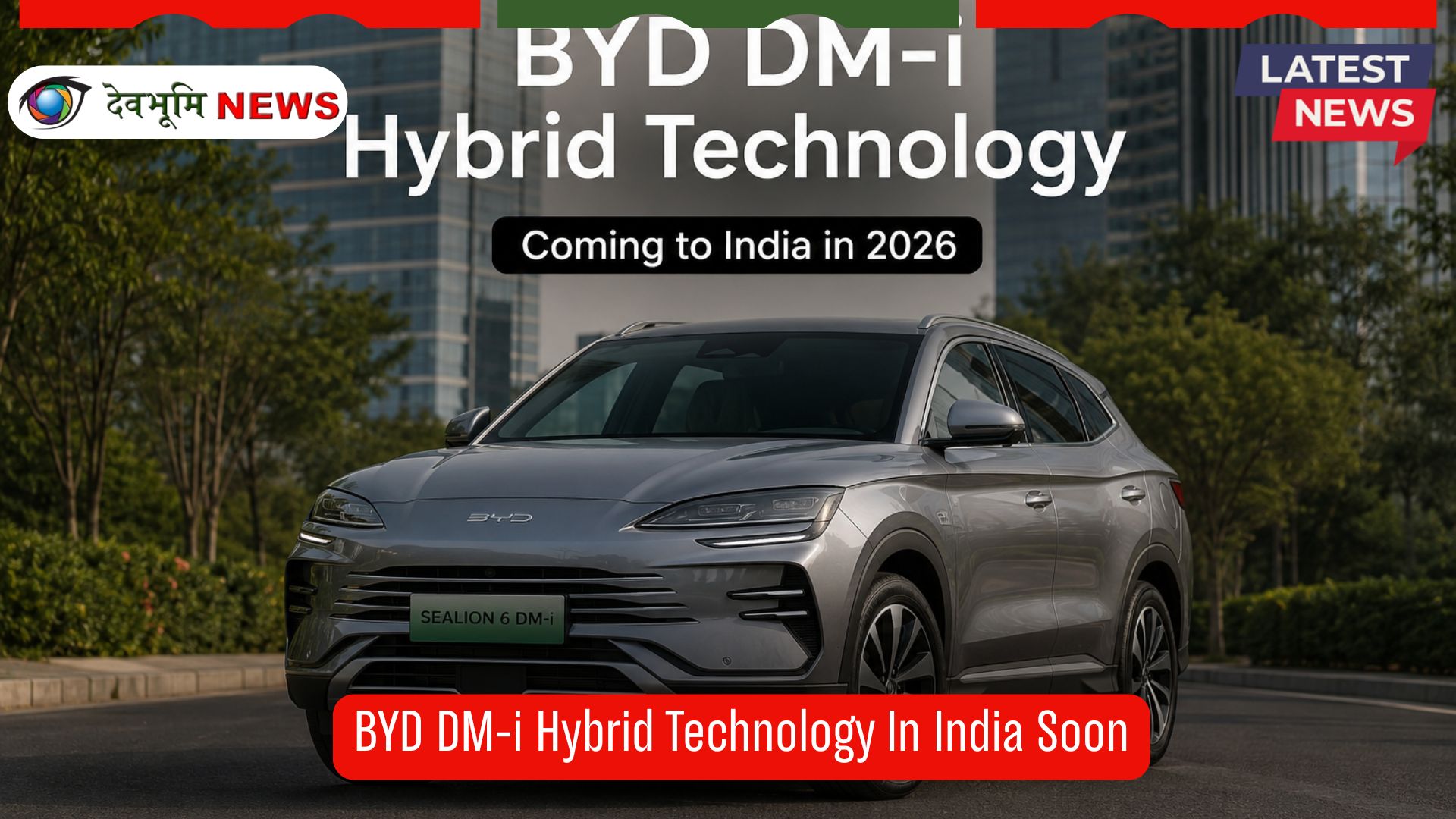
The most likely vehicle leading the BYD DM-i Hybrid Technology India rollout is the upcoming Sealion 6 DM-i SUV.
Globally, the Sealion 6 already sits as a premium electrified SUV with strong focus on comfort, technology, and efficiency.
And unlike many futuristic EVs trying desperately to look like spacecraft, the Sealion 6 actually looks approachable.
Clean lines. Premium stance. Aggressive enough to feel modern, but not so weird that your relatives start asking if it came from the future.
That matters more in India than many manufacturers realize.
Expected features include:
- Large rotating touchscreen
- ADAS safety suite
- Panoramic sunroof
- Connected car technology
- Premium cabin materials
- Plug-in hybrid powertrain
Globally, BYD already offers multiple DM-i configurations for the SUV.
| Variant | Powertrain | Output |
|---|---|---|
| FWD Variant | 1.5L Naturally Aspirated Petrol + Electric Motor | Approx. 218 hp |
| AWD Variant | 1.5L Turbo Petrol + Dual Motors | Approx. 344 hp |
And honestly, the AWD numbers are ridiculous for something being marketed as an efficient family hybrid.
Three hundred forty-four horsepower in a hybrid SUV used for school drops and grocery runs feels deeply unnecessary.
Which, ironically, makes it very desirable.
Real-World EV Range Is the Real Headline Here
One of the biggest problems with older plug-in hybrids was simple:
Their electric range felt symbolic.
Many offered tiny batteries capable of driving shorter distances than an average Gurgaon traffic jam.
BYD’s latest DM-i systems are different.
The global Sealion 06 DM-i recently debuted with claims of up to 310 km EV-only range under the CLTC testing cycle. Realistically, Indian conditions would produce lower numbers, but even conservative estimates remain impressive.
That changes how buyers use the vehicle daily.
Most urban users could realistically:
- Drive 60–120 km daily without fuel
- Charge overnight at home
- Use petrol mainly for weekend highway trips
At that point, the car behaves less like a hybrid and more like a flexible EV.
And flexibility is becoming the most valuable feature in modern mobility.
Not horsepower.
Not giant touchscreens.
Not ambient lighting with 64 colors nobody asked for.
Just convenience.
Expected Price and India Launch Details


With BYD India officially teasing its DM-i technology rollout, the launch timeline now feels much more immediate than earlier rumors suggested.
Industry tracking currently points toward a phased hybrid strategy for India.
The compact Atto 2 DM-i is expected to target the mass-premium market later, while the Sealion 6 DM-i could arrive first as a premium flagship offering.
And because these vehicles are expected to initially enter India through the CBU or premium SKD route, pricing will likely sit higher than early speculation suggested.
Here’s the revised expected pricing structure:
| Vehicle Model | Expected Powertrain | Estimated Price Range |
|---|---|---|
| BYD Atto 2 DM-i | 1.5L Petrol + 7.8kWh / 18kWh Battery | ₹18 lakh – ₹25 lakh |
| BYD Sealion 6 DM-i | 1.5L NA / Turbo Petrol + 18.3kWh / 26.6kWh Battery | ₹45 lakh – ₹50 lakh |
That places the Sealion 6 directly against premium electrified SUVs from:
- Toyota
- Hyundai
- MG Motor
- Kia
Why BYD Could Quietly Trouble the Entire Market
BYD’s biggest advantage isn’t just aggressive pricing or flashy technology.
It’s vertical integration.
The company manufactures its own famous Blade Batteries, controls massive parts of its supply chain, and has years of real-world EV scaling experience globally.
That matters enormously.
Because in the electrified era, batteries are no longer just components.
They are the engine, fuel tank, performance character, safety architecture, and ownership experience combined into one system sitting beneath the floor.
Most automakers still rely heavily on third-party battery suppliers.
BYD builds the ecosystem itself.
That level of control could become a massive competitive advantage as hybrid and EV adoption accelerates globally.
The Bigger Problem BYD Is Trying to Solve
There’s a deeper reason this launch feels important.
India’s automotive future probably won’t transition in one dramatic leap from petrol to fully electric overnight.
Realistically, it will happen in layers.
First efficient petrol.
Then hybrids.
Then plug-in hybrids.
Then widespread EV adoption.
And perhaps that’s the smartest way forward.
Because consumers don’t buy technology revolutions.
They buy reduced stress.
If BYD successfully delivers long electric driving range, strong fuel efficiency, premium comfort, and reliable ownership support in one package, the Sealion 6 DM-i could become one of the most significant premium SUV launches India has seen in years.
Not because it’s radical.
But because it feels practical.
And practicality usually wins eventually.
Read more
- Triumph Bonneville T120 India Review: Old Soul, New Brain
- पत्नी खाना न बनाए तो क्या पति तलाक ले सकता है? बॉम्बे हाई कोर्ट का बड़ा फैसला
- उत्तराखण्ड में जनगणना का पहला चरण खत्म, भवनों की संख्या में भारी इजाफा
Final Thoughts
The BYD DM-i Hybrid Technology India launch could become a major turning point for India’s premium SUV market in 2026.
The formula is compelling:
- EV-like driving experience
- Long electric-only commuting range
- Petrol backup for flexibility
- Premium SUV packaging
- Reduced charging anxiety
For buyers who want electrification without fully committing to infrastructure uncertainty, BYD’s plug-in hybrid strategy suddenly makes enormous sense.
Funny enough, the future of mobility may not belong to the loudest technology.
It may belong to the one that quietly fits into everyday life the easiest.
And right now, BYD seems to understand that better than most.