Join
Join
 Shorts

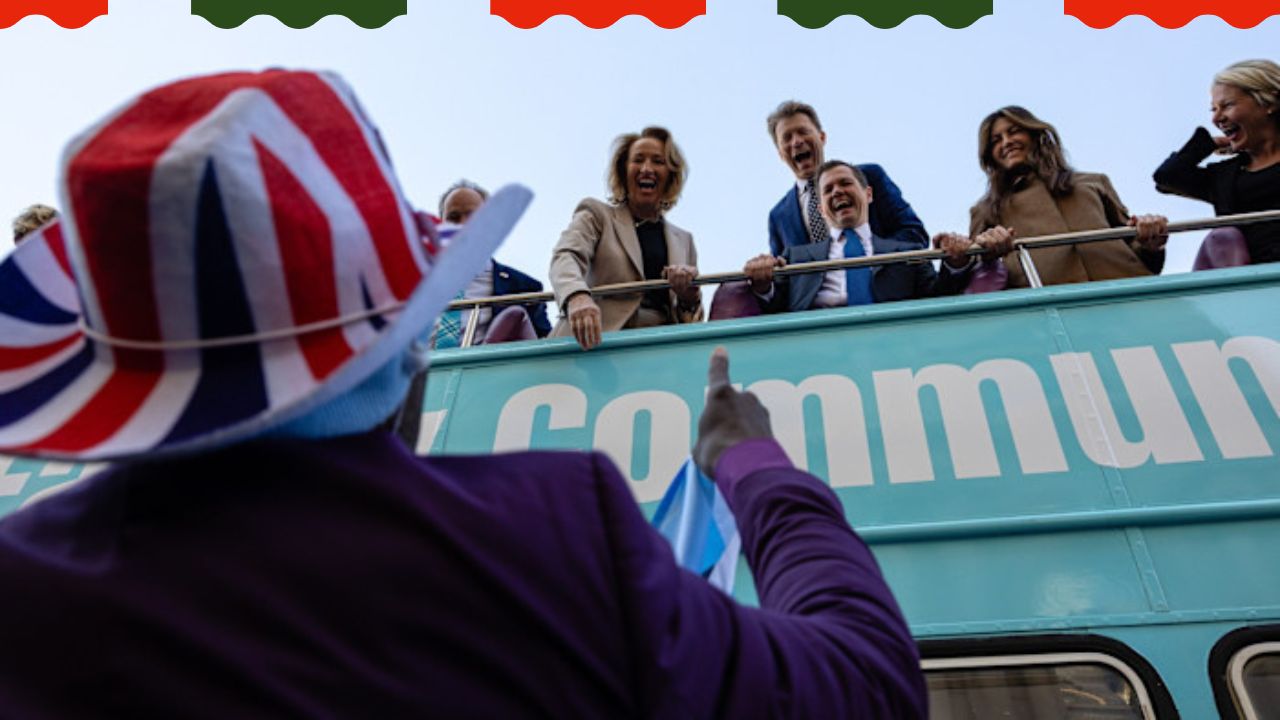
Britain’s Political Divide Deepens: Reform UK, Greens and Regional Parties Set to Reshape Elections: A huge number of people across Britain are expected to go to the polls for what could turn out to be an election that is among the biggest and most transformational local elections in modern history. These elections are likely to reveal the deterioration of the two-party system, with Labour as well as the Conservatives anticipating major losses as Reform UK, the Green Party, Plaid Cymru, and regional parties gain momentum across the nation.
The result could bring about significant political repercussions for Prime Minister Keir Starmer, whose administration is already under fire in the face of growing public discontent regarding migration, economic pressures, public services, and political instability.
Britain’s Political Landscape Is Fragmenting Rapidly
In the last decade, British politics has shifted drastically away from the traditional power in the hands of Labour and the Conservatives. People are increasingly shifting to other parties to find solutions to problems they feel mainstream politicians haven’t been able to tackle.
Recent polls and analysis of the campaign show that Britain isn’t anymore just between right and left. The political ties are determined by regional identity along with immigration and economic distress, as well as environmental concerns, and international policy debates.
This election may be a solid foundation for Britain as a multi-party system of politics.
Labour Faces Potential Electoral Disaster
Labour is fighting for the council of more than 2,500 seats across England. However, projections indicate that the party could lose nearly 1,900 seats, which could be the worst local election performance in its history.
Many old labor areas of the northern part of England, along with the Midlands, are in danger from Reform UK. The areas that were once thought to be part of Labor’s “Red Wall” are increasingly shifting to populist options.
Reform UK is expected to succeed in councils such as
- Barnsley
- Bradford
- Wigan
- Oldham
- Dudley
One of the most significant memorable moments of the elections may occur in the event that Labour is defeated in Sunderland, the council it has held since 1974.
Political analysts believe that the growing anger about immigration, pressures on the cost of living, and discontent with Westminster politics are driving a lot of former Labour supporters to Reform UK.
Reform UK Expands Across England
The party of Nigel Farage, Reform UK, is becoming one of the most significant winners of the election season.
The party is likely to be able to control several councils located in eastern England, including those in Norfolk as well as Suffolk. Reform is also focusing on the Essex County Council, located within Conservative Leader Kemi Badenoch’s political sphere of influence.
Within London, Reform UK could take control of Havering Borough Council while challenging Conservatives in boroughs like:
- Bexley
- Bromley
- Hillingdon
Even though Reform’s support is growing quickly, the experts think Labour might not be able to retain the boroughs of Barking and Dagenham at present.
Conservatives Struggle to Regain Public Trust
Despite a boost in performance under Kemi Badenoch’s leadership, the Conservatives remain in the face of anger from those who are dissatisfied with decades of political instability as well as economic problems.
According to predictions, the Conservatives could lose anywhere between 600 and 1000 council seats across the nation. Many voters who are right-leaning are turning to Reform UK, further weakening Conservative support.
However, the party could gain ground in London in the near future, in the event of Westminster as well as Wandsworth councils possibly returning to Conservative control following Labour wins in 2022.
While they are expected to continue expanding their reach. Liberal Democrats are expected to continue to expand throughout the southern part of England and commuter belts, with a focus on traditionally conservative counties like Surrey as well as Hampshire.
Green Party Gains Momentum in Urban Areas
The Green Party of England and Wales is likely to see significant gains, notably in the urban areas of younger and more progressive voters.
According to party figures, the Greens could secure up to 1,000 council seats in the United States.
The most promising opportunities for the party seem to be located in London boroughs like:
- Hackney
- Haringey
- Lambeth
- Southwark
- Greenwich
- Islington
The Greens are also gaining from voters who are dissatisfied with Labor’s position regarding its position on the Gaza conflict. In several urban areas, the pro-Palestinian sentiment has dramatically changed the voting pattern.
But Green Party co-leader Zack Polanski has been in the news recently due to controversial remarks about anti-Semitism as well as media coverage that could affect the party’s popularity.
Birmingham and Sectarian Politics Reshape Local Elections
In Birmingham, Labour support has been dwindling due to discontent with the city’s ongoing bin strike as well as opposition to the party’s position regarding Israel and Gaza.
A total of 40 independent pro-Palestinian candidates are seeking seats in wards that are labor-dominated and have significant Muslim populations. Political analysts believe that this could lead to Labour losing control over the city, which is England’s second largest.
Research conducted by the Henry Jackson Society warns that the growing “sectarian wave” could reshape local politics in a myriad of councils throughout England.
The increase of community-based political groups that are based on community concerns in Birmingham as well as Tower Hamlets highlights how local and political issues are increasingly impacting British elections.
Read Also: Russia-Ukraine War update: Civilians struggle for Survival in Oleshky Mega City
Scotland and Wales Continue Their Political Shift
In Scotland, the Scottish National Party remains dominant and could be able to secure the fifth consecutive term of the Scottish government.
The First Minister John Swinney has focused heavily on the issue of cost-of-living during the campaign, while hinting that the outcome of a decisive SNP victory could spark calls for a second Scottish independence vote.
While in Wales, Plaid Cymru is getting more popular in the former Labour strongholds. Reform UK is also polling sufficiently strongly to move Labour to third in certain regions—a result that seemed unattainable in the past.
Britain May Enter an Era of Coalition Politics
The experts in politics believe these elections could mark an era of change. period of political coalitions across Britain.
As votes are increasingly divided between several major groups, a lot of councils will eventually fall under “No Overall Control,” making it necessary for parties to sign coalition agreements as well as power-sharing arrangements.
According to the political analyst Tony Travers, the fragmentation that is evident during these elections may be the standard in general elections in the future.
Conclusion:
Local elections in 2026 are predicted to be among the most volatile and politically significant elections Britain has witnessed in the past few years.
Labour, along with the Conservatives, is facing significant problems as more voters abandon the traditional loyalty to their party in favor of a variety of alternative political movements. Reform UK, the Greens, Plaid Cymru, and regional independents all profit from the growing discontent with the Westminster political system.
What will emerge following the counting of votes might not just be an alteration in the leadership of the council, but could be the start of a brand new era of politics for Britain that is defined by coalition politics, division, and the eroding of the two-party system.