Join
 Shorts

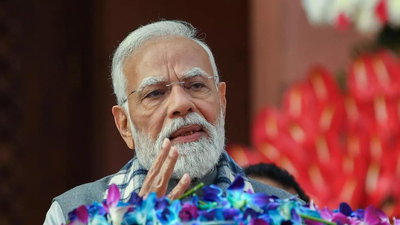
Prime Minister Narendra Modi is set to visit Manila, the capital of the Philippines, from November 16 to 17, 2026, to participate in the 23rd ASEAN-India Summit and the 21st East Asia Summit (EAS). The visit comes at an important time when geopolitical tensions, maritime security concerns and changing global economic conditions are shaping the Indo-Pacific region.
Philippine President Ferdinand R. Marcos Jr. has invited Prime Minister Modi to attend the two important regional gatherings. The Philippines is hosting the summits as the Chair of the Association of Southeast Asian Nations (ASEAN) for 2026.
The visit is expected to strengthen India’s engagement with Southeast Asian countries and provide an opportunity to discuss regional peace, economic cooperation and strategic partnerships.
1. ASEAN-India Summit: Strengthening Strategic Partnership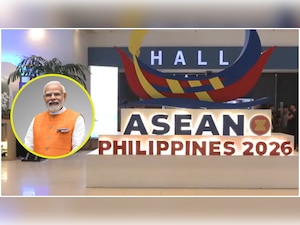
The 23rd ASEAN-India Summit will be one of the major highlights of Prime Minister Modi’s visit. The meeting will review progress in the India-ASEAN Comprehensive Strategic Partnership and discuss ways to expand cooperation in different sectors.
A key focus will be the implementation of the ASEAN-India Plan of Action for 2026-2030. The framework aims to strengthen cooperation in trade, investment, connectivity, technology, defence and development.
India considers ASEAN a crucial partner in its Act East Policy. The partnership is also important for India’s broader vision of a free, open, inclusive and stable Indo-Pacific region.
Both sides are expected to explore new opportunities for economic growth, strengthen supply chains and improve regional connectivity.
2. Maritime Security to Remain a Key Priority
Maritime cooperation is expected to receive significant attention during the summit. India and ASEAN share important maritime interests, and the security of sea routes is essential for regional trade and economic development.
The year 2026 is being observed as the ASEAN-India Year of Maritime Cooperation. This initiative provides an opportunity to deepen collaboration in maritime security, maritime safety, connectivity and the blue economy.
The discussions are expected to cover stronger maritime partnerships, cooperation against common security threats and maintaining stability across important sea lanes.
The issue is particularly significant amid continuing geopolitical tensions and competing strategic interests in the Indo-Pacific.
3. Trade, Investment and Economic Cooperation
Economic cooperation will form another important part of the discussions.
India and ASEAN have considerable potential to expand bilateral trade and investment. Both sides are interested in strengthening business partnerships, improving market access and building resilient supply chains.
The review of the ASEAN-India Trade in Goods Agreement (AITIGA) is also an important issue. India has expressed its interest in completing the review of the trade agreement at the earliest.
Greater economic cooperation could create opportunities for businesses, improve connectivity and support sustainable economic development across the region.
Digital transformation, infrastructure development and technology partnerships are also expected to remain important areas of engagement.
4. East Asia Summit: Focus on Regional and Global Challenges
Prime Minister Modi will also participate in the 21st East Asia Summit on November 17.
The East Asia Summit is an important ASEAN-led platform that brings together leaders from the region and major international partners to discuss strategic, political and economic challenges.
The participating countries include ASEAN members, India, China, Japan, South Korea, Australia, New Zealand, the United States and Russia.
The discussions are expected to focus on regional security, geopolitical developments, maritime stability, economic cooperation and international challenges.
India is likely to underline the importance of dialogue, diplomacy, respect for international law and peaceful resolution of disputes.
The summit will also provide an opportunity for India to strengthen its relationships with major regional and global powers.
5. Quad Summit and Bilateral Meetings
Apart from the ASEAN-India and East Asia summits, a possible Quad Leaders’ Summit is also attracting attention in Manila.
Prime Minister Modi is expected to join US President Donald Trump, Japanese Prime Minister Sanae Takaichi and Australian Prime Minister Anthony Albanese for discussions under the Quad framework, although the meeting had not been officially confirmed at the time of the announcement.
The Quad partnership focuses on maintaining a free, open and inclusive Indo-Pacific. Economic security, strategic infrastructure, maritime cooperation and emerging technologies are among its important areas of engagement.
Modi is also expected to hold bilateral meetings with other world leaders on the sidelines of the summits.
6. India-Philippines Relations in Focus
The visit is also important for strengthening India’s bilateral relationship with the Philippines.
Both countries have been expanding cooperation in defence, maritime security, trade, technology and regional connectivity.
Their growing partnership reflects shared interests in maintaining peace, stability and respect for international law in the Indo-Pacific.
Prime Minister Modi is also expected to interact with members of the Indian community in the Philippines, highlighting the importance of people-to-people relations.
7. Significance of the 2026 Visit
The Manila visit comes ahead of two important milestones in India-ASEAN relations. The year 2027 will mark 35 years of ASEAN-India Dialogue Relations and five years of their Comprehensive Strategic Partnership.
The visit will therefore provide an opportunity to review achievements and identify new areas of cooperation for the coming years.
Read more like this:
- एयर इंडिया और एयर इंडिया एक्सप्रेस ने रियाद और दम्माम की उड़ानें 30 नवंबर तक कीं रद्द, यात्रियों को मिलेगा रिफंड या रीशेड्यूलिंग का विकल्प
- Nvidia Chaos: Trump Unlikely to Raise Alice Huang Allegations During Meeting With Xi Jinping
Conclusion
Prime Minister Narendra Modi’s participation in the ASEAN-India and East Asia summits in Manila reflects India’s growing strategic and economic engagement with the Indo-Pacific region.
From maritime security and trade to regional stability, technology and defence cooperation, the discussions are expected to cover several important issues.
The outcomes of these meetings could strengthen India’s partnership with ASEAN countries, deepen regional cooperation and contribute to a more stable and prosperous Indo-Pacific.